
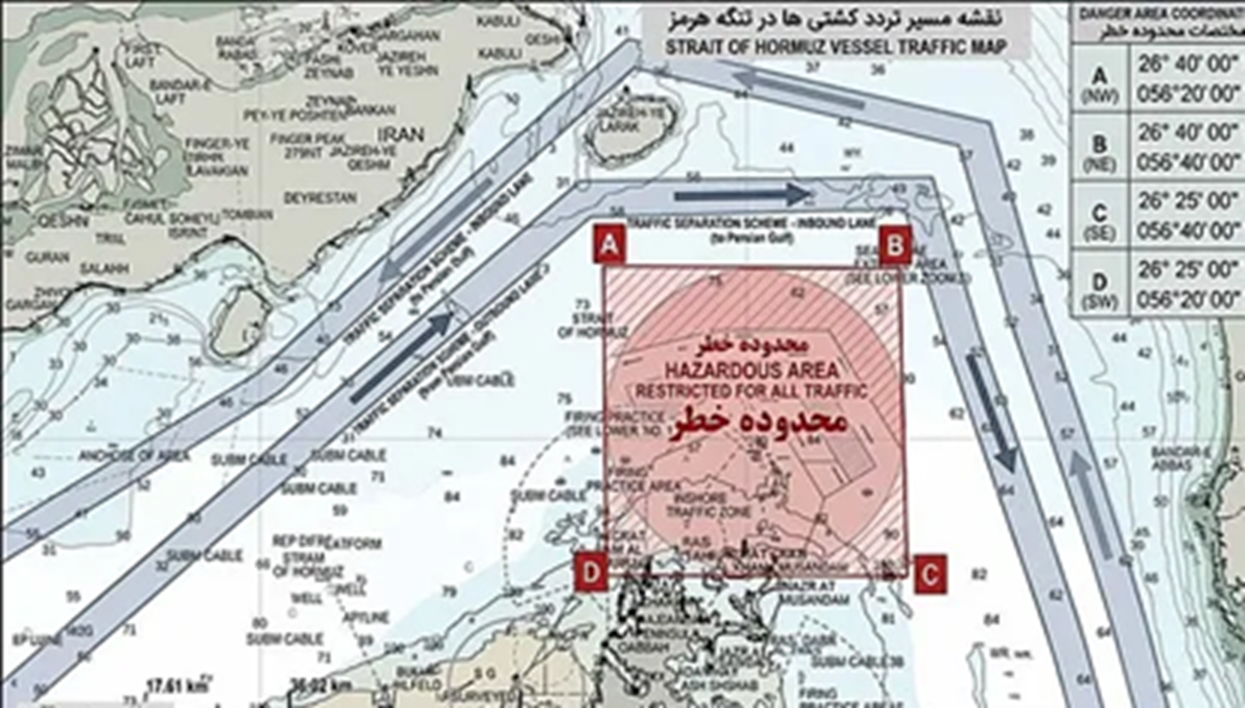
The Strait of Hormuz is still not as free as it was on 27 February.
Trump also reiterated that the US had “knocked the hell out of Iran” during the conflict that resulted in Khamenei’s death.
Trump told Axios, “I was shocked. I thought people hated him.”
“Maybe it’s fake tears,” he said, after seeing mourners crying during the funeral ceremonies.
He reiterated Iran was “begging to make a deal”, a claim he made in an interview with CNBC on Friday. He said both sides agreed to pause talks until the funeral proceedings conclude.
“They are all there. One shot and we can take them all out, but we are not going to do that because then we would have nobody to negotiate with.”
He said neither side would launch attacks during the funeral period.
Iran continues to use threats and force to compel commercial vessels to transit through its illegal traffic separation scheme in the Strait of Hormuz. Alternative transit routes such as the route along Oman’s coast undermine Iran’s efforts to establish complete control over the Strait of Hormuz. Iran likely calculates that threats and continued attacks on vessels will deter countries and international organizations from facilitating such alternative transit routes.
**
Senior Iranian officials continue to portray the strait as Iran’s primary source of leverage against the United States. Long-term Iranian control over the strait would enable Iran to close the waterway at any time and for any reason in order to make its adversaries meet Iranian demands and deter its adversaries from taking action against Iran.
**
Senior Iranian regime officials appear to be trying to contain growing factional disputes over Supreme Leader Mojtaba Khamenei’s position on the US-Iran memorandum of understanding (MoU). Supreme Leader Representative to the Islamic Revolutionary Guards Corps (IRGC) Abdollah Haji Sadeghi told IRGC and Basij commanders and members in a letter on July 4 that Mojtaba’s recent message on the MoU is the regime’s final basis for action.
**
The Iranian regime appears to be reshuffling some senior military positions after the US-Israel-Iran war. Armed Forces General Staff (AFGS)-run media Defa Press reported that Rear Admiral Ali Ozmaei replaced Rear Admiral Alireza Tangsiri as the IRGC Navy commander.
Mixed messaging on ship traffic
Senior Iranian officials continue to portray the strait as Iran’s primary source of leverage against the United States. Supreme Leader Military Affairs Adviser Major General Yahya Rahim Safavi warned on July 4 that Iran could use both the strait and the Bab al Mandeb as leverage if the United States violates the US-Iran memorandum of understanding (MoU).[5] Iranian Parliamentarian Malek Shariati similarly emphasized on July 3 the importance of Iranian control over the strait because of its important role for global energy markets.[6] Iran has repeatedly used force and the threat of force since April 2026 to control transit through the waterway to raise global oil prices and thus increase pressure on the United States and the broader international community to meet Iranian demands.[7] Iran announced the closure of the strait on June 20 to try to compel the United States to pressure Israel to halt operations against Hezbollah, for example.[8] Long-term Iranian control over the strait would enable Iran to close the waterway at any time and for any reason in order to make its adversaries meet Iranian demands and deter its adversaries from taking action against Iran.
The Iranian regime appears to be reshuffling some senior military positions after the US-Israel-Iran war. Armed Forces General Staff (AFGS)-run media Defa Press reported that Rear Admiral Ali Ozmaei replaced Rear Admiral Alireza Tangsiri as the IRGC Navy commander.[16] The Israel Defense Forces (IDF) killed Tangsiri in an airstrike targeting Bandar Abbas, Hormozgan Province, on March 26.[17] Ozmaei previously commanded the IRGC Navy 5th Imam Mohammad Bagher Region in Hormozgan Province, which oversees IRGC Navy operations in the southern Persian Gulf near the northern entrance of the Strait of Hormuz.[18] The United States sanctioned Ozmaei in June 2019 for acting on behalf of the IRGC and facilitating “destabilizing and provocative” actions around the strait.[19] The US sanctions against Ozmaei came after Iran conducted several attacks against commercial vessels in the Strait of Hormuz, including two tankers in early June 2019.[20] Iran’s maritime escalation around the strait in 2019 was a response to US President Donald Trump’s imposition of maximum pressure sanctions on Iran.[21] Some Iranian media outlets have also begun to publicly describe Major General Ahmad Vahidi as the IRGC commander instead of the IRGC deputy commander.[22] ISW-CTP assesses that Vahidi has been serving as the IRGC commander since the US-Israeli combined force killed the former commander on February 28.[23]
Trump only wishes he could have a six, no, a bigly seven day state funeral.
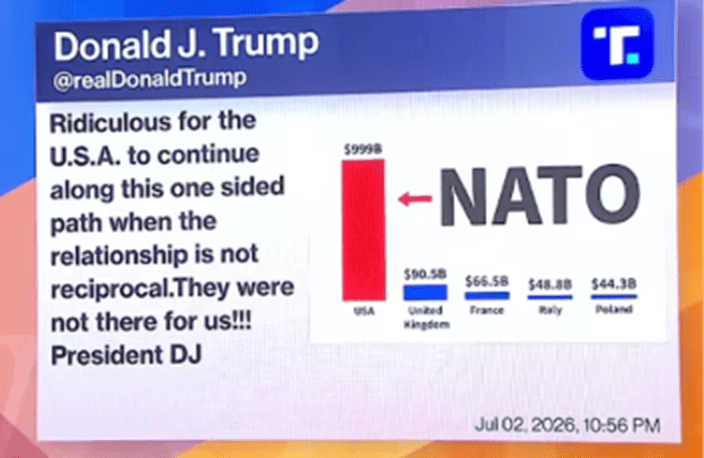 @annieli screenshot from Bloomberg podcast on Youtubeannieli screenshot from Bloomberg podcast https://www.youtube.com/watch?v=9tUGOktHDzo&pp=ygUJaXJhbiB3YXIg
We’ll get straight to the point: The financial hardships that Daily Kos is facing this year are tough.
We continue to be paywall-free. We continue to be supported by our readers, not billionaires or corporations. But we need to bring in more revenue. We are leaning on our community more than ever to help make ends meet.
Power matters.
Was this story worth reading?
Recommending and sharing stories helps us decide which stories are most important to show our readers.