
Archaeologists uncovered a long-forgotten, 1,600-year-old city in Egypt that includes preserved watchtowers, a church and a haul of artifacts and Christian symbols, officials announced.
The jaw-dropping discovering of the well-preserved Byzantine-era city and 18 ancient tombs near Alexandria were announced by Egypt’s tourism board on Saturday.
Egypt’s Tourism and Antiquities Ministry said the newly discovered Fourth Center city includes public squares, a basilica church, and two watchguard towers in Egypt’s western desert, known as Dakhla Oasis.
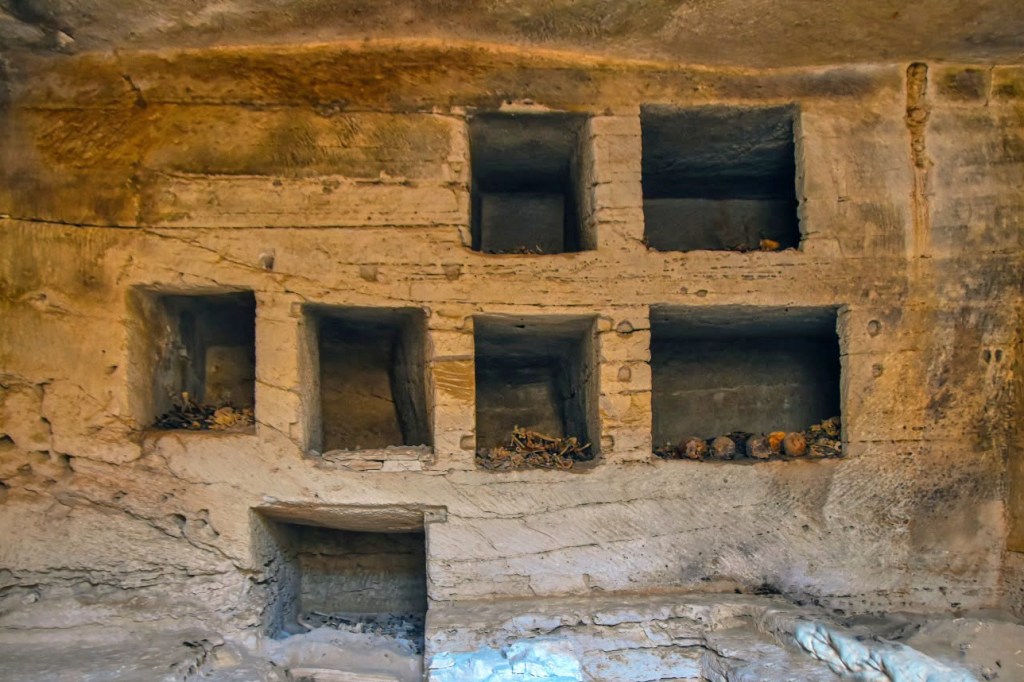 Seven surface limestone-built tombs, discovered in the Marina el-Alamein archaeological site, are seen west of the Mediterranean city of Alexandria, Egypt. Ministery of Tourism and Antiquities via AP
The city had been part of the Byzantine empire, the ministry explained.
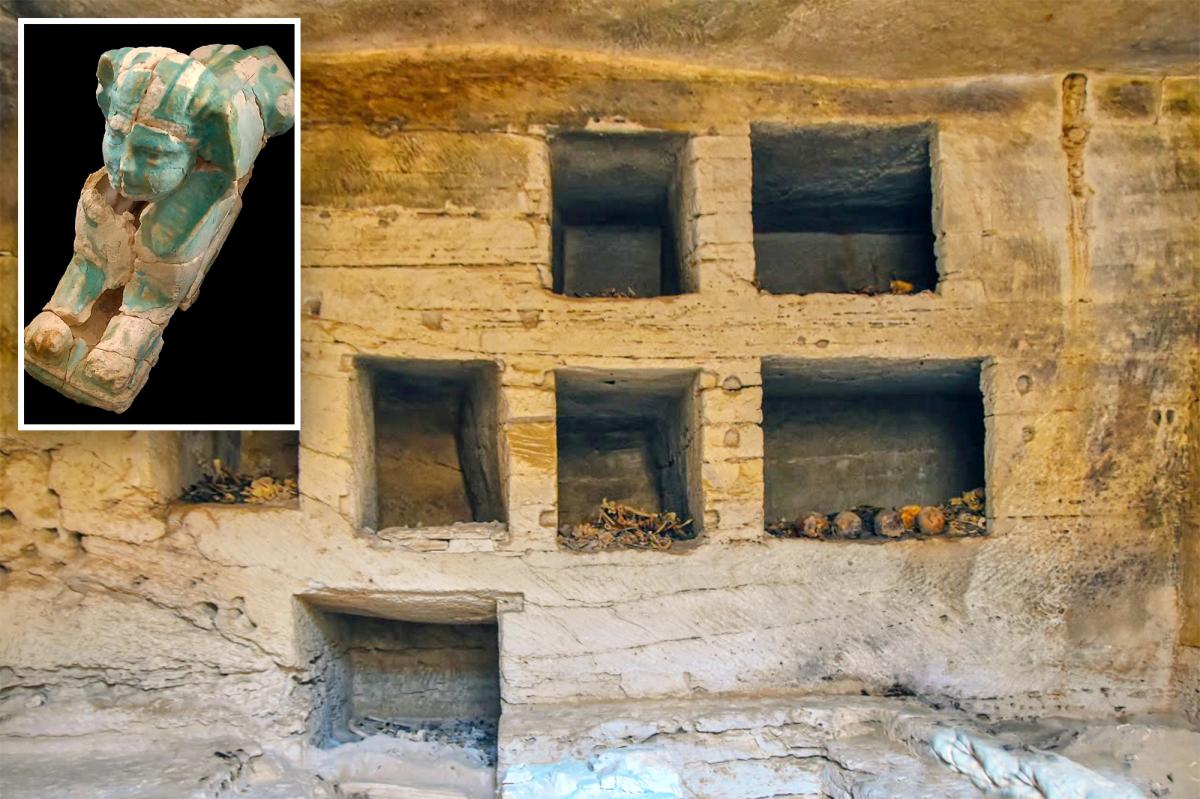
Archaeologists also made a second discovery, finding 18 new tombs 62 miles west of Alexandria at the Marina el-Alamein site — 11 rock-cut tombs averaging 8 meters deep, and seven surface limestone-built tombs — bringing the site’s total tomb count to 48, the ministry said.
The recent discoveries at the Dakhla Oasis and at the Marina el-Alamein archaeological site are the latest findings which the Egyptian government hopes will boost the country’s vital tourism sector, partially driven by antiquities sightseeing.
Tourism is a major source of foreign currency in the cash-strapped country.
Officials said the secret city gives unique insight into the everyday life centuries ago.
The long-lost city is decorated with a city grid that includes north-south thoroughfares intersected by east-west streets, said Hisham el-Leithy, secretary general of the supreme council of antiquities.
 A basilica church dating back to the mid-fourth century stands at the settlement’s head. Ministery of Tourism and Antiquities via AP
The Fourth-Century church overlooks the city’s main streets, while the watchtowers are located on the edges of the residential streets for likely security.
The oasis, which is located in western Egypt in the province of New Valley, is a step away from being added to the agency’s World Heritage List on UNESCO’s Tentative List.
Researchers also found a heavily fortified structure with thick defensive walls, along with rows of houses consisting of reception halls and vaulted roofs, Massoud said.
Among the structures discovered included one identified as the house of Tisous, a church deacon, which archaeologists believe served as a house of worship before the basilica was erected.
Researchers also found bread ovens, kitchens, stone grinding tools, and well-preserved bronze coins with portraits of Byzantine emperors, Latin inscriptions and Christian symbols.
Start your day with all you need to know
Morning Report delivers the latest news, videos, photos and more.
Thanks for signing up!
Mountains of gold coins, dating back to the reign of Roman emperor Constantius II who ruled between 337 and 361, were also uncovered, ministry statement said.
Roughly 200 pottery fragments, also known as octraca, were found in the city and likely used as writing material, as the fragments found had inscriptions detailing business deals and other aspects of life at the time, officials detailed.
Among the fragments, archaeologists found pottery vessels, lamps and other items — such as a granite sarcophagus stuffed with skeleton remains — roughly 62 miles west of the Mediterranean city of Alexandria, at the Marina el-Alamein archaeological site, Mission chief Eman Abdel-Khaliq said.
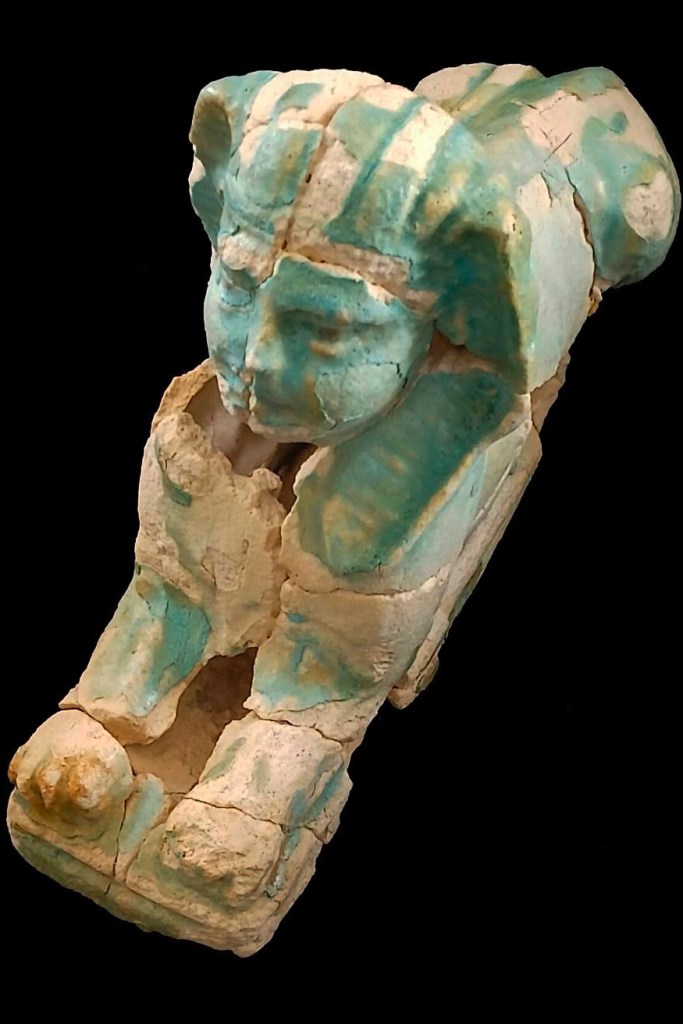
Near the sarcophagus they also found a plaster sphinx statue, Abdel-Khaliq added.
The remains are now being tested, officials said.
With Post wires