
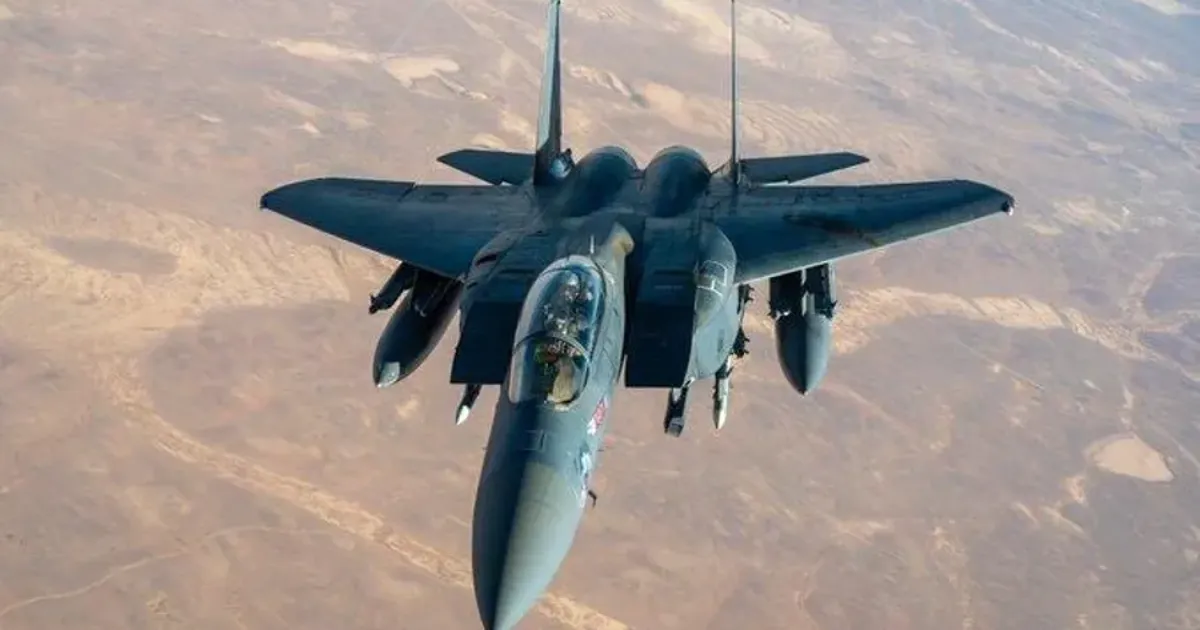
Survivors of the Iranian drone strike that killed six U.S. soldiers at Kuwait’s Port Shuaiba in March accused senior commanders of ignoring intelligence warnings about the base’s vulnerability and abandoning troops in the attack’s aftermath, according to an investigation published by The Washington Post.
The report, based on interviews with 17 people, including survivors, witnesses and people familiar with the U.S. military’s investigation, alleges that commanders moved troops to Port Shuaiba despite internal assessments warning the site lacked adequate defenses against Iranian drone attacks.
 Close
Close
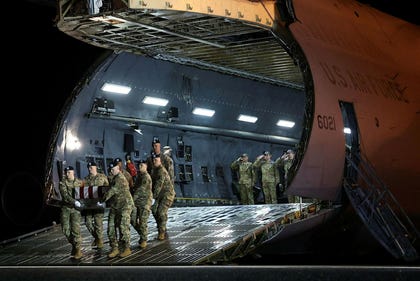
Coffin of U.S. soldier who died in Kuwait arriving in Delaware, March. Credit: Win Mcnamee/Getty Images via AFP
Coffin of U.S. soldier who died in Kuwait arriving in Delaware, March. Credit: Win Mcnamee/Getty Images via AFP
According to the Post, soldiers said classified briefings before the war identified Port Shuaiba as a likely Iranian target and warned that any conflict with Iran would put all U.S. positions at risk. The newspaper reported that troops had unsuccessfully requested additional counter-drone defenses before the attack.
The March 1 strike killed six members of the Army’s 103rd Sustainment Command and wounded more than 30 others, making it one of the deadliest attacks on U.S. forces during the war.
The Post also reported that several survivors accused Brig. Gen. Clint Barnes of fleeing to a bunker after the drone struck rather than helping evacuate wounded soldiers. One soldier quoted by the newspaper said, “We shouldn’t have run out of the fucking building,” while another officer reportedly rushed back inside to rescue survivors. Army Central disputed those accounts, telling the Post that senior leaders helped coordinate evacuations before being medically evacuated themselves because of their own injuries.
 Close
Close
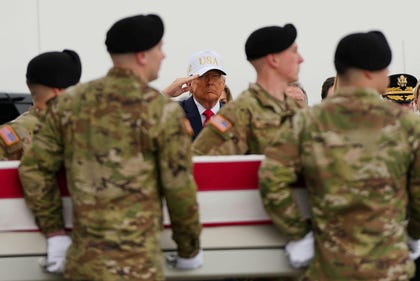
President Trump salutes at the coffin of a U.S. soldier killed in a drone strike at a command center in Kuwait, March. Credit: Julia Demaree Nikhinson/AP
President Trump salutes at the coffin of a U.S. soldier killed in a drone strike at a command center in Kuwait, March. Credit: Julia Demaree Nikhinson/AP
According to the Post, many survivors also said they received inadequate medical care after the attack and expressed little confidence that the military’s investigation would hold anyone accountable. A U.S. official familiar with the probe told the newspaper it does not assign blame or recommend disciplinary action.
Army Central defended its decisions, saying Port Shuaiba was selected “in accordance with operational plans,” was adequately fortified and had sufficient bunker space. It said intelligence and air-defense issues would be addressed in the investigation, which has not yet been released publicly.