
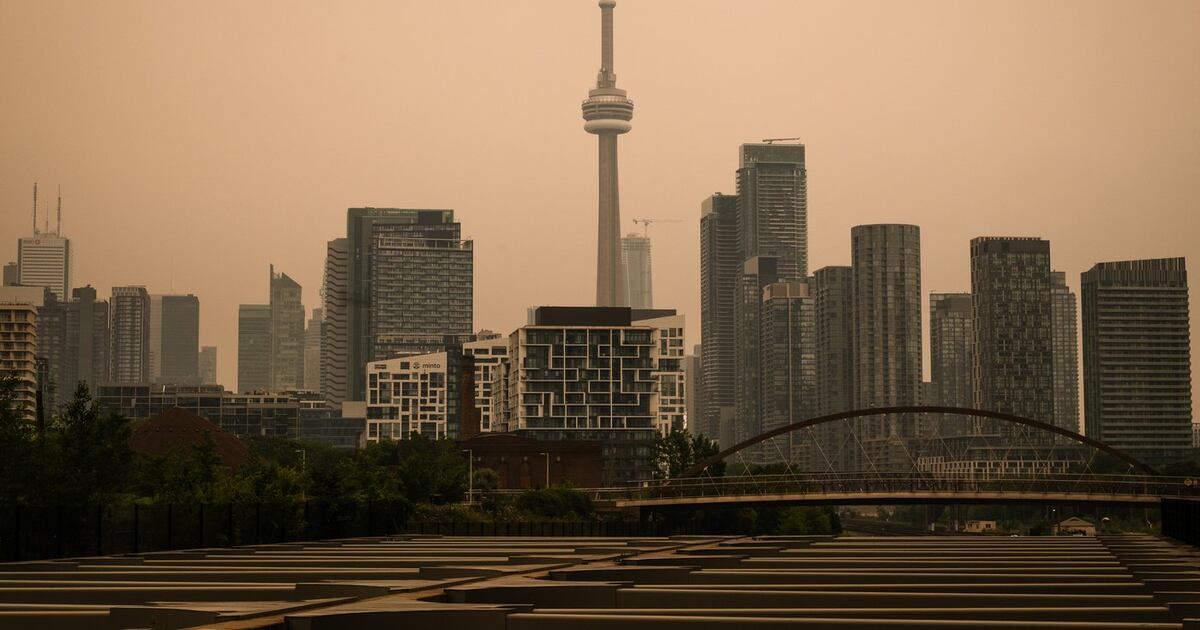
An orange haze has washed over Toronto’s skyline as wildfire smoke drifts into the region, leaving Toronto with some of the worst air quality in the world this morning.
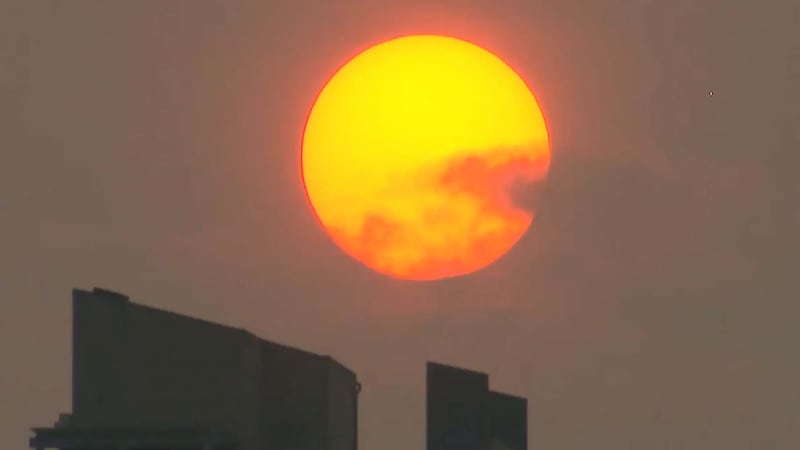 Orange sun over Toronto as smoke covers the area Orange sun over Toronto as smoke covers the area
An air quality warning, orange alert, has been issued for the city on Wednesday as smoke from forest fires in northwestern Ontario move south.
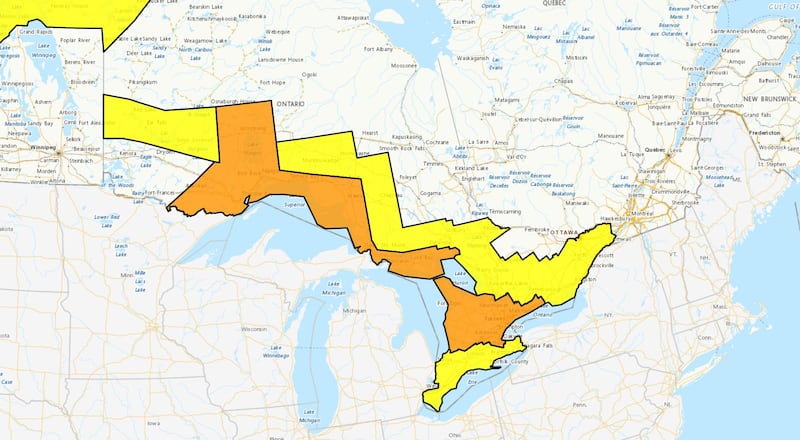 Ontario weather alerts smog wildfire Environment Canada alerts across Ontario, as of 9 a.m. ET Wednesday morning, July 15, 2026. Environment and Climate Change Canada has introduced a new colour-coded, tiered weather alert system: Yellow: Hazardous weather may cause damage, disruption or health impacts. Orange: Severe weather is likely to cause significant damage, disruption or health impacts.
“Poor air quality may persist into Thursday for some areas,” the national weather agency said in its alert.
“As smoke levels increase, health risks increase. Limit time outdoors. Consider reducing or rescheduling outdoor sports, activities and events.”
As of about 8 a.m. on Wednesday, Toronto’s air quality was ranked the worst in the world, according to IQAir, which tracks global air quality data.
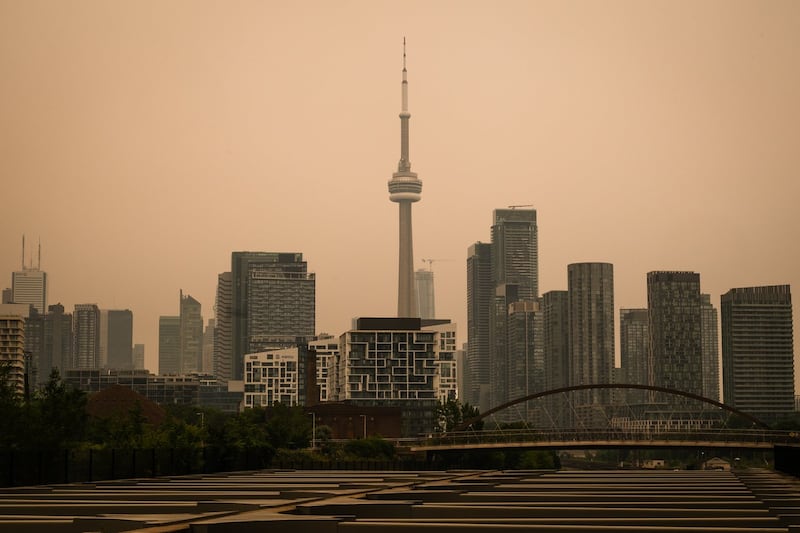 The CN Tower is pictured in Toronto as wildfire smoke fills the city, on Wednesday, July 15, 2026. THE CANADIAN PRESS/Laura Proctor The CN Tower is pictured in Toronto as wildfire smoke fills the city, on Wednesday, July 15, 2026. THE CANADIAN PRESS/Laura Proctor
“We have a very smoky start to the day. I know it may look like fog but we are contending with wildfire smoke,” CP24 Weather Specialist Jess Smith said on Wednesday morning.
“It doesn’t get better throughout the day today, unfortunately.”
Environment Canada said smoke may cause mild symptoms, such as eye, nose, and throat irritation, headaches or a mild cough.
“More serious but less common symptoms include wheezing, chest pains or severe cough. If you think you are having a medical emergency, seek immediate medical assistance,” Environment Canada said in its advisory.
Those at greater risk of health issues related to poor air quality include people over the age of 65, pregnant people, infants and young children, and people with existing illness or chronic health conditions.
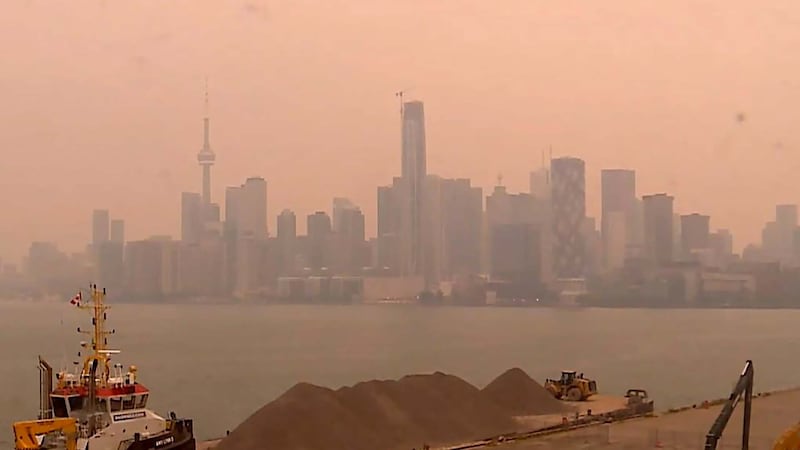 Toronto wildfire Heavy wildfire smoke hangs over the Toronto skyline, Wednesday, July 15, 2026.
“When indoors, keep windows and doors closed as much as possible,” the advisory read.
“When there is an extreme heat event occurring with poor air quality, prioritize keeping cool.”
Heat warning still in effect
A heat alert remains in effect for Toronto today with the mercury rising to 33 C today, feeling closer to 36 with humidity.
“We are still under that heat dome that stretches from southern portions of Saskatchewan through Manitoba, almost the entire province of Ontario, and into Quebec as well,” Smith said.
Environment Canada notes that the heat and humidity are exacerbating issues with air quality.
“Hot and humid air can also bring deteriorating air quality and can result in the Air Quality Health Index approaching the high-risk category,” the national weather agency said.
“Watch for the early signs of heat exhaustion in yourself and others. Signs may include headache, nausea, dizziness, thirst, dark urine and intense fatigue. Stop your activity and drink water.”
‘It is intensifying’
Dr. Jeffrey Siegel, a professor with the University of Toronto’s department of Civil and Mineral Engineering, said the health impact to residents in the city, including otherwise healthy individuals, is “very significant.”
“It is intensifying and we are going to have certainly for the rest of today and probably into tomorrow some very unhealthy conditions,” he told CP24’s Courtney Heels.
“Unfortunately, it comes along with the heat wave and so we’ve kind of got a double whammy.”
He said it is unusual for Toronto to take the top spot for worst air quality in the world.
“We’ve seen this increasing in frequency,” he said. “I think this represents something like the new normal.”
Share your photos of the wildfire smoke with us by emailing torontonews@bellmedia.ca.