
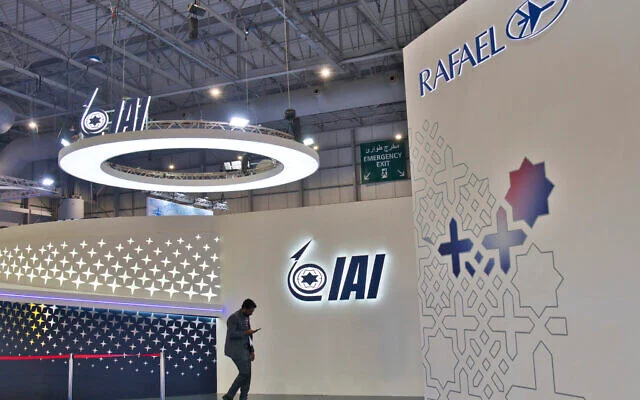
American capital may finance Israeli power. It must not command it. Shay Gal, former IAI Vice President and Chief of Staff to its Chairman, who helped advance the company’s proposed IPO, sets the sovereign line: protect every irreplaceable capability through enforceable state rights or remove it from the listed parent; list IAI first in Tel Aviv; reserve Nasdaq for civilian businesses, US subsidiaries and units outside the sovereign core.
Listing Israel Aerospace Industries and Rafael on Nasdaq is not a change of trading venue. It places two instruments of national power within an American regime of law, capital and incentives.
The timing is tempting. Global defence spending reached approximately $2.9 trillion in 2025. IAI closed the first quarter of 2026 with a $32.8 billion order backlog and $2.1 billion in sales; Rafael ended 2025 with NIS 21.7 billion in sales and an NIS 74.4 billion backlog. This is a window to unlock value, not a distress measure. Neither needs an IPO to survive. The state can therefore define the transaction, allocate the proceeds and draw the sovereign boundary.
In 2020, the government approved the sale of up to 49% of IAI through the sale of existing state shares, the issuance of new shares to raise capital for the company, or both. The options now under review are a Nasdaq listing, a dual listing and subsidiary IPOs.
Nasdaq is not a strategy, and a US presence is not an achievement. For years, Israeli defence companies have invested in offices, innovation hubs, visitor facilities, delegations, lobbying, marketing and compliance, while their US defence activity has cost far more than it has earned. Success is concentrated in civilian businesses, including aircraft conversion.
American production, employment, supply chains, legal responsibility and control are the price of access to the US defence market. It does not reward foreign producers. It absorbs them or quietly rejects them. Persistent investment without return builds white elephants, not market access. That is managerial failure.
When Capital Becomes Power
IAI is better prepared for a listing. It already issues bonds, reports in dollars and operates internal controls partly aligned with US standards. Its core capabilities include air defence, missiles, space, intelligence, unmanned aircraft and military aviation. Rafael is more deeply embedded in Israel’s national research and development system across multilayered defence, precision weapons, active protection, optronics, electronic warfare and naval systems.
Readiness to list does not make the sovereign core tradable. Products are only the visible edge. Sovereignty lies in design authority, code, knowledge, test facilities, personnel, supply chains, wartime upgrade authority and surge capacity. A capability that cannot be rebuilt is not an ordinary business asset. Losing it means losing freedom of action.
A Nasdaq listing subjects that core to US securities law. Foreign private issuer status, the SEC framework for overseas issuers, allows annual reporting on Form 20-F and limited reliance on Israeli corporate governance rules. It does not remove requirements for internal controls, material disclosure and an independent audit committee, or exposure to investor litigation.
Nor does secrecy resolve the tension. A company may protect classified information and immaterial commercial terms. It may not conceal a material financial consequence. It will not disclose range, algorithms, radar signatures or a confidential customer’s identity, but it must report delays, cancellations, cost overruns, declining backlog, customer concentration or dependence, and export restrictions.
That creates the mosaic effect: individually lawful disclosures can combine into an operational picture. Data on business segments, regions, inventories, customer advances, provisions, profitability and backlog can be assembled into a map of programmes, customers, production vulnerabilities and strategic priorities for competitors and intelligence services, even when each disclosure alone satisfies national security requirements.
Even 70% or 75% state ownership would not shield the companies from US law, litigation or market pressure. Banks, insurers, analysts, underwriters and advocacy groups need no formal veto. They need only make a product, customer or transaction legally and financially costly. Whoever imposes the cost of a decision gains power over it.
The pressure is most acute in the customer portfolio, itself an asset of statecraft. A defence transaction can open relations, build an alliance, deepen intelligence cooperation and establish a presence that no other Israeli instrument can secure.
The United States is Israel’s principal ally and a partner in development, funding, procurement and production. The interests of Jerusalem and Washington diverge over third countries, technology transfer, local production, competition, transaction timing and regional consequences. Germany’s Arrow 3 procurement exposed the structure: Washington had to approve the Israeli sale while offering THAAD to the same customer. The gatekeeper can also be the bidder. Technological superiority does not erase dependence on a partner that is also a competitor.
Export authority will remain in Jerusalem, while US export controls under ITAR and EAR already apply where American technology is involved. Nasdaq adds a corporate filter. Every customer, product and destination becomes a question of disclosure, director liability, investment, credit, insurance and reputation. A company that embeds American law, capital, credit and insurance embeds American risk preferences in its decisions.
Even a transaction approved by Israel, containing no US technology and violating no sanctions, can become commercially untenable under pressure from investors, lawyers, insurers and banks. Customers whose relations with Washington are complex may doubt supply continuity and turn to competitors.
The risk has already materialised. Elbit Systems, listed on Nasdaq and in Tel Aviv, reports boycotts, divestment and pressure to terminate contracts. Investment funds have divested, while banks have excluded the company from their investable universe.. Its continued growth proves that the pressure is bearable, not that a sovereign instrument should be exposed to it.
Cellebrite ended relationships with customers following public criticism, investor pressure and legal and reputational risk. It has warned investors that such perceptions can harm revenue and results.
Power rarely arrives as a public prohibition. It operates through delay, repricing, insurance, credit and timing. No American directive is required. Legal counsel warns, the audit committee reviews, the insurer reprices coverage, the bank tightens its terms and management retreats. Price replaces the veto.
The Tomer Test
Israel has already built the safeguard.
In the privatisation of Israel Military Industries, or IMI Systems, its rocket propulsion operations and other strategic activities were carved out and transferred to a dedicated state owned company, Tomer, together with their assets, facilities, employees and knowledge. Tomer remained wholly owned by the state, with arrangements covering state priority, continuity of supply and procurement over the long term.
The carve out did not reflect distrust of Elbit. It acknowledged that even professional, regulated Israeli private ownership is not sovereign control over an irreplaceable capability. In an offering, the state will retain control; the American market will price its freedom to exercise it.
A sovereign core is defined not by classification or corporate structure, but by substitutability, design authority, operational continuity, surge capacity, dependence on unique personnel, noncommercial missions, statecraft value and irreversible damage.
A capability requires state ownership or a dedicated sovereign safeguard when it has no alternative supplier, its design authority remains in Israel, it is required in an emergency and it cannot be restored in time.
A capability retained inside the company cannot be judged by profit alone. Profitability funds development, production, acquisitions and personnel. It is a condition of resilience, not the purpose of national defence.
Production lines maintained without current orders, deep inventories, an alternative supplier, teams retained between programmes and long term research may look inefficient in financial statements. In war, they are redundancy, readiness and insurance.
Israel’s Government Companies Law requires companies owned by the state to operate according to commercial considerations unless the government determines otherwise. Once private investors enter, every national mission must be defined, priced and funded. The state must fund capability retention, inventories, emergency production and priority for national requirements.
The returns cannot be privatised while the risk is nationalised.
The source of the proceeds also matters. Selling state shares funds the Treasury. Issuing new shares funds the company. If the proceeds flow to the Treasury while the company bears the costs of disclosure, compliance and litigation, the transaction is asset monetisation, not capital formation.
A state majority alone does not protect sovereignty. Brazil holds a golden share in Embraer, with veto rights over military programmes and technology transfer. The United Kingdom restricts foreign ownership of BAE Systems and retains a special state share. Germany holds 25.1% of defence electronics group HENSOLDT to protect key defence technologies. Leonardo listed Leonardo DRS on Nasdaq, not Italy’s sovereign core.
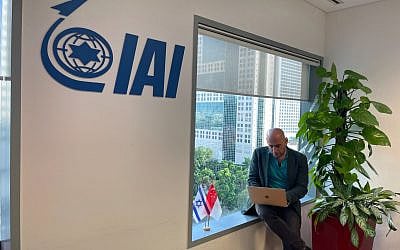
Shay Gal at IAI’s Singapore office. A company can prepare for listing; only the state can draw the sovereign boundary. (Photo: Shay Gal)
Israel’s model is clear: map the sovereign core through the Tomer Test; secure every irreplaceable capability with explicit state rights over control, technology transfer, closure and supply continuity; and, where necessary, remove it entirely from the parent company.
IAI belongs first on the Tel Aviv Stock Exchange. Nasdaq is for US subsidiaries, civilian activities and units separated from the sovereign core.
–
This English version, adapted and expanded by the author, is based on an article originally published in Hebrew in Walla Money under the title “לא מנפיקים ריבונות: את הסודות של תע״א ורפאל תשאירו בבית” on July 20, 2026.
Related by the same author: