
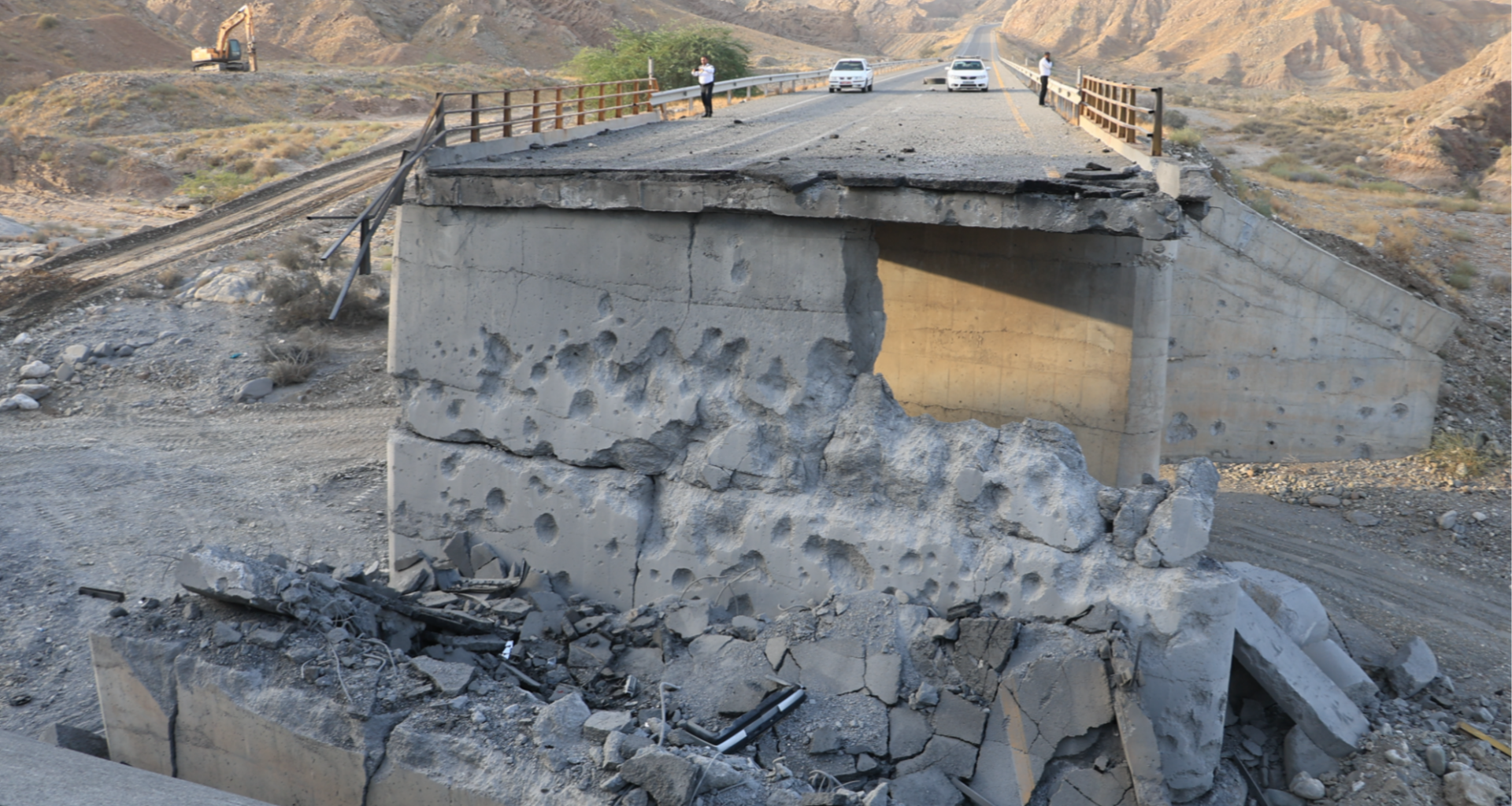
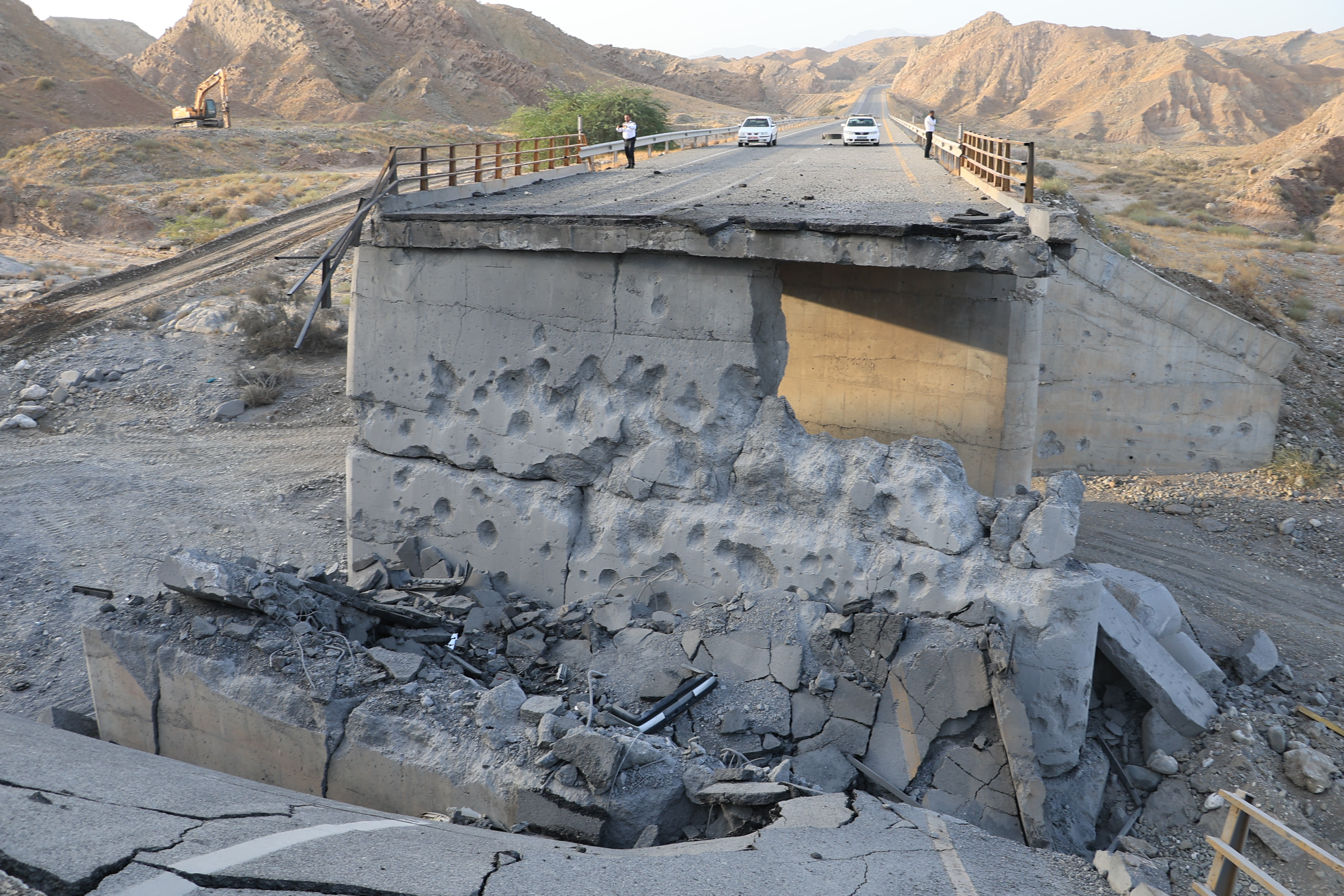
 People stand on a bridge destroyed after a strike in Hormozgan province, southern Iran, July 18, 2026. (PHOTO / IRANIAN STUDENTS’ NEWS AGENCY VIA AP)
TEHRAN/KUWAIT CITY/AMMAN – Iranian President Masoud Pezeshkian said on Monday that his country is engaged in a “full-scale war” with the United States, stressing the importance of maintaining economic stability during wartime.
“Today’s war is not a war of merely missiles. The enemy has come to the conclusion that it cannot force the Iranian nation to surrender with military strikes,” Pezeshkian said at a meeting of the High Council of the Judiciary in Tehran, according to a statement published on the website of his office.
He said that the “enemy” has waged a “hybrid war” against Iran, describing the economy and the people’s livelihood as the most important areas of confrontation with the “enemy,” and highlighting the necessity to maintain economic stability and protect social assets as two priorities of “the system of governance during wartime.”
ALSO READ: Iran launches new wave of missiles toward ‘enemy targets’
Pezeshkian added that his government “fully protected” Iran’s national rights and interests in negotiations with the United States, including in the memorandum of understanding (MoU) signed on June 18.
The United States has launched multiple strikes on Iran’s southern provinces over the past week, saying they were aimed at “degrading Iran’s ability to threaten commercial shipping.”
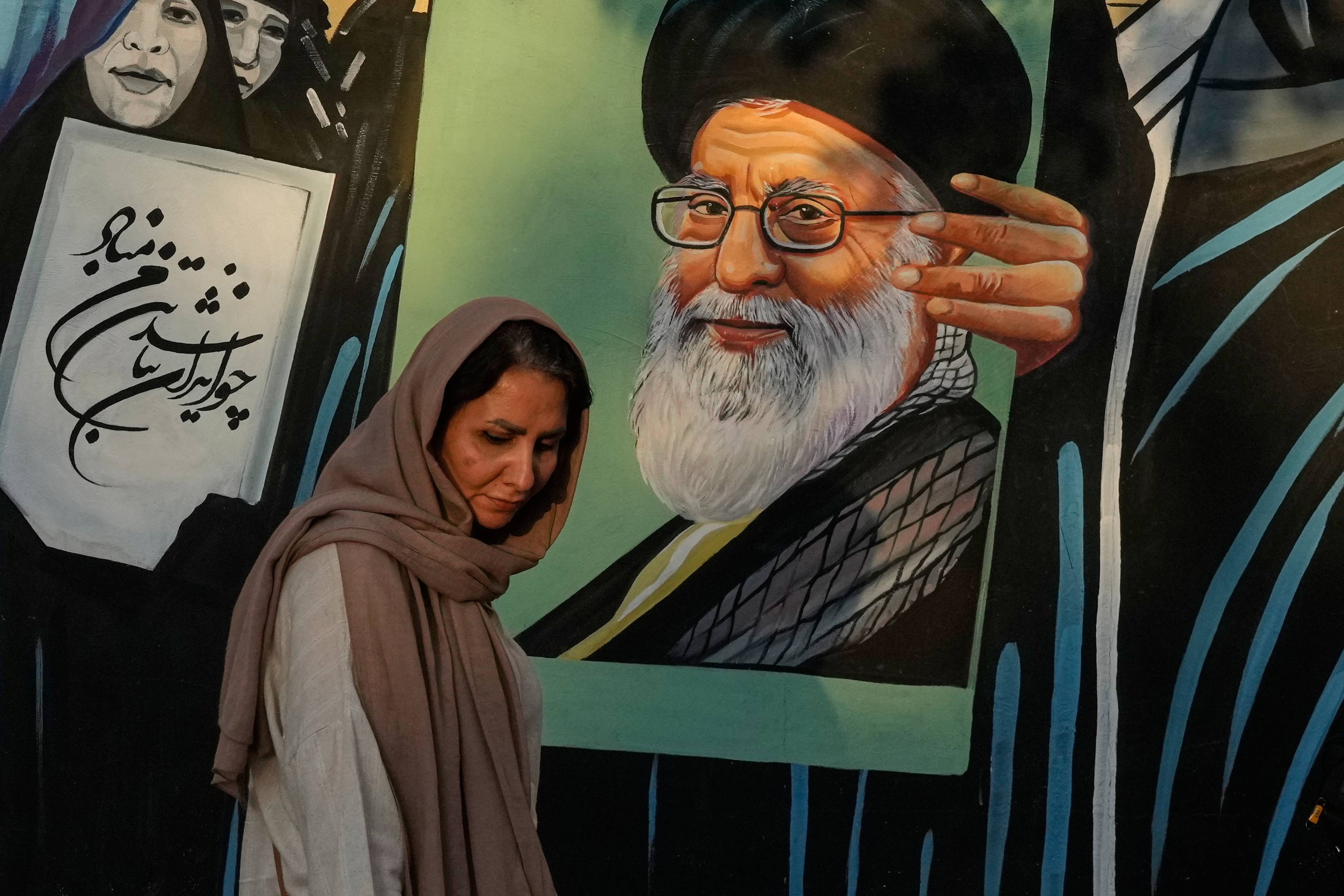 A woman walks past a mural depicting a portrait of the late Iranian Supreme Leader Ayatollah Ali Khamenei, who was killed in the US and Israel strike on Feb 28, in downtown Tehran, Iran, July 18, 2026. (PHOTO / AP)
Iran has responded with waves of missile and drone attacks targeting US military bases and facilities in regional countries, including Kuwait, Bahrain, and Jordan.
The escalation comes as the two sides, under their MoU, were scheduled to hold negotiations within a 60-day period to reach a final agreement.
ALSO READ: US completes another round of strikes against Iran
Meanwhile, several explosions were heard in southern and central Iran on Monday night and early Tuesday, Iranian media reported, as US Central Command (CENTCOM) announced the launch of a new round of strikes against the country.
Blasts were reported on Monday night in the counties of Bandar Abbas, Sirik, Bandar Lengeh and Qeshm in the southern province of Hormozgan, as well as the counties of Chabahar and Konarak in the southeastern province of Sistan and Baluchestan, according to Iranian media reports.
 A small motorboat passes anchored vessels in the Strait of Hormuz off Bandar Abbas, Iran, June 11, 2026. (PHOTO / ISNA VIA AP)
Air defenses were activated in the southern port city of Bushehr to “engage with hostile aircraft,” the official news agency IRNA reported on Monday night.
Early Tuesday, an explosion was heard in the southern city of Shiraz, and two explosions were heard in the central city of Isfahan, according to the IRNA and the semi-official Mehr news agency.
READ MORE: US-Iran tensions escalate with renewed strikes
The incidents occurred as CENTCOM announced Monday night a new round of strikes against Iran on social media platform X, saying they are designed “to further degrade Iranian military capabilities used to attack commercial shipping in the Strait of Hormuz.”
Separately, the General Staff of the Kuwaiti Army said early Tuesday on X that its air defenses are currently responding to “hostile missile and drone threats.”
Over the past week, the United States has launched multiple strikes on Iran, saying they were aimed at “degrading Iran’s ability to threaten commercial shipping.”
Iran’s IRGC claims ‘heavy blows’ to US assets in Bahrain, Kuwait
Iran’s Islamic Revolution Guard Corps (IRGC) said on Monday that its naval forces had delivered “heavy blows” to US assets and facilities in Bahrain and Kuwait through three rounds of missile and drone attacks, in retaliation for US attacks on Iranian provinces.
In a statement on its official news outlet Sepah News, the IRGC said it “destroyed” drone maintenance and repair hangars used by US units at Al-Sakhir Air Base in Bahrain in the first round of the strikes.
In the second round, the US silos housing Task Force 59 vessels at Salman Port in Bahrain were targeted and “destroyed,” and the vessels were heavily damaged, it said.
ALSO READ: US, Iran ramp up regional threats as tensions deepen
The third round of its strikes set fire to and “completely destroyed” facilities for stationing, supporting, and equipping US special naval commandos at Camp Arifjan in Kuwait, it added.
The IRGC also said that two oil tankers that intended to transit the Strait of Hormuz caught fire after explosions, according to Iran’s Press TV on Tuesday.
Bahrain’s Ministry of Foreign Affairs condemned the repeated Iranian attacks, saying they targeted “vital civilian infrastructure” and posed a direct threat to civilian lives.
The country’s Civil Aviation Affairs said the civil air navigation systems of the Bahrain flight information region were targeted by Iranian drones, with air navigation services unaffected.
Earlier Monday, the IRGC said in statements that it had struck US aircraft in Jordan’s port city of Aqaba and assets in Kuwait.
Jordan says intercepted 3 Iranian missiles, no casualties reported
In Amman, the Jordan Armed Forces-Arab Army said in a statement Monday night that its air defenses intercepted three missiles launched from Iran.
It said the interception caused no casualties or material damage, adding that it remains on high alert and will respond firmly to any threats to national security and sovereignty.