
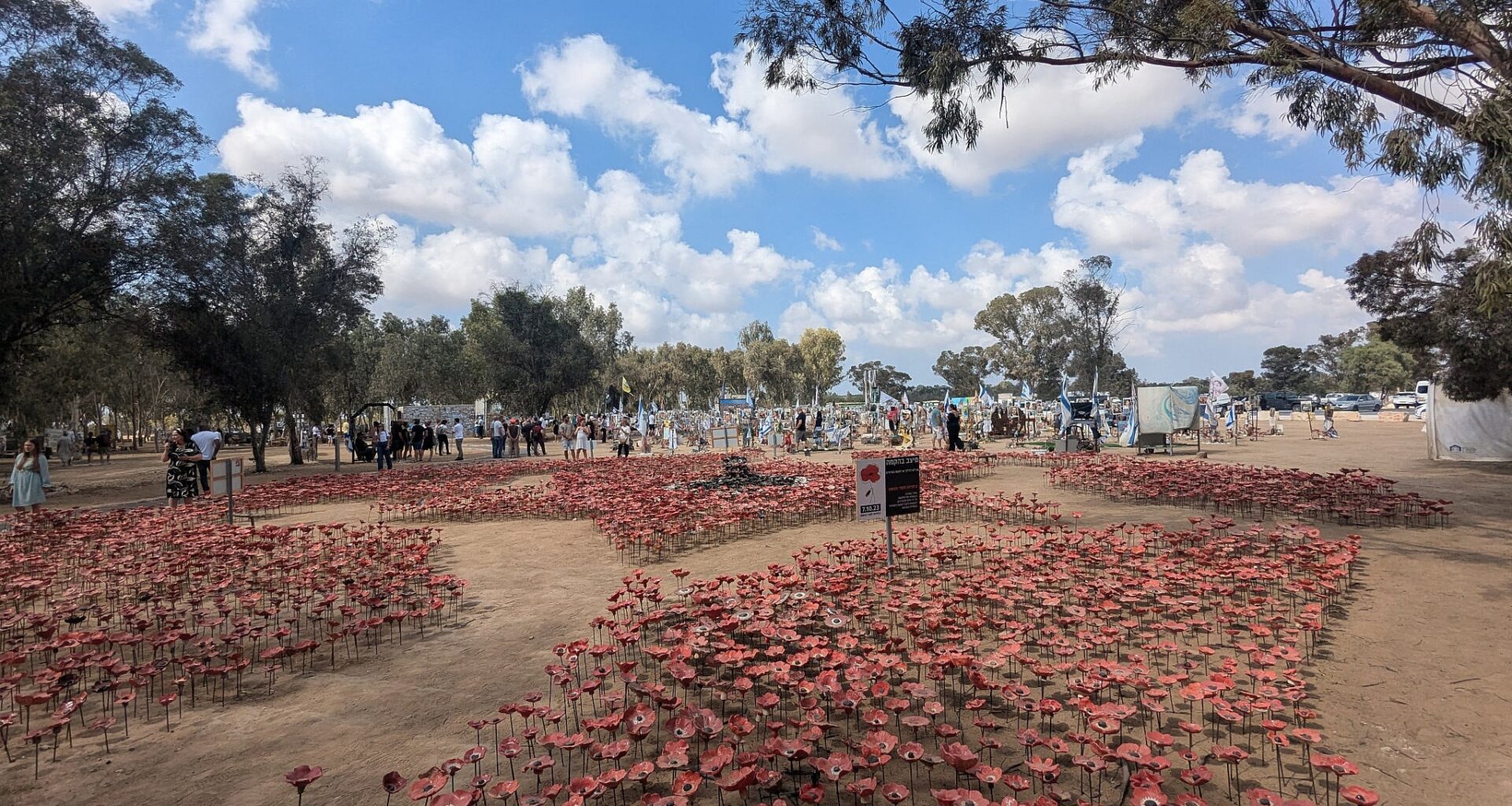
Nova Memorial (Photo taken by Ari Melnik)
There are no tour guides left in Israel. There are only job seekers with guiding licenses, waiting by the phone for a tourism industry that has not come back.
I am one of them. My calendar used to be full, booked with the ancient sites people flew across the world to see. Masada. Jerusalem. Caesarea. Now it holds almost nothing, and when the phone does ring, the request is always the same two words. Not Jerusalem. The Gaza envelope, and Nova.
I don’t think the world has noticed this reversal, and I’m not sure we have either.
For the twenty years I have been a tour guide, people came to Israel to go deep. They came on pilgrimage to holy places. They came to stand on ground where ten civilizations sit one on top of another, to feel the oldest parts of their own story under their feet. Depth was the whole point. It was the narrative I told, and it was true.
In those years, no one ever asked me for the western Negev. Not because it isn’t beautiful. Because, in the shorthand of the trade, there was nothing to see there. The communities along the Gaza border were young, the first settlers arrived only in the 1940s, and the land held none of the ancient layers that people crossed oceans for. It was farmland and kibbutzim. You don’t fly from Ohio for farmland.
Now that farmland is the only ground anyone wants to walk. And the deep places, the layered stone and the holy hills, sit empty. There is, on my calendar, no Jerusalem anymore.
Until October 7, I interpreted history. Now I guide people through history that is still bleeding, and on the empty days, I have started to write it down.
This new ground is sacred. I guide it with my voice low. To stand at Re’im among the photographs of the murdered, to walk the route people ran, is a duty, and I expect to perform it for the rest of my working life.
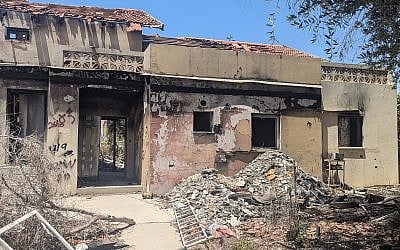
Destroyed house in the Gaza Envelope (Photo by Ari Melnik)
I have also seen what it can do. In 2024 I took Dr. Julie Norman, a British academic and a familiar voice on the region for the BBC and others, to Be’eri, where she heard first hand what had happened there. When we met again not long ago, she told me the day has stayed with her, in the work she does and the rooms she speaks in. Seeing changes people in a way that reading never does. Showing works.
That’s exactly why I can’t accept what is happening to us. October 7 will, and should, be part of every itinerary from now on. But a country is not a photograph of its worst day. Israel is a long and fascinating film, thousands of years of it, full of achievement and struggle and reinvention, and it deserves to be shown as a film, not frozen on a single frame. October 7 is a large part of who we are now. It is not the only thing we are.
And yet the world, right now, is in no mood to see more. I don’t need a survey to tell me the sentiment has turned against Israel; I hear it in the car, from the few who still come. While we were driving down Route 232, where so many people were killed on October 7, one young man told me how he and his Israeli professor had to move their classroom week to week and slip in almost undercover, after protesters threw eggs and tomatoes at them on the way to a lecture. They were humiliated, and no one at the university stood up for them. The fear he carried out there is the same force that empties my car in here. This June, Pew Research Center found that across 36 countries a median of 67 percent of people now hold an unfavorable view of Israel, against just 25 percent favorable, and climbing. Being against Israel has become the base coat under every picture the world paints of us.
The war, it seems, is becoming endless. And yet I am trying to hold on to the last of my optimism, so I make myself picture the day after. I know, in my bones, that when it comes we will have to show the world more than our wounds, real and undeniable as they are. We will have to show what we are proud of.
How many people abroad know that when the envelope was emptied, ordinary Israelis opened their own homes to strangers, free, for as long as they were needed? That families in Tel Aviv cooked in their kitchens and sent the food south? That in my own neighborhood we went door to door collecting bicycles, so that children moved to hotels near the Dead Sea would have something to ride? The world was shown a response, but only a military one, and much of even that through false libels. It was never shown this response, the quiet, beautiful resilience that I doubt any other society on the planet would manage. And every visitor who does finally land here says the same thing on the drive in, before we reach a single ancient stone. Look at all the cranes. Look at the roads. This is not a country that has given up on tomorrow.
What I recently understood is this: everything I want the world to see lives in the very place that once had nothing to see.
The envelope holds the courage of the first settlers who chose to build on hard, empty land. It holds the stubbornness it took to make that desert bloom. It holds the communities they built out of nothing, and the courage those same communities showed on October 7 and through the gray months after. The place with no history laid down, in a single day, a layer of it as deep as anything in Jerusalem. Israel is still doing what it has always done. It is still making history, still adding to the stack.
So when you come to Re’im, and I hope you will, know that you are already standing inside the fullest answer to the question the world keeps asking about us. Do not let it be the only thing you see. Give me one more day, and I will show you the country that existed before that morning, the country that survived it, and the country that is already building what comes next.
Ari Melnik is a historian and licensed tour guide who has shown Israel to visitors for twenty years through Exclusive Israel Tours. He is the author of two books, Israel Unfiltered and the memoir Waiting For The Boom: How War Became Ordinary, which he began in his family’s safe room in Ramat Gan, where he lives with his partner and their twin sons.