
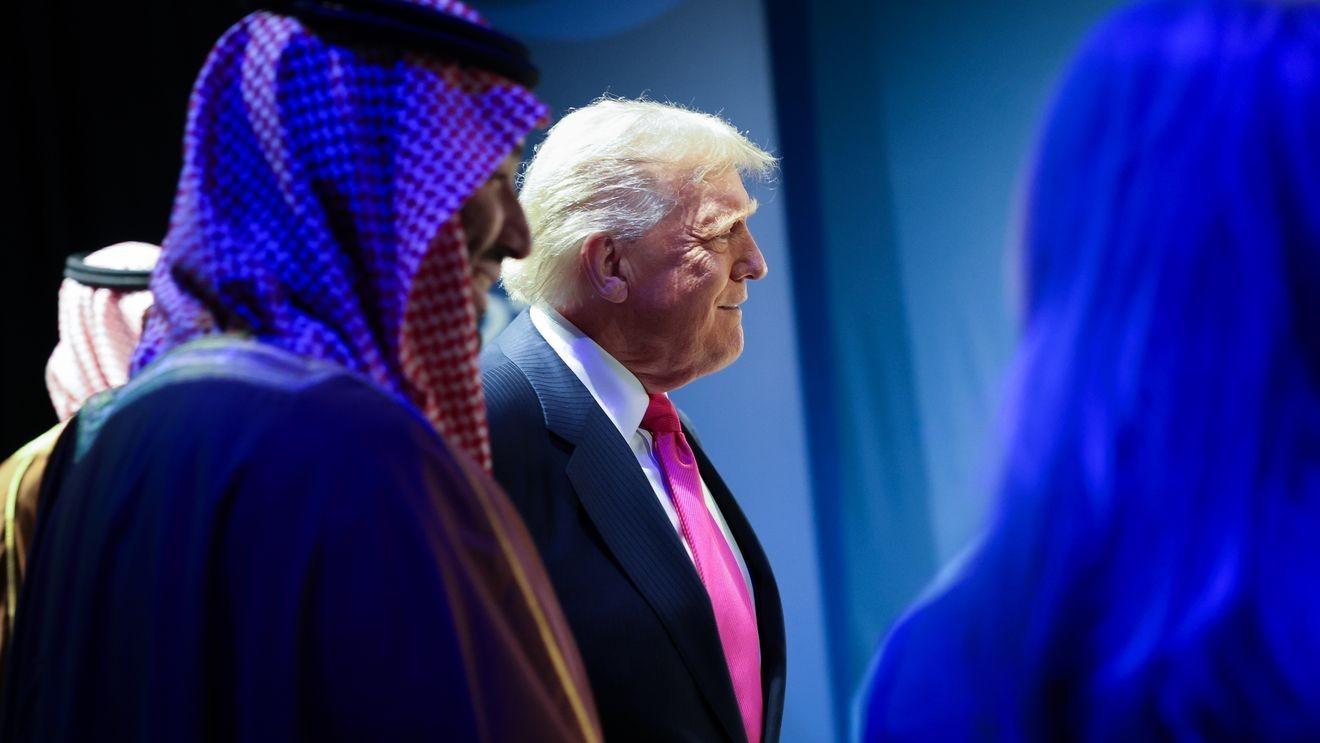
WASHINGTON (TNND) — The Trump administration’s agreement to expand nuclear cooperation with Saudi Arabia is raising questions about nuclear proliferation in the Middle East as the United States also says preventing Iran from obtaining a nuclear weapon is the main objective of the war.
The 30-year agreement announced on Wednesday would allow private U.S. nuclear companies to export to Saudi Arabia and create a framework for American safeguards, though text of the deal has not yet been released.
Any future uranium enrichment would likely be years away if the agreement ultimately takes effect. But still, the announcement comes as the war in Iran continues with Tehran’s nuclear program at the center of the conflict.
The timing of helping Saudi Arabia build nuclear power plants has renewed concerns among some lawmakers and analysts about whether allowing more countries to development enrichment programs could lead increase the long-term risks of nuclear weapons proliferation.
Uranium enrichment is controversial because the same technology used to produce fuel for peaceful purposes can also be used to produce material for nuclear weapons if enriched to much higher levels.
Saudia Arabia has insisted its intentions with nuclear power are peaceful, but Crown Prince Mohammed bin Salman has also publicly said the kingdom would work to develop a nuclear weapon if Iran isn’t stopped from getting them. Other countries in the region have made similar suggestions.
The Department of Energy said the agreement will include safeguards designed to prevent the spread of nuclear weapons. The United Arab Emirates entered the same type of agreement with the U.S. in 2009 but also agreed to not seek enrichment and to comply with rigorous monitoring and inspections by the International Atomic Energy Agency.
“Rest assured, these agreements uphold the highest standards of nuclear safety and nonproliferation, while relying on the world’s best nuclear technology and scientists, designed right here in the United States,” Energy Secretary Chris Wright said in a statement.
Secretary of State Marco Rubio also rejected concerns the deal would lead to an arms race in the Middle East.
“The U.S. is not going to reach any agreement with any country in the world that leads to the risk of proliferation,” he said.
Saudi Arabia has held ambitions to develop a civilian nuclear program for years. Some analysts said getting the kingdom to cooperate with the U.S. is better than Riyadh turning to Moscow or Beijing to obtain one.
“Understanding what we’re getting going in is important, but the strategic aspect of looking at this is we must realize that China and Russia were both trying and will continue to try to gain a stronger position in the Middle East and come up with where they can take away the United States’ advantage,” said Mark Chandler, former director of Defense Intelligence Agency’s Middle East and Africa Center and professor at Coastal Carolina University.
Administration officials argue the U.S. involvement in any future Saudi nuclear program will give it more influence over safeguards that might not exist if it partnered with another country.
But the concerns extend beyond the technical safeguards included in the agreement and creates questions about how other countries in the region will interpret the deal.
The agreement with the Saudis could also complicate efforts to settle the war with Iran that Trump has said is to prevent Tehran from ever being able to obtain a nuclear weapon. Tehran has claimed for years that its nuclear program is strictly for peaceful purposes, an assertion that has been rejected by the United States and other international agencies.
“Iran’s probably going to play this against the United States. They’re going to exacerbate it and talk about nuclear weapons programs and all that, which is not part of this Saudi deal. But they’re going to they’re going to play it up and try to get the world opinion going against the United States and talk nuclear weapons proliferation,” Chandler said.
The president will need to submit the deal to Congress, which would start a 90-day period for approval. However, it will be challenging for Congress to stop it even if there is significant opposition. Lawmakers would need a veto-proof two-thirds majority in both chambers to stop the deal from moving forward.
Another uncertainty weighing on whether the deal moves forward is if Saudi Arabia will agree to normalizing relations with Israel through the Abraham Accords, a condition Trump added on Thursday. The kingdom has been resistant do doing so until Israel agrees to the creating a clear path for a Palestinian state, which has been rejected by Israeli Prime Minister Benjamin Netanyahu and other officials.
Several administrations have debated whether to allow Saudi Arabia to have access to U.S. nuclear technology that have ultimately faltered because of its refusal to normalize relations with Israel and concerns about nuclear proliferation.
In a social media post, Trump said Saudi Arabia will not enrich material, and the agreement was subject to the country recognizing Israel.
“The Civil Nuclear Deal (There will be no enrichment of material!) being made between the United States Department of Energy and Saudi Arabia, which pertains only to non-military use such as the ones that Iran and UAE (and others) already have, will be approved,” Trump wrote on Truth Social on Thursday. “But is totally subject to Saudi Arabia joining the very respected and successful Abraham Accords.”