
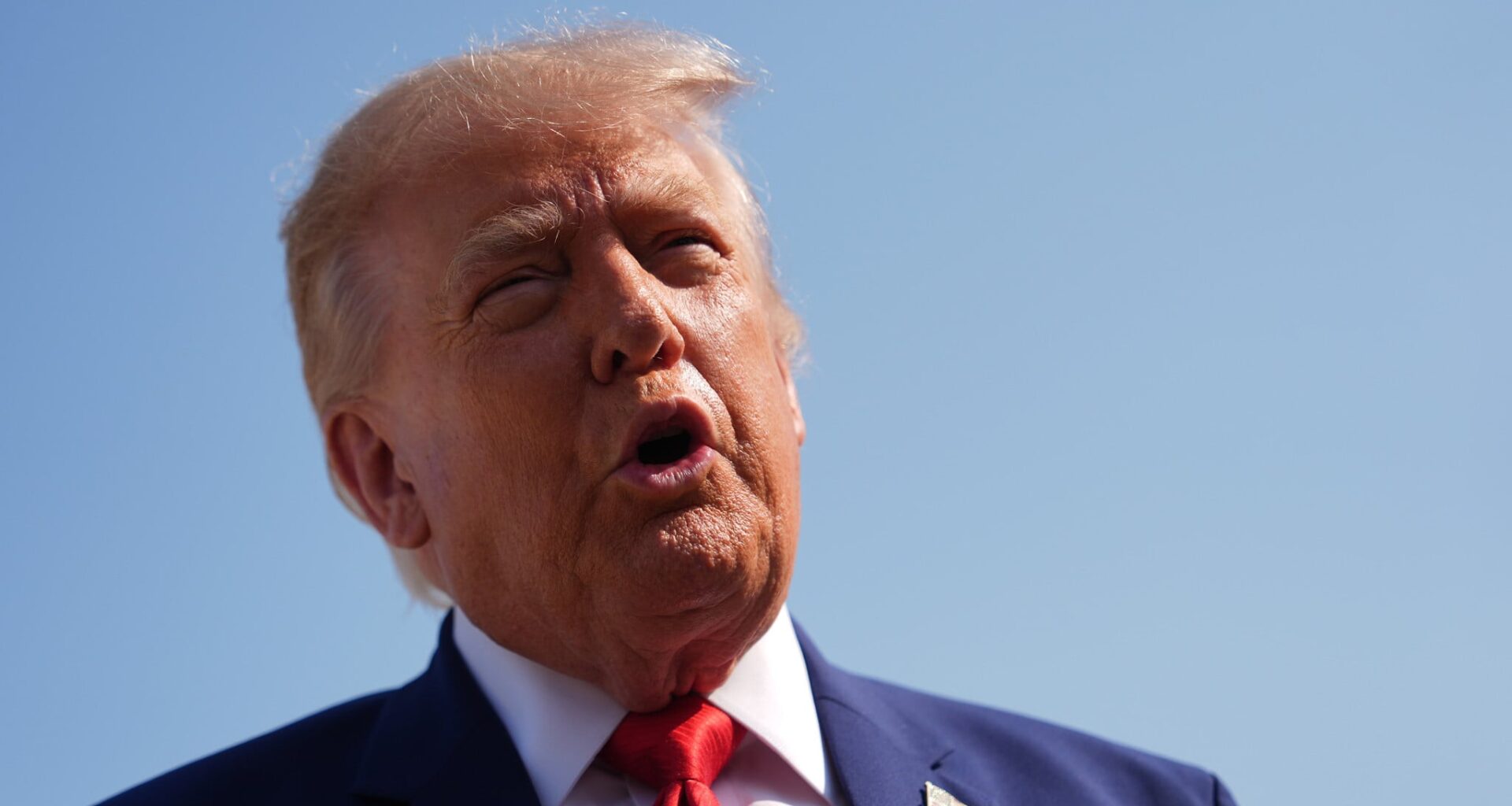
US President Donald Trump said on Thursday that he is considering ordering the largest US attack on Iran yet, adding that Israel would join the strikes upon his request.
“I am considering a massive attack. Bigger than ever before. I am close to making a decision. We are all set for it,” he told the Axios outlet, which reported that the strikes, if carried out, would be bigger than Operation Epic Fury, the US operation that launched the war alongside Israel in late February.
Trump regularly makes bombastic threats against Iran without carrying them out. He has repeatedly threatened major strikes only to announce a diplomatic breakthrough shortly afterward. He made the threat hours after warning Iran that it would be held responsible if the Houthis in Yemen continue to target Saudi shipping, after the Iran-backed terror group fired on two Saudi tankers overnight.
Israel has not been involved in the latest round of fighting, or in the talks between the US and Iran. But Trump told Axios that Israel would join the new wave of strikes if he wanted it to.
Israel “would join in two minutes if I asked them to,” Trump said, adding that “we don’t need anybody.” He also said there would be “consequences” if Israel joined in, likely referring to Iranian attacks on Israel.
Get The Times of Israel’s Daily Edition
by email and never miss our top stories
By signing up, you agree to the terms
Trump said that the Iranians need to be struck more before they’ll be ready to make a deal. “They haven’t received enough pain yet,” he said.
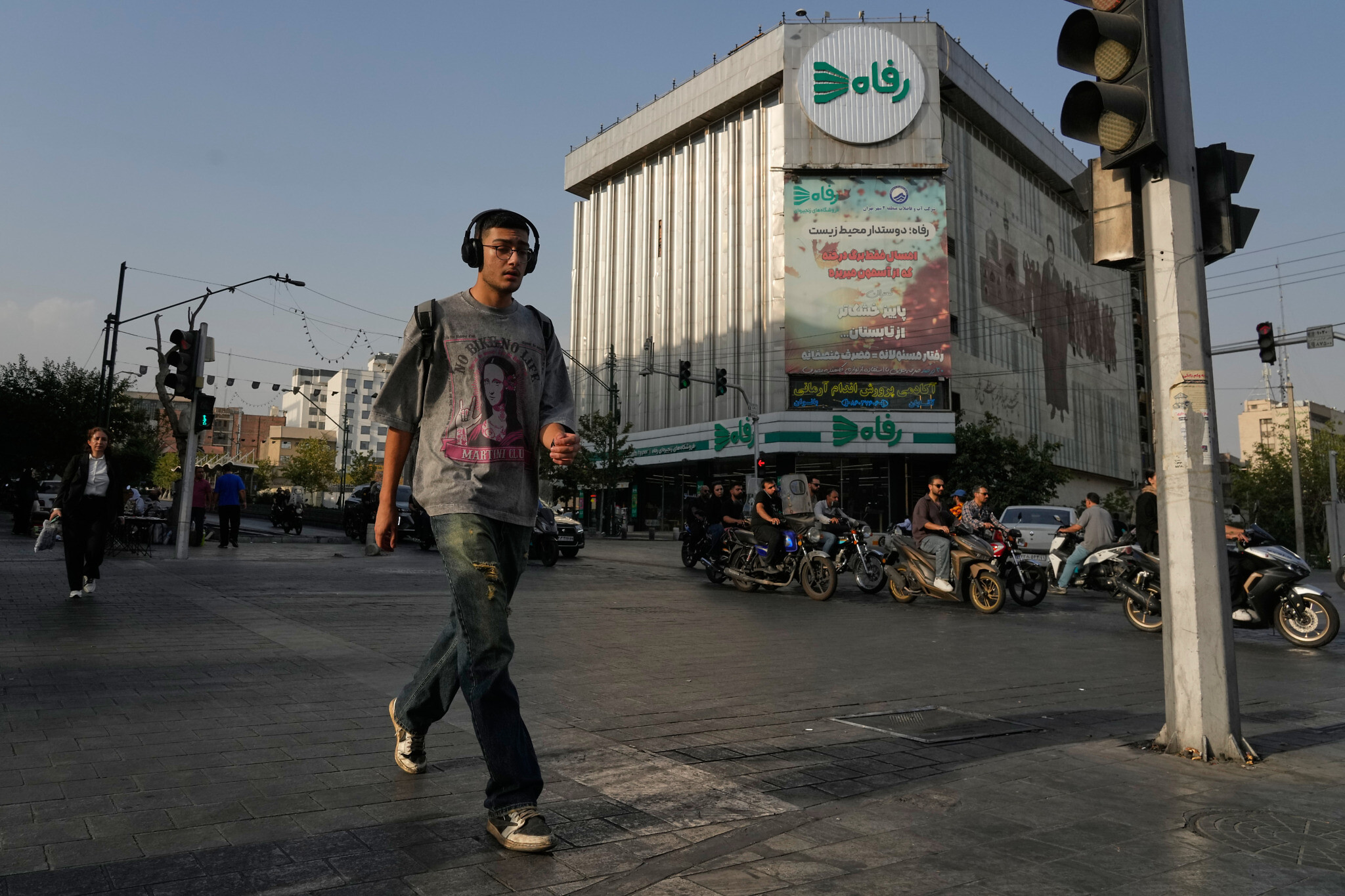
Pedestrians walk through downtown Tehran, July 22, 2026. (AP/Vahid Salemi)
Fears also grew in Israel of renewed Iranian attacks, as several mayors ordered that public bomb shelters open. Defense Minister Israel Katz, during a security assessment on Thursday, said Israel is “prepared for every possibility” amid the tensions with Iran.
“If Iran attacks Israel, it will suffer a crushing blow,” he added, according to remarks published by his office.
In addition, Prime Minister Benjamin Netanyahu will convene top ministers and aides for a national security meeting tomorrow, the office of one of the ministers told The Times of Israel.
But Israeli officials are uncertain where things are heading. “Everything depends on Trump,” a senior official told Channel 12. “We don’t know where he is heading. He is maneuvering between a major escalation and a gradual escalation.”
Trump vows to hold Iran responsible for Houthi attacks
Trump’s threat to hold Iran responsible for future attacks by the Houthis in Yemen on Saudi ships was the latest indication that a new front was opening up in the Middle East war.
On Monday, the Houthis, an Iranian proxy group that controls western Yemen, announced that they were imposing a naval blockade on Saudi Arabia, which backs Yemen’s internationally recognized government.
A blockade on Saudi ports would further choke off the flow of oil in the Middle East, given that Iran is also obstructing shipping in the Strait of Hormuz, another key energy artery.
In his warning, Trump referenced the US’s bombing campaign against the Houthis last year, which aimed to stop their attacks on Red Sea shipping.
“A year ago the United States of America attacked, very powerfully, the Houthis, for their interference with commerce and trade, by shooting at ships,” wrote Trump on Truth Social. “Since that time, and during our conflict with Iran, they have acted very responsibly.”
“Unfortunately, now they are starting up again, shooting at two Saudi Arabian ships last night,” he continued. “Please let this TRUTH serve to represent that if they do this again, the US will hold Iran responsible, in that the Houthis are a Surrogate and/or Proxy of Iran, and major military punishment will be inflicted upon Iran and, of course, the Houthis, themselves.”
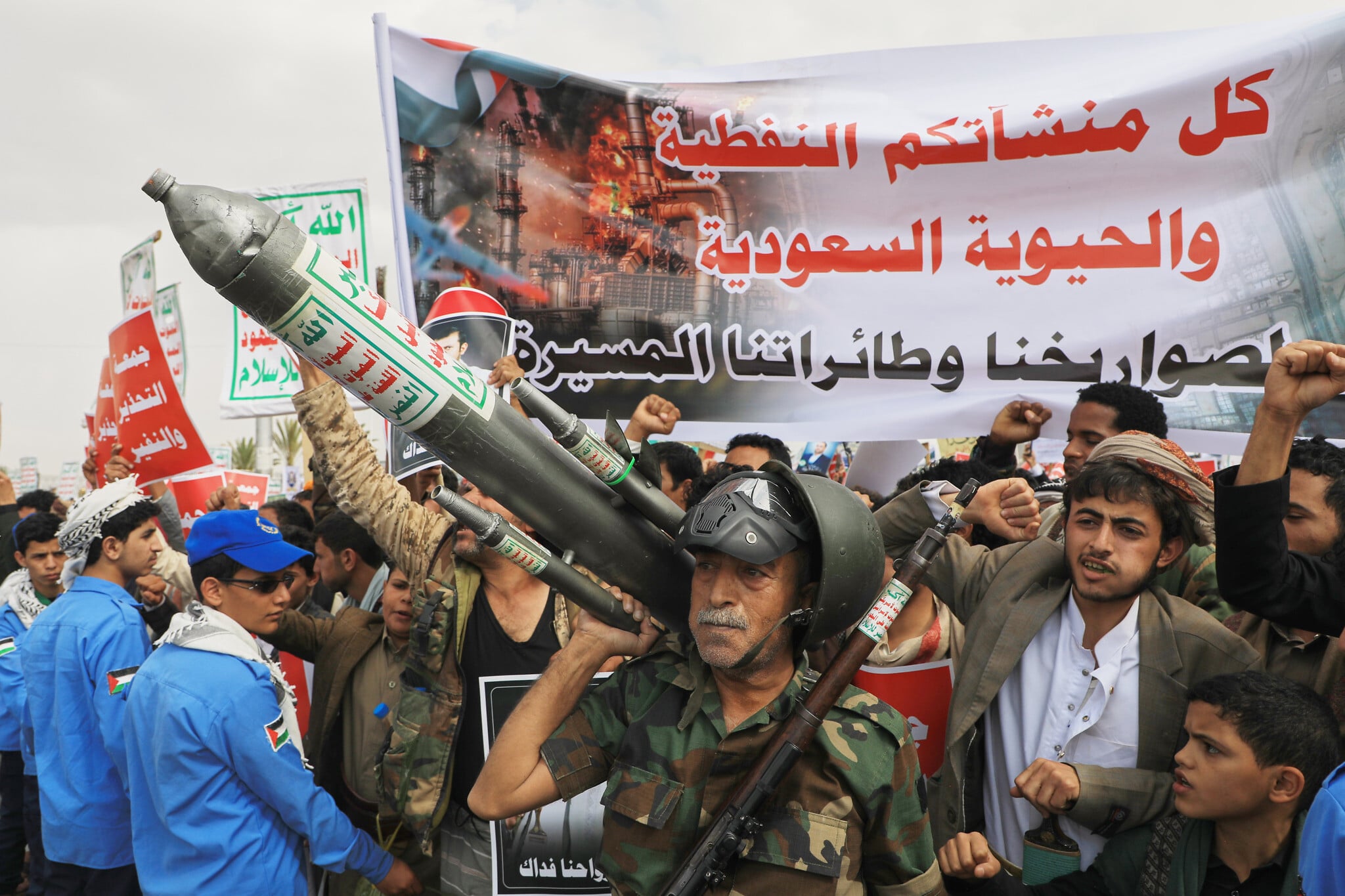
Houthi supporters hold a rally in Sanaa, Yemen, July 17, 2026, against the Saudi-led coalition. (AP Photo/Osamah Abdulrahman)
On Thursday, Oman, which has attempted to mediate between the US and Iran, announced that it was now trying to broker calm between Saudi Arabia and the Houthis, with the help of the UN envoy for Yemen. Oman’s foreign ministry stressed the need to avoid escalation and any threats that could worsen the situation in the Red Sea and endanger freedom of navigation.
US Secretary of State Marco Rubio also blamed the Houthi attacks on Iran, and EU foreign policy chief Kaja Kallas called on the Houthis to immediately stop activities that endanger shipping.
“Navigation must be unimpeded, in the Strait of Hormuz as well as in the Red Sea,” she said.
The Iranian news outlet Tasnim reported on Thursday that a US missile had hit a site near the town of Suza on Qeshm Island, in the disputed Strait of Hormuz.
“The relevant authorities are currently assessing the extent of the incident and the possible level of damage,” the agency said.
Israeli mayors reopen public bomb shelters
On Thursday, the mayors of several cities announced that their public bomb shelters would reopen, indicating growing fears that Iran may renew attacks on Israel.
The announcements came from the central city of Ramat Gan, which was hard hit in previous rounds of conflict with Iran, as well as Kiryat Gat and Eilat in southern Israel and Karmiel in the north.
“The assessment is that the threat of missiles from Iran over the weekend has grown and is no longer negligible,” Ramat Gan’s Carmel Shama-Hacohen wrote on Facebook. He called on apartment supers to similarly open their buildings’ shelters.
Nonetheless, Shama-Hacohen said the move was being undertaken “out of an abundance of caution,” and noted that it was not based on any special warning from the military.

Dog salon workers take cover with the dogs in a bomb shelter as sirens warn of incoming Iranian missiles in Ramat Gan, Israel, Wednesday, March 25, 2026. (AP Photo/Oded Balilty)
Home Front Command guidelines nationwide remained unchanged. Municipalities often decide to reopen public bomb shelters at their own initiative, while others have kept theirs open year-round regardless of security tensions.
Rubio: Iran ‘paying the price’ for breaking deal
Diplomatic efforts to end the fighting have continued, but Iran and the US traded blame as to who is at fault for the breakdown in talks. Rubio said Washington has kept its end of a deal with Iran, but that Tehran keeps reneging on agreements.
“These people make deals and then they break it almost immediately, or they decide, ‘Oh, let’s change the deal.’ That’s not how deals work,” he said on the sidelines of a Southeast Asian summit in Manila.
“So now they’re paying the price for it. And maybe they’ll change their mind here over the next few days as they continue to suffer great losses,” he added.
Rubio also said the Houthis were “suckered” into attacking Red Sea shipping by Iran.
“The Houthis largely were smart and stayed out of all this throughout the conflict, but they now apparently have gotten themselves suckered into this, going after Saudi Arabia and their ships,” Rubio said. “I hope they will de-escalate, because I think the Houthis, frankly, got snookered into this thing by the Iranians.”
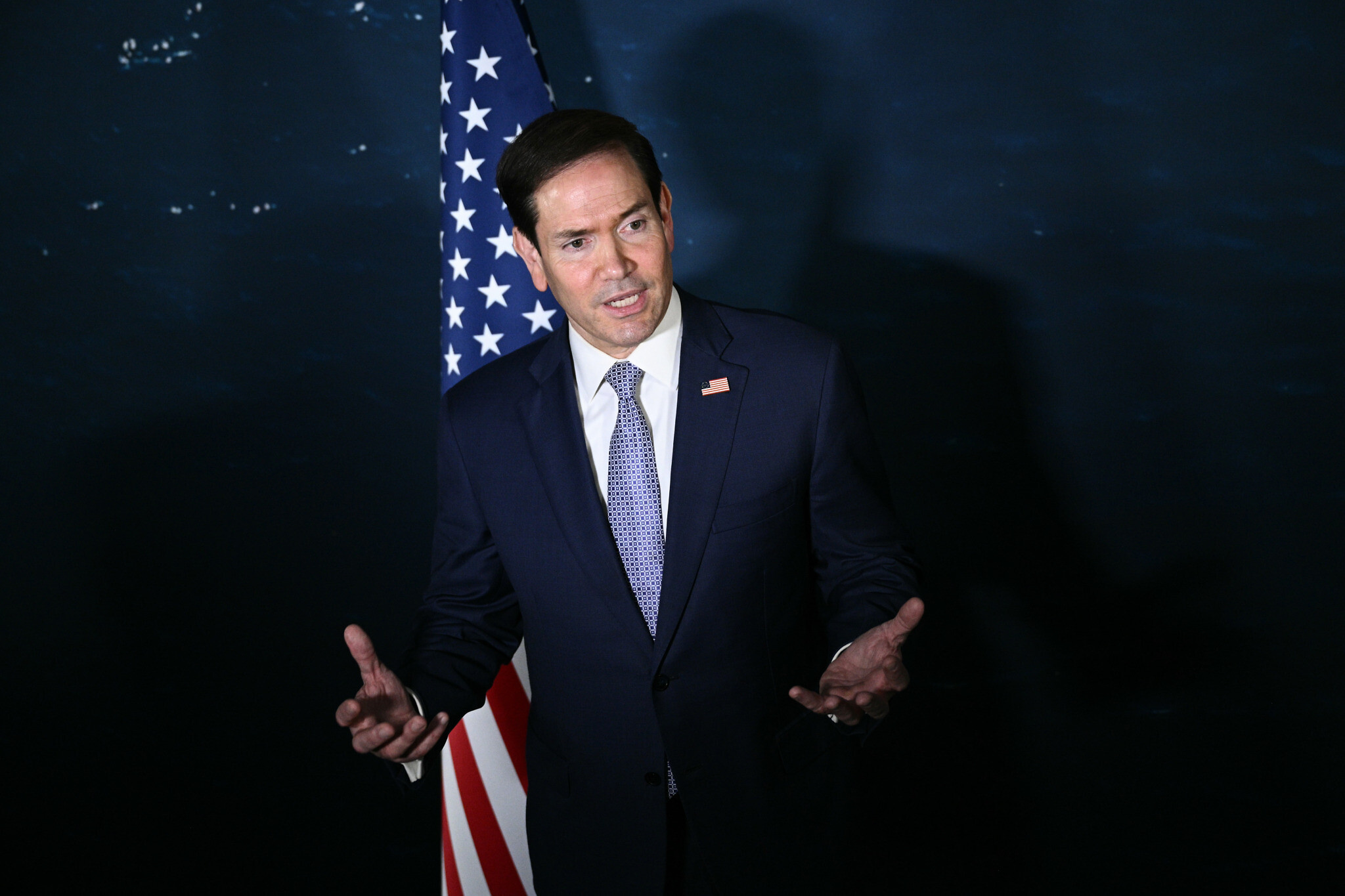
US Secretary of State Marco Rubio speaks during a press conference on the sidelines of the Association of Southeast Asian Nations (ASEAN) Foreign Ministers’ Meeting in Pasay, Metro Manila, Philippines July 22, 2026. (Brendan Smialowski/Pool via AP)
But Iranian Foreign Minister Abbas Araghchi said talks with the US could not progress due to Washington’s “domineering” stance in negotiations.
“The problem is the American approach, which is irrational, excessive, and domineering,” he told state media on the sidelines of talks between Iranian President Mahmoud Pezeshkian and Iraqi Prime Minister Ali al-Zaidi.
“Until they understand that there is no alternative to respecting Iran’s people and their interests, there will not be the conditions for progress,” he added.
He indicated there was no point in negotiating or exchanging messages until then. “They simply need to reconsider their policies,” Araghchi said.
Iran attacks Jordan, Kuwait
The Jordanian military said four Iranian ballistic missiles and six drones launched from Iran at the kingdom were intercepted on Thursday.
Iran has been carrying out near-daily attacks on Jordan in the past week.
Iran’s Revolutionary Guards said earlier that it targeted a radar for the US THAAD missile defense system, a Patriot system, a C-RAM radar and a helicopter hangar in Jordan, according to a statement aired by state TV.
And Kuwait’s army said the Abdali border crossing with Iraq was hit by a drone attack on Thursday, causing material damage but no casualties.
Located in Kuwait’s northern Al-Jahra Province, Abdali is the country’s main land border crossing with Iraq and a key route for passenger and commercial traffic between the two countries.
Iran said this morning it carried out drone attacks on bases in Kuwait hosting US military assets, saying it hit warehouses, fuel tankers and an ammunition depot at three bases in the Gulf country.
It said US strikes hit a border crossing between Iran and Iraq, killing two people.