
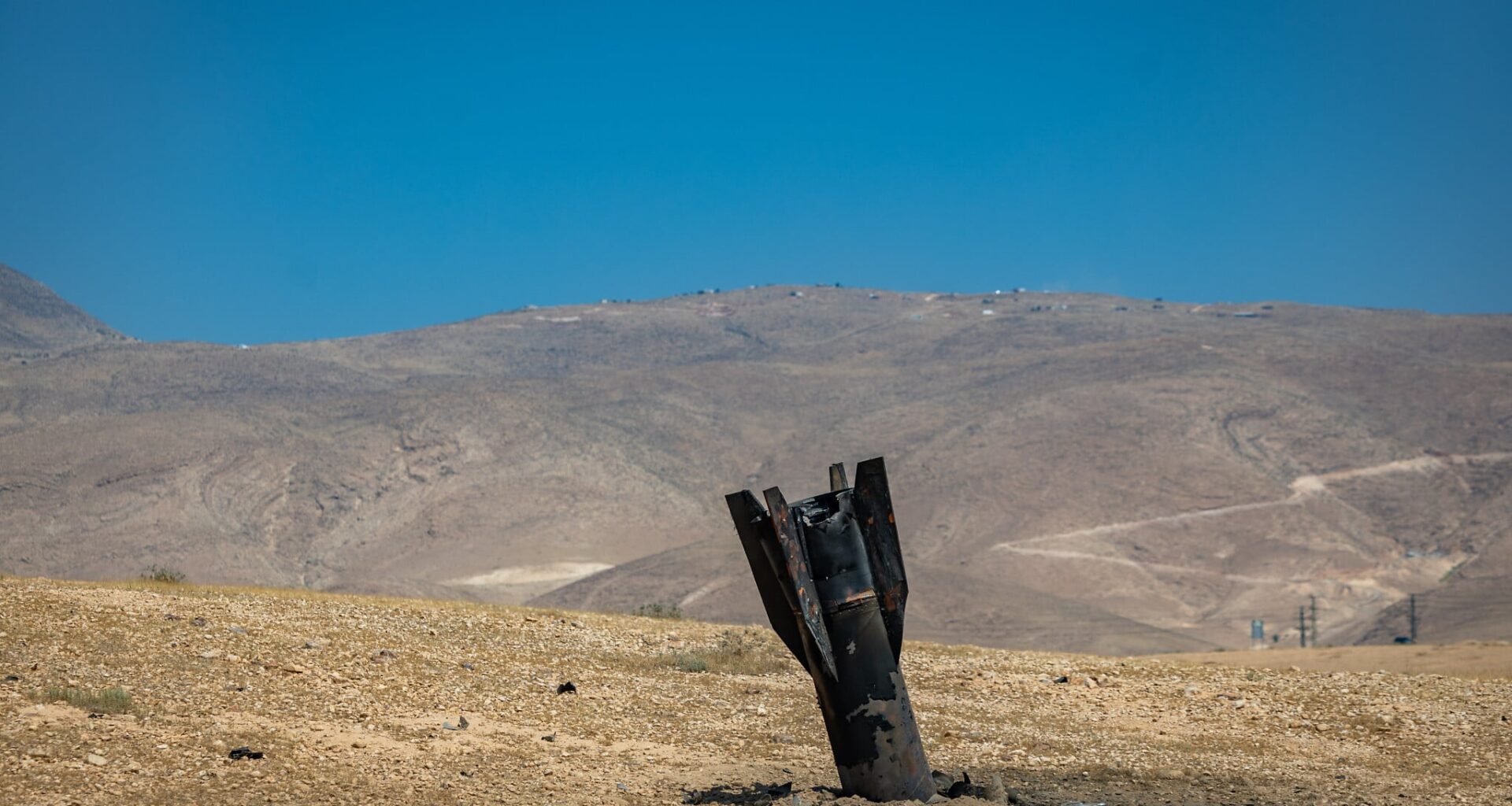
Iran is increasingly relying on its Kheibar Shekan ballistic missile in its regional attacks, all the while adapting and enhancing its capabilities to better evade air defenses, The Wall Street Journal reported Saturday.
The Kheibar Shekan, or Kheibar-buster, is named after a Jewish castle overrun by Muslim warriors in the early days of Islam.
It has a range of 1,450 kilometers (900 miles), making it fully capable of reaching Gulf nations and Israel. Its ability to be quickly deployed and launched has helped the Iranians avoid air strikes during the war by the Israeli and US air forces as they hunted for and eliminated launch sites.
The report said Iranian forces have been using the missile in recent attacks on US assets in the region in recent weeks, as fighting restarted, often varying its trajectory, speed, and maneuvering to complicate interception efforts. Some models of the missile are able to perform last-minute maneuvers in the final stage of flight, helping them avoid interceptors.
A US official speaking to the paper said most Kheibar Shekan missiles launched at the region have been successfully shot down, but some have been able to punch through defenses using such advanced methods, indicating the Iranians are studying interceptions and learning how to better circumvent them.
Get The Times of Israel’s Daily Edition
by email and never miss our top stories
By signing up, you agree to the terms
Missile expert Fabian Hinz told The Journal that Tehran “has seen what types of maneuvers are the most effective ones for overcoming missile defense. Every single combat use gives you some sort of data, so that’s very useful for the Iranians.”
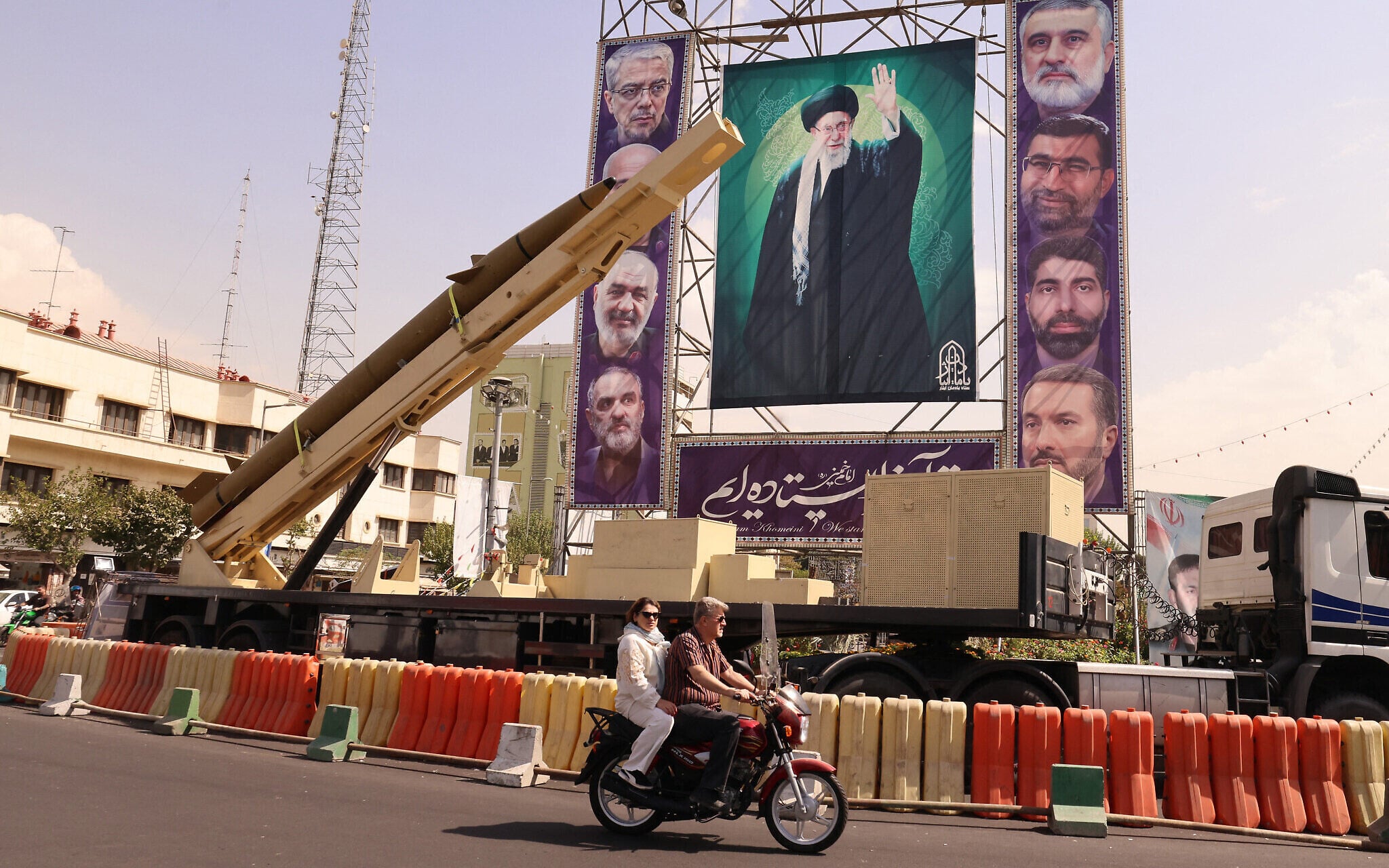
A man rides his motorcycle past a deactivated Kheibar Shekan ballistic missile in front of a picture of Iran’s Supreme Leader Ayatollah Ali Khamenei in Tehran’s Bahrestan Square on September 27, 2025, as part of an exhibit to mark the ‘Sacred Defense Week’ commemorating the 1980-88 Iran-Iraq war. (ATTA KENARE / AFP)
Despite intense Israeli and American efforts to destroy Iran’s ballistic missile capabilities during this year’s war, Iran is believed to retain significant capabilities.
In April, shortly before a temporary ceasefire was announced in the fighting, Channel 12 news reported that the Israeli military believes Iran still had more than 1,000 ballistic missiles that could reach Israel, citing an Israeli Air Force intelligence officer.
In late May, the network reported that Iran had resumed production of ballistic missiles, launchers and other critical weapons systems far faster than initially expected, citing updated US intelligence assessments and a senior Israeli official.
According to that report, Tehran restarted manufacturing using surviving components, improvised underground facilities, and partially restored production lines, with assistance from Russia and China.
The report said Israeli defense officials assessed Iran could significantly ramp up ballistic missile production within about a year, or possibly sooner. Channel 12 reported that updated intelligence assessments also indicated that roughly two-thirds of Iran’s missile launchers remained operational, contradicting earlier wartime estimates that about half had been destroyed.
During most of the war, Iran would fire some 10-15 missiles at Israel a day. Though this allowed Israel’s air defenses to intercept most of the missiles, limiting damage and casualties, it also preserved Iran’s capabilities for the long term while keeping Israelis repeatedly running to shelters every day for weeks, exhausting the home front.
The April ceasefire put a stop to the Iranian barrages, but Tehran has increasingly targeted Gulf nations in recent weeks as the conflict has erupted once more, and Israel is increasingly braced for the possibility it will be drawn into the fighting.
AP and Stav Levaton contributed to this report.
We can’t do this work alone.

The war with Iran has been draining for all of us in Israel. But when I heard about a high casualty incident – ballistic missile impacts in Arad and Dimona that left nearly 200 people wounded – I drank a cup of coffee, packed a bag, and headed south.
There, I spoke with Shilgit, the head of an after-school program for underprivileged youth. Standing outside her destroyed center, Shilgit said it was a miracle that no children were hurt and spoke about the community coming together in the hours since.
As a Times of Israel reporter, I’m committed to telling stories of resilience like Shilgit’s. But my colleagues and I can’t do this alone. If you value work like this, please consider joining our reader support group, The Times of Israel Community. Your financial support is essential to keep real human reporting like this going.
— Stav Levaton, military reporter
Already a member? Sign in to stop seeing this
You’re a dedicated reader

That’s why we started the Times of Israel – to provide discerning readers like you with must-read coverage of Israel and the Jewish world.
So now we have a request. Unlike other news outlets, we haven’t put up a paywall. But as the journalism we do is costly, we invite readers for whom The Times of Israel has become important to help support our work by joining The Times of Israel Community.
For as little as $6 a month you can help support our quality journalism while enjoying The Times of Israel AD-FREE, as well as accessing exclusive content available only to Times of Israel Community members.
Thank you,
David Horovitz, Founding Editor of The Times of Israel