
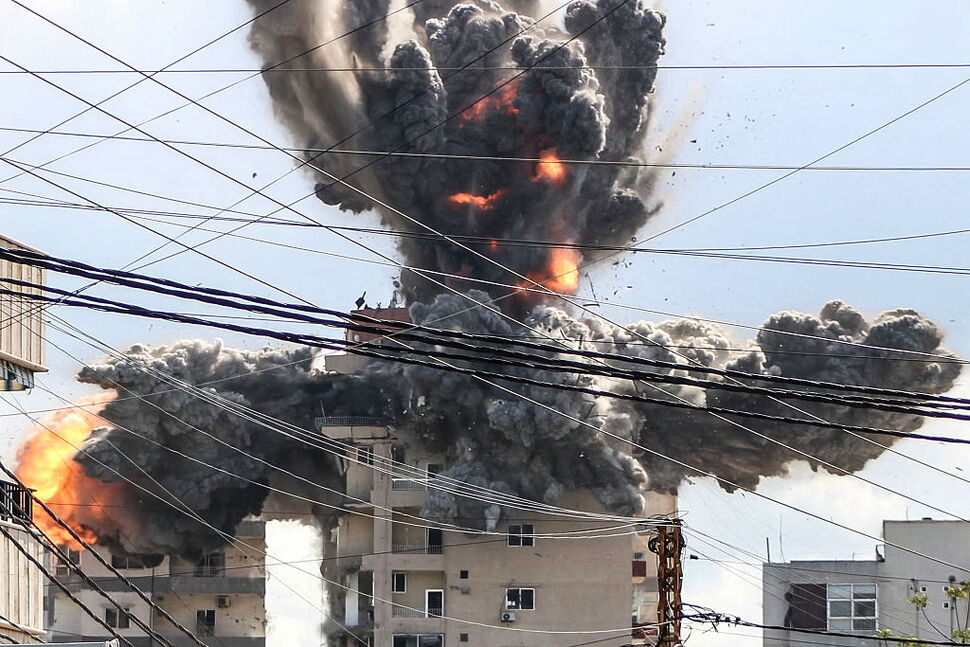
Six months have passed since the United States and Israel launched an attack on Iran, pointing to the nation’s continued nuclear capabilities as an existential threat.
Make Your Inbox Smarter
Sign up for these free email newsletters from U.S. News:
Pick Newsletters
President Donald Trump ordered the military campaign without seeking congressional approval and engaged U.S. forces well beyond the 60-day time limit authorized in the War Powers Resolution, which spells out the limitation on the presidential use of American troops without lawmakers’ approval. That has made the war itself hotly debated as unconstitutional.
Despite the adoption of two nonbinding congressional resolutions demanding an end to the conflict – resolutions that garnered the support of four Republicans who broke from their party to support the measure seeking to restrict Trump’s powers – Congress has been unable to halt the war.
So with each day, the cost of the war climbs – for everyone involved.
The Human Toll: 8,975-18,309 Deaths
While an official number has not been made public, the independent think tank Military Spend has estimated that between 8,975-18,309 military and civilian deaths, citing reports out of the U.S., Iran, Israel, Lebanon and elsewhere.
The death toll of U.S. service members rose this month, with 18 killed since the start of the war. This week, the family of Sgt. Angel Rampersad, 28, will hold a vigil for her in Ozone Park in the New York City borough of Queens.
And while Defense Secretary Pete Hegseth has insisted that U.S. forces are not targeting civilians, ordinary Iranians have paid the price.
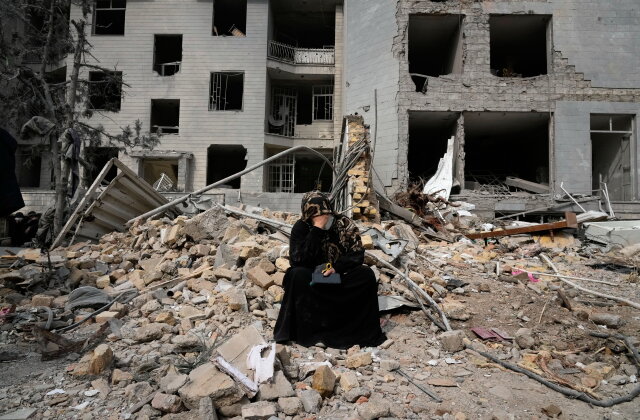
Investigations have concluded that the United States was responsible for a strike that killed dozens of civilians. On Feb. 28, the first day of the war, a girls elementary school in Minab, Iran, was struck multiple times. The attack killed 156 civilians, including 26 teachers and 120 school girls. The strike occurred on a school day as parents were picking up their children.
Hegseth has repeatedly said he would investigate the attack, which was condemned by the United Nations Human Rights Council, UNESCO and Amnesty International. CNN reported this month that no such investigation has begun.
The Cost: $37.5 Billion
The Department of Defense spent nearly $2 billion dollars a day in the first six days of the war. Since then, the total cost of the war has ballooned to $37.5 billion, according to Hegseth’s latest estimate Tuesday.
That money has been spent on military equipment, missiles and support for some 50,000 troops in the war zone. Hegseth asked for an “urgent” additional $88 billion last week, when he testified before Congress. The funding request comes amid reports of shortages of precision munitions and depleted stockpiles of sophisticated weaponry as a result of the war. The Pentagon has downplayed the reports.
Photos: War in Iran
The Cost to Consumers: $74.7 Billion
The estimated burden on consumers in gasoline and diesel fuel sat at $74.7 billion as of Monday afternoon, according to the Brown Climate Solutions Lab. Gas prices, which have risen to over $4 a gallon, have surged between 37%-43% along with diesel prices – an inflation effect that could soon make headwinds in sectors like home heating.
The rising prices are a direct result of the war’s effect in driving up oil prices. Disruptions in supply through the critical Strait of Hormuz have driven the global price of crude oil over $100 a barrel. And while the price has retreated when a ceasefire seems within reach, it has soared again with each new escalation of hostilities. Shipping costs also have surged as fuel prices in the international supply chain skyrocket.
Smog has become a daily fixture of the sky in Iran, as the war has been branded a climate war.
A study by Queen Mary University estimated that the first 14 days of the Iran war generated more than 5 million tons of carbon dioxide equivalent – and within a month had outpaced the carbon emissions of Iceland for a year.
Support for the War: 30%
Public opinion currently sits at a 30% overall approval for the Iran war, a low that it took six years to hit for the deeply unpopular war in Vietnam and a figure that resembles Trump’s own approval numbers. As days pass with rising human tolls and economic disruption, the American public has rapidly soured on the war.
Veterans have been split, with some continuing to stand by the Trump administration, and others pointing to the history of past conflicts which posed heavy American tolls.
“It is 100% unnecessary. It is unconstitutional. Literally, our own Congress didn’t even approve of this,” Chris McFarland, a veteran who served in Iraq and Afghanistan who leads the nonprofit advocacy group Veterans for All, told The Associated Press. “This was done without anyone’s acknowledgement at 3 in the morning to murder people over in Iran.”