
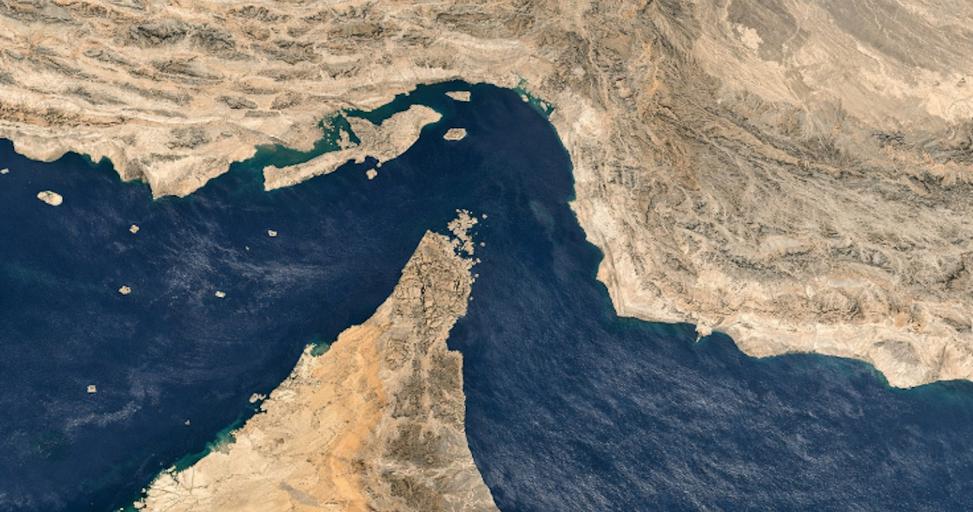
Kazem Gharibabadi, Deputy Foreign Minister of the Islamic Republic, announced on Tuesday that Tehran had rejected Oman’s proposal to divide transit routes through the Strait of Hormuz equally and had instead submitted a temporary plan to Muscat to reopen the waterway.
Speaking to Iranian state television, Gharibabadi stated that Oman had proposed designing the shipping lane so that 50% would fall under Iranian control and the remaining 50% under Omani control. However, the Islamic Republic deemed the plan insufficient.
“We stated that this does not address Iran’s concerns,” Gharibabadi said.
According to the Deputy Foreign Minister, Tehran countered with a temporary proposal under which vessel traffic would follow a single route passing through Iranian territorial waters, with portions of both the inbound and outbound routes located within Iran’s waters.
Gharibabadi also emphasized that the Islamic Republic’s policy is to ensure that the Strait of Hormuz “never returns to its pre-war state,” warning that any European warship approaching the strait would be considered a “legitimate target” by Tehran.
He added that Oman had also suggested allowing a third country to conduct mine-clearing operations in the southern portion of the Strait of Hormuz, a proposal that Tehran likewise rejected.
In another part of his remarks, the Deputy Foreign Minister dismissed the possibility of negotiations with the United States, stating that, over the past 15 days, the Islamic Republic had made no requests to engage in talks with Washington.
He claimed that it was the US that had sought negotiations through Oman, sending messages assuring Tehran that it would not pursue military action against the Islamic Republic.
Gharibabadi further asserted that a naval blockade of Iranian ports would not force the regime to the negotiating table, adding: “Since the 1979 Revolution, we have lived under the most extensive sanctions and have learned how to endure severe economic pressure.”
Earlier, Reuters reported, citing an informed source, that Oman had presented a framework to establish a joint regional mechanism for managing the Strait of Hormuz, funded through voluntary transit fees or tolls. According to the report, the proposal enjoyed support from several regional nations and avoided placing exclusive control of the strait in Iran’s hands.
The Strait of Hormuz, which had reopened following a memorandum of understanding between Iran and the United States, faced renewed restrictions on maritime traffic after hostilities flared up again between the two countries in July. At the same time, the United States resumed its naval blockade of Iranian ports. These developments came even as US President Donald Trump spoke of continuing positive talks with Iran, while officials of the Islamic Republic denied participating in any negotiations with Washington.