
Investors have mostly shrugged off a re-escalation in the US-Iran war. Since tensions flared again in early July, sending Brent Crude prices up as much as 20%, the S&P 500 has remained roughly flat.
While there are renewed hopes for a peace deal, there are certain “red lines” to watch for in the war to know when to start to de-risk your stock portfolio, according to market research firm MRB Partners. While there are several potential red line scenarios, two of them stand out as “edging closer to reality,” the firm said in a July 24 client note.
“The war in the Middle East is far from being over, and may yet trip up risk asset markets and the global economy. While the most likely scenario is that a de-escalation will occur before the red lines are fully crossed, the probabilities of such dire outcomes have risen. Moreover, periodic hostilities will likely remain a fact of life for some time,” the firm wrote.
MRB’s first red line is US boots on the ground. Since the US has struggled to curtail the Iran’s ability to disrupt shipping in the Strait of Hormuz, the US could resort to taking over strategic points in and near the Strait.
That would likely lead to a further escalation in fighting, the firm said.
“Such troops would become targets for Iranian counterattacks, inviting heavy casualties and risking a military quagmire from which it will be very difficult to exit,” it said.
The second red line would be a closure of the Bab-el-Mandeb Strait, another narrow but critical stretch of water that connects the Red Sea to the Gulf of Aden, on the other side of the Arabian Peninsula.
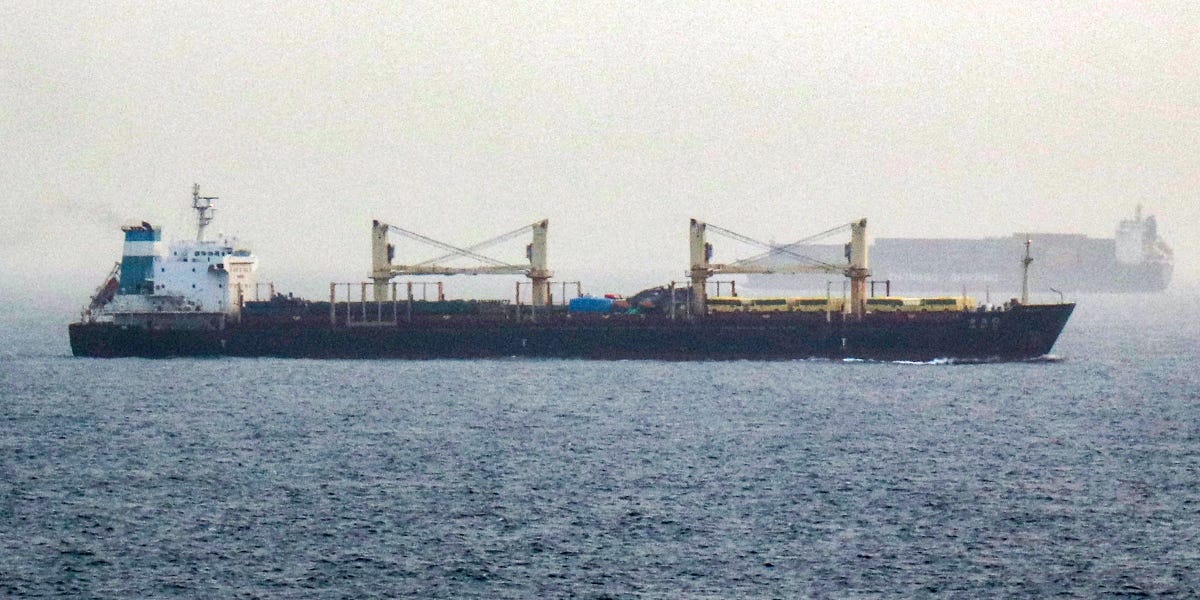
Bedirhan Demirel/Anadolu via Getty Images
It could be used as an alternative shipping route to the Strait of Hormuz, but the passageway puts ships into close contact with the coast of Yemen, which is controlled by Iran-backed Houthi rebels.
Houthi rebels have started to attack passing oil tankers in recent weeks, which is another risk to further escalation, MRB said.
“Should such attacks be sustained, the combination of this together with the Hormuz closure would return oil markets to the worst-case outcome of a loss of 20% of global supply,” the firm said. “Furthermore, the widening of the war risks pulling the US into fighting a second front, making any ceasefire negotiations immeasurably more complex.”