
By Matt Spetalnick
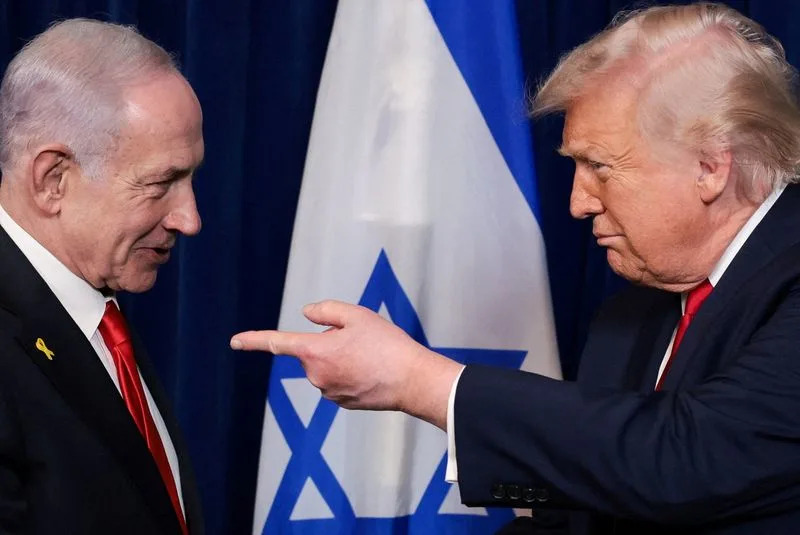
WASHINGTON, July 29 (Reuters) – U.S. President Donald Trump and Israeli Prime Minister Benjamin Netanyahu explored all possible paths to curb Iran’s nuclear program in their meeting, including diplomacy, economic pressure and force, a senior Israeli official said on Wednesday.
Netanyahu did not tell Trump that Israel’s preference now was for further attacks on Iran, the official said in briefings with reporters after the two men met in the White House on Tuesday.
“In the end, it’s his decision,” the official, speaking on condition of anonymity, said of Trump.
The U.S. president has three options and all were discussed at length, said the official, listing them as “a (negotiated) deal, continuing the blockade and economic pressures, and a massive strike.” Netanyahu also added unspecified new ideas to the mix, the official added.
Trump had voiced irritation with Netanyahu ahead of their meeting, complaining that details had surfaced publicly about the Israeli leader’s plans to talk about new intelligence on Pickaxe Mountain, a deep-underground, nuclear-linked facility that Trump has threatened to bomb.
Pushing back against any notion of tensions over the issue, the official said the two allies readily share intelligence, denied that Netanyahu had pushed Trump to escalate militarily against Iran and left open the possibility of a diplomatic solution.
At the same time, the Israeli official acknowledged that Trump is the “senior partner” while Netanyahu is the “junior partner” in the allies’ conflict with Iran.
The official said that there were signs Iran’s clerical rulers have been rattled by rising inflation and public frustration, but that the impact on the global economy and oil markets was also a consideration.
Oil prices shot up on Wednesday in one of the sharpest spikes since the war began on February 28, with a joint Israeli-U.S. aerial bombing campaign in Iran. Tehran responded with strikes on Israel and Gulf states.
Israel had not taken part in the latest two-week U.S. bombing campaign this month that provoked Tehran to fire on U.S. bases in response, but it has warned Tehran that it would respond forcefully if attacked.
Israel sees its biggest threat from Iran’s nuclear program and wants to be sure it can never get a nuclear weapon, the official said. Tehran has insisted it is not seeking a bomb.
On Wednesday, the United States and Saudi Arabia struck Iran-backed paramilitary groups in Iraq, and Trump vowed to “beat the fucking shit” out of Iran for firing on U.S. troops days after he halted air strikes.
Iran confirmed overnight that it had fired on U.S. bases in Jordan and at ships in the Strait of Hormuz, and also spurned an Omani proposal to jointly manage the strait.
(Reporting by Matt Spetalnick; Writing by Maayan Lubell; Editing by Bill Berkrot)