
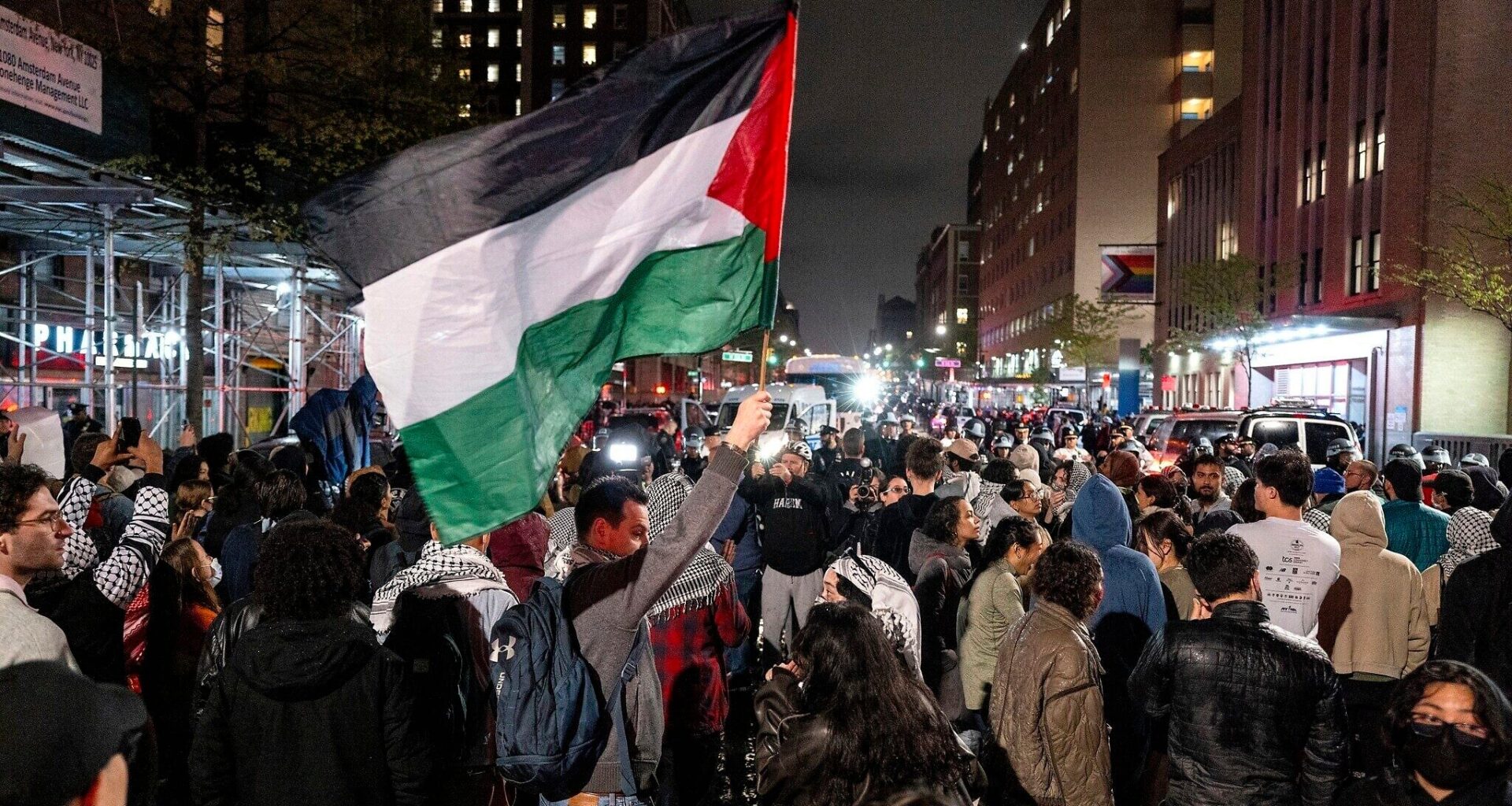
The student worker union at Columbia University on Tuesday gave up on its demand that the university divest from Israel, in a defeat for the protest movement that rocked the Ivy League campus after the start of the war in Gaza.
Student Workers of Columbia-United Auto Workers has been negotiating a contract with the university since last year.
The union had included sweeping demands, including that the university divest from companies in violation of “international law,” a measure targeted at Israel.
The demands led to a stalemate with the university and pressure on the student union from its parent organization, the United Auto Workers, to rein in its activist activity.
The student union dropped a contract article that had demanded divestment on Tuesday, The Columbia Spectator reported.
Get The Times of Israel’s Daily Edition
by email and never miss our top stories
By signing up, you agree to the terms
The move marked a major concession from the union, which had made anti-Israel activism a priority — as have other student unions and student governments in the US.
A union leader confirmed the dropped demand to The Columbia Spectator, acknowledging that the group had to “face the realities.”
The union says it represents more than 3,000 undergraduate and graduate student workers at Columbia.
The student union had previously endorsed the anti-Israel Boycott, Divestment and Sanctions (BDS) movement.
Last year, a Columbia investment committee rejected student protester demands that the university divest from Israel, saying some of the demands were too vague, that there was no consensus on campus, and that it was not financially viable.
We can’t do this work alone.

The war with Iran has been draining for all of us in Israel. But when I heard about a high casualty incident – ballistic missile impacts in Arad and Dimona that left nearly 200 people wounded – I drank a cup of coffee, packed a bag, and headed south.
There, I spoke with Shilgit, the head of an after-school program for underprivileged youth. Standing outside her destroyed center, Shilgit said it was a miracle that no children were hurt and spoke about the community coming together in the hours since.
As a Times of Israel reporter, I’m committed to telling stories of resilience like Shilgit’s. But my colleagues and I can’t do this alone. If you value work like this, please consider joining our reader support group, The Times of Israel Community. Your financial support is essential to keep real human reporting like this going.
— Stav Levaton, military reporter
Already a member? Sign in to stop seeing this
You’re a dedicated reader

That’s why we started the Times of Israel – to provide discerning readers like you with must-read coverage of Israel and the Jewish world.
So now we have a request. Unlike other news outlets, we haven’t put up a paywall. But as the journalism we do is costly, we invite readers for whom The Times of Israel has become important to help support our work by joining The Times of Israel Community.
For as little as $6 a month you can help support our quality journalism while enjoying The Times of Israel AD-FREE, as well as accessing exclusive content available only to Times of Israel Community members.
Thank you,
David Horovitz, Founding Editor of The Times of Israel