
Traffic in the Strait of Hormuz reached new lows on Friday as President Trump suggested that the path to ending the war and reopening the all-but-closed waterway could be weeks away.
Asked about the US efforts to degrade Iran’s ability to disrupt traffic in the strait, Trump was noncommittal, saying, “Well, you never know, most people would have given up by now,” as he acknowledged that Iran maintains some ability to launch attacks.
“They’re tough,” the president added, “so I give them credit for that.”
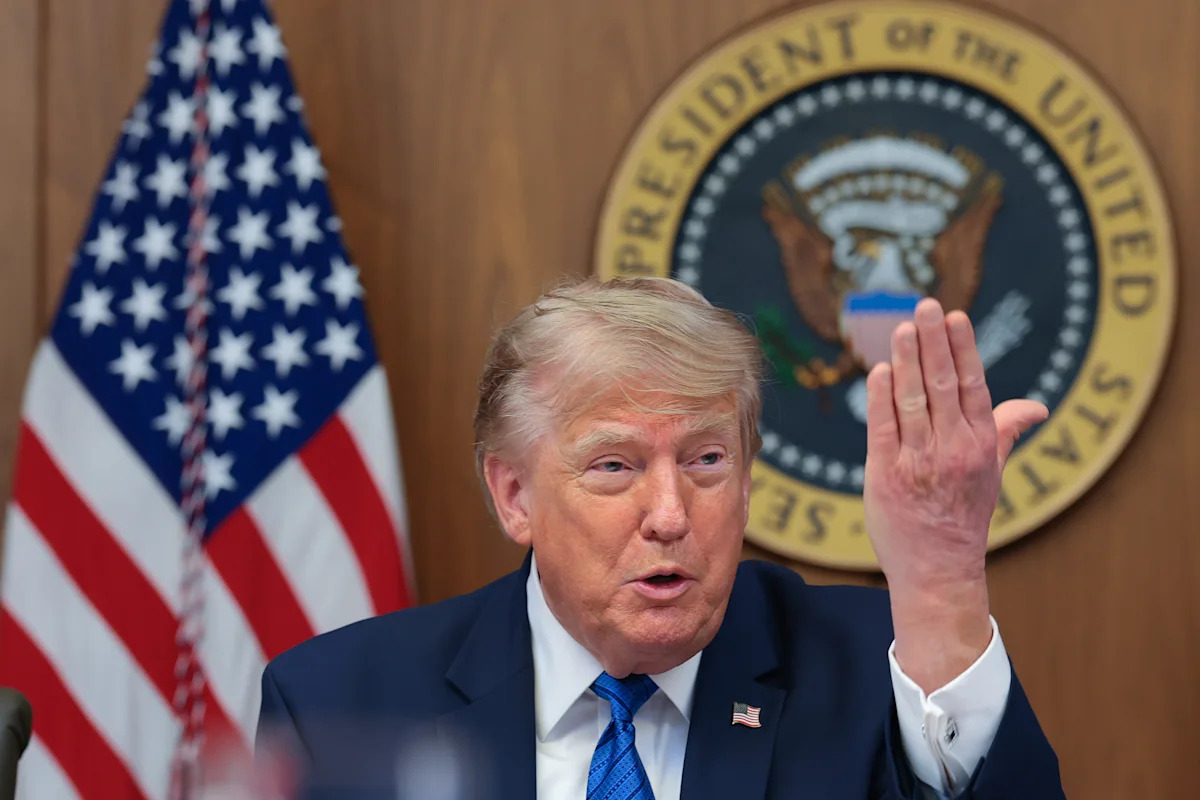
 President Trump answers questions from reporters during a Cabinet meeting at Camp David, the presidential retreat, on July 31. (Anna Moneymaker/Getty Images) · Anna Moneymaker via Getty Images
New data from ship-tracking service Kpler reported that Hormuz traffic has dropped sharply, with just five transits in the crucial waterway on Thursday .
The ships that did make a documented passage used a more northern route preferred by Iran, with no ships transiting a US-preferred route closer to Oman.
Prior to the war, more than 100 ships passed through the waterway on an average day, transporting about one-fifth of the world’s oil.
A brief ceasefire in June temporarily increased traffic, but the renewal of fighting in recent weeks has again closed the waterway, with daily traffic now in the single digits.
Also on Friday, Iran’s fledgling “Persian Gulf Strait Authority” — which could seek to impose tolls as early as this fall — claimed that US actions have meant that “passage through the Strait of Hormuz is not feasible” and that permits would be paused.
US officials quickly described the claim as false and said the waterway remains open for commercial vessel transit, though most shippers have decided to stay away.
A broad view of the Strait of Hormuz between southern Iran and Oman’s Musandam Peninsula which is one of the world’s most strategically important maritime chokepoints for global oil and commercial shipping. (Maps4media via Getty Images) · maps4media via Getty Images Attacks between the US and Iran could ‘get a little stronger’
Speaking during a Cabinet meeting on Friday at Camp David, the presidential retreat, Trump also pushed back on sour poll numbers and Americans’ worries about a slowing economy and stubborn inflation that have been linked to the ongoing war.
A Quinnipiac University national poll released earlier this week found just 28% of voters approve of the president’s handling of the war in Iran.
But the president said Americans should be ready for more tit-for-tat attacks in the weeks ahead.
“We’ll be hitting them very hard, and at some point they’re going to say, ‘We just can’t take it anymore,'” Trump said.
He also said he was “losing faith” in Iran when it comes to diplomatic talks and wouldn’t say if any more are scheduled.
The repeated comments suggest that no imminent end to the fighting is in the offing and came after weeks of attacks that the US military has repeatedly said are designed to address shipping worries.