
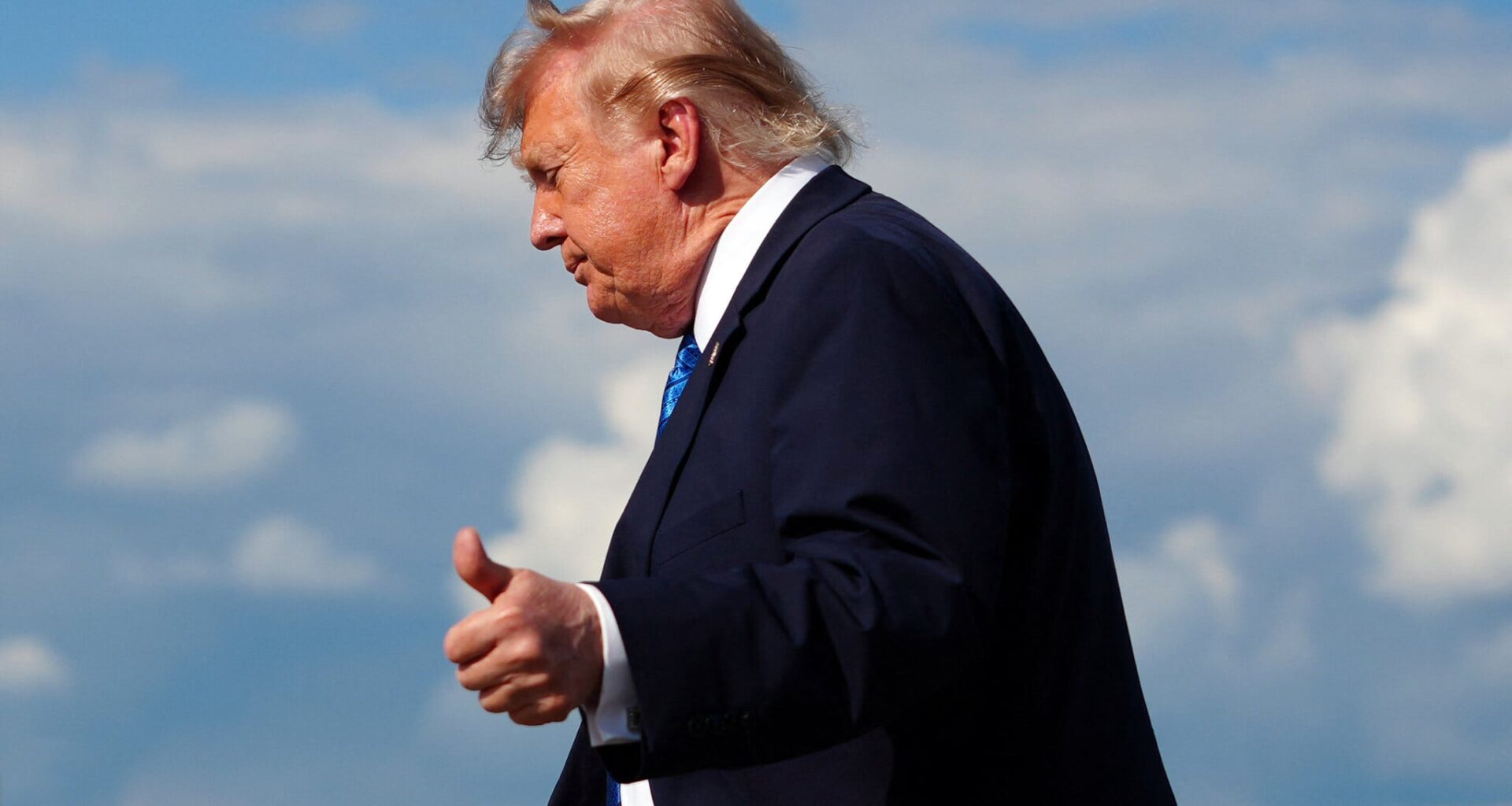
US President Donald Trump has ordered another wave of strikes against Iran, with the aim of forcing the Islamic Republic’s surrender, The Wall Street Journal reported early Saturday, with other reports suggesting Israel could take part in attacks expected to target Iran’s energy infrastructure.
Citing US officials, the report said the bombing was expected to last several days and could start as soon as this weekend.
Trump had earlier indicated that the US would be resuming hostilities.
“We’ll be hitting them very hard,” Trump said about Iran on Friday in an exchange with reporters during a cabinet meeting. “You know, at some point they’re going to say, ‘We just can’t take it anymore.’”
Asked if Americans should be prepared for the back-and-forth strikes between the US and Iran to continue, Trump responded, “A little bit.”
Get The Times of Israel’s Daily Edition
by email and never miss our top stories
By signing up, you agree to the terms
US embassies in Jerusalem and other Middle Eastern capitals later called on American citizens to avoid traveling to the region, and advised those in the Middle East to consider leaving or be ready to depart due to the “potential for unforeseen escalation.”
Security Alert: U.S. Embassy Jerusalem – August 1, 2026
Due to heightened tensions in the Middle East, the security environment remains complex with the potential for unforeseen escalation.
Americans currently in the Middle East should exercise caution and heightened vigilance… pic.twitter.com/lTAMRS9yKv
— U.S. Embassy Jerusalem (@usembassyjlm) August 1, 2026
“The Iranian regime is unpredictable, as seen by its recent decisions to attack areas in the region without warning or provocations as well as to expand attacks to areas not previously targeted (such as Egypt),” US embassies from Cairo eastward said in identical messages published on their respective websites.
Previous talks between the two parties following an April truce stalled, with the ceasefire collapsing about a month ago and Iran again obstructing the Strait of Hormuz, a vital conduit for the global supply of oil and gas.
Iran blockaded the strait early in the war, which began with US and Israeli strikes on the Islamic Republic on February 28.
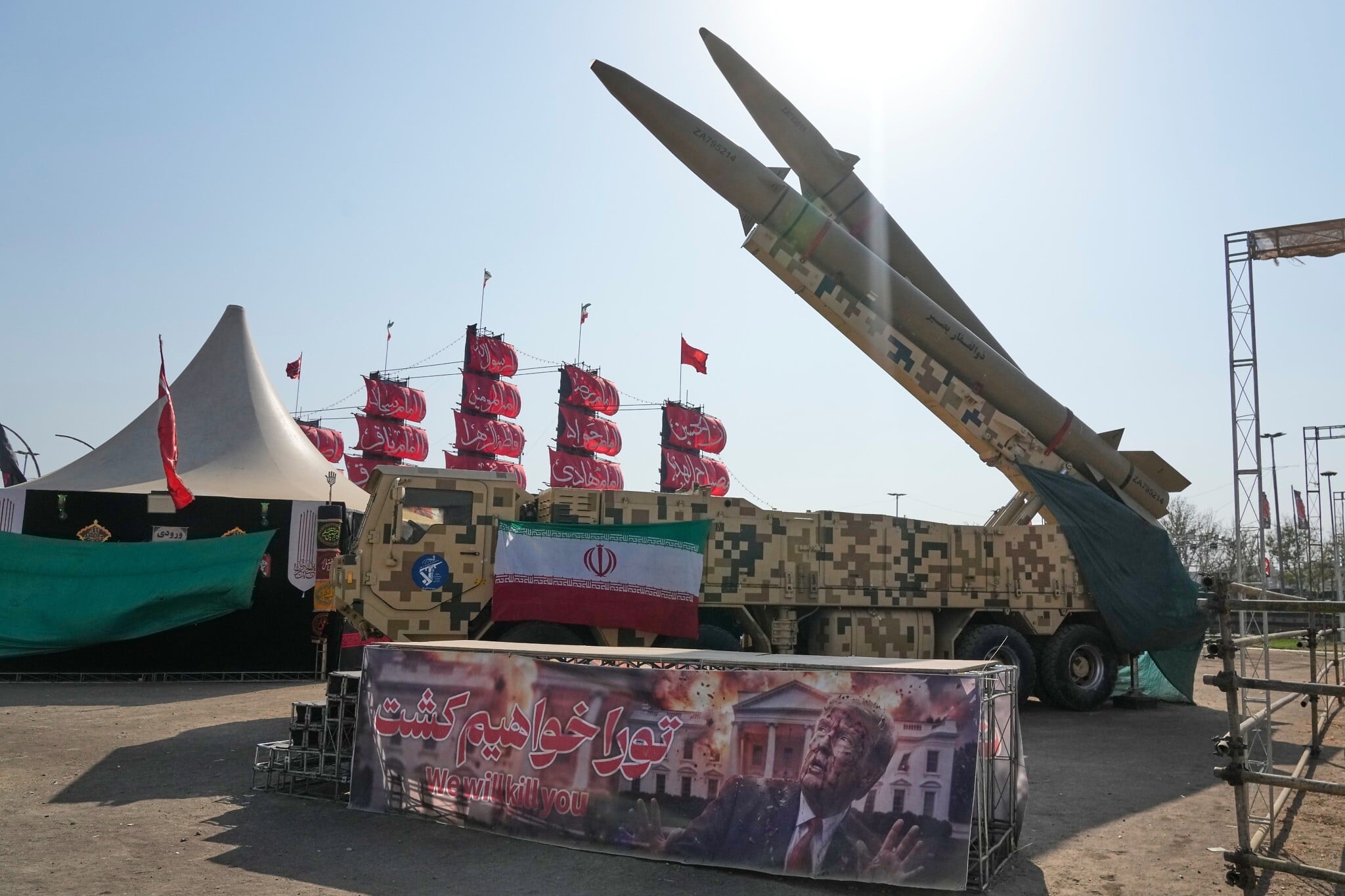
Iranian missiles are displayed by the armed forces as an anti-Trump banner declaring in English and Farsi, ‘We will kill you,’ is seen in a temporary exhibition at Azadi (Freedom) Square in Tehran, Iran, July 29, 2026. (AP Photo/Vahid Salemi)
A deal last month between the US and Iran partially reopened the strait, with future talks planned to resolve larger issues, including Iran’s nuclear program. But the agreement, which Israel was not a party to, collapsed in early July after Iran fired on vessels. Israel has also yet to participate in the current round of fighting.
Israel was not party to the understanding and opposes a halt to strikes on Iran that would leave its nuclear and missile programs intact.
Conflicting reports on potential Israeli involvement
Meanwhile, reports circulated about the possibility of Israeli involvement in the planned strikes.
CNN reported that there was no indication as of Saturday that Israel would participate in the potential offensive, after sources cited by CBS said the US and Israel were jointly planning an imminent bombing campaign on Iranian energy facilities.
ABC News cited a source as saying the strikes were discussed with Israeli officials, but that it remains unclear if Israel will be directly involved.
Prime Minister Benjamin Netanyahu visited the White House this week for his first in-person talks with Trump since the Iran war began in February, describing the meeting as an opportunity “to coordinate on things that are important for the security and for the future of Israel.”
Beyond those remarks, few details regarding the content of the discussions were made public. A senior official in the prime minister’s entourage told The Times of Israel shortly after the sit-down that they “talked about all arenas — primarily Iran.”
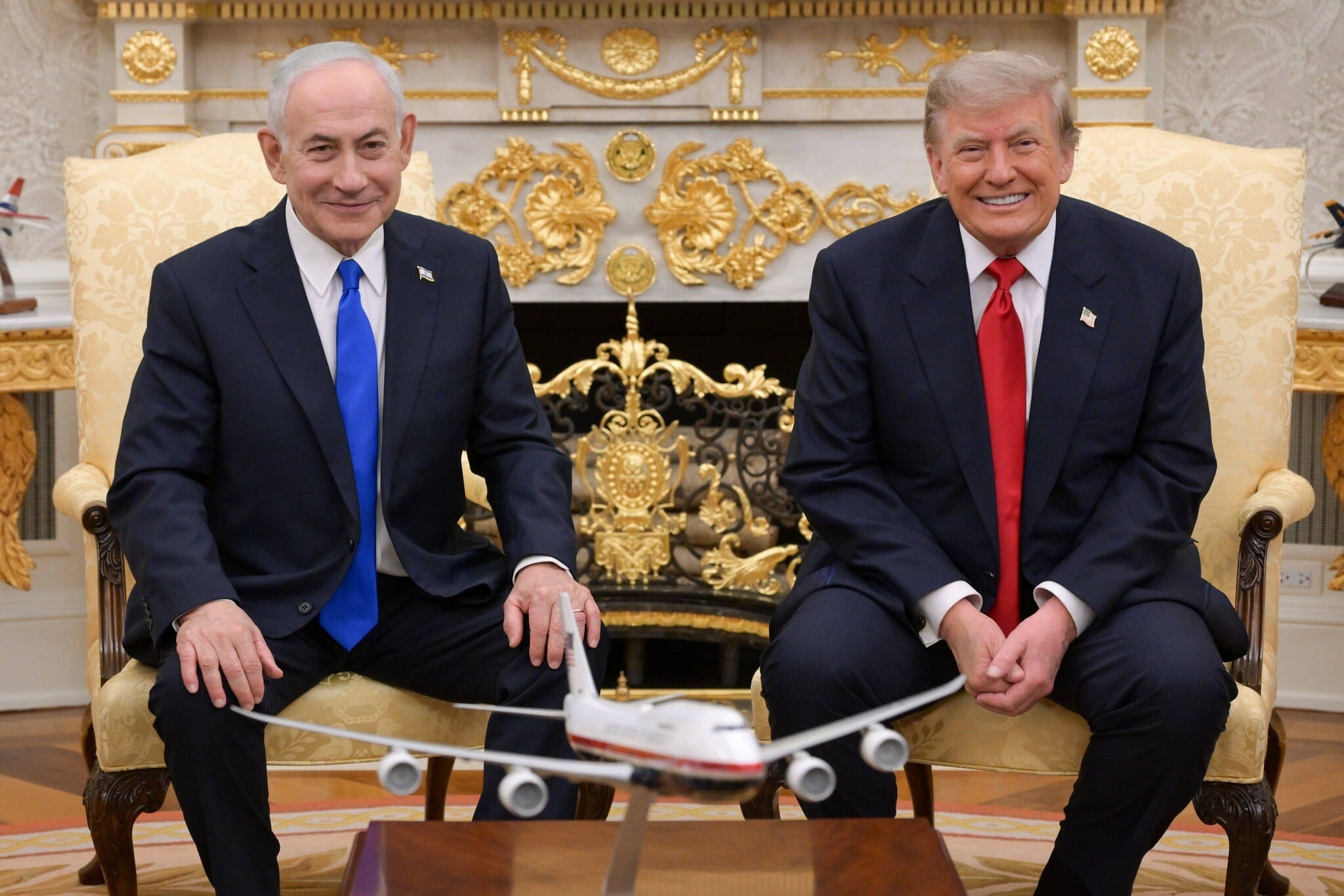
Prime Minister Benjamin Netanyahu (left) and US President Donald Trump meet in the Oval Office on July 28, 2026. (GPO)
Following the report of US attack plans, Iran’s military accused the US of “escalating tensions” in the Middle East, warning countries in the region against cooperating with Washington.
“The United States is rapidly moving down the path of escalating tensions in the region,” said Ali Abdollahi, head of Iran’s military central command. “Any country serving as a defensive shield for criminal and aggressive America will be engulfed by the flames of war.”
‘Insufficiently equipped to defend Israel’
With the resumption of hostilities potentially looming, The Washington Post reported that the head of the US military’s European Command, Gen. Alexus Grynkewich, sent the Pentagon a written warning this week that if he does not receive another Navy destroyer, he “will be forced to choose defense of the United States ‘homeland’ over that of Israel, according to officials.
The European Command coordinates operations in the Mediterranean Sea, where its vessels help shoot down projectiles launched at Israel from both Iran and Yemen’s Iran-backed Houthi rebels. Two of the European Command’s five Rota, Spain-based destroyers were stationed in the Mediterranean as of Friday, according to the newspaper.
On the other hand, the European Command is also responsible for protecting against potential Russian incursions into NATO territory and the threat posed by Russia’s long-range missiles, which can reach the US, the outlet noted.
Earlier this week, Defense Minister Israel Katz said that Israel “very much” wanted to strike Iran, but that the US “is not approving it at the moment because of the concern that Iran would attack neighboring countries, causing a global oil crisis.”
Iran’s army warned on Sunday that the Middle East war would widen if the US chose to press ahead with attacks on the Islamic Republic, with army spokesman Mohammad Akraminia telling state television that he believed Israel was trying to prod the US into resuming attacks.
Israel is presumably not the only target of Iran’s threats, as Saudi Arabia joined the US in striking Iran-backed militant groups in Iraq earlier this week.
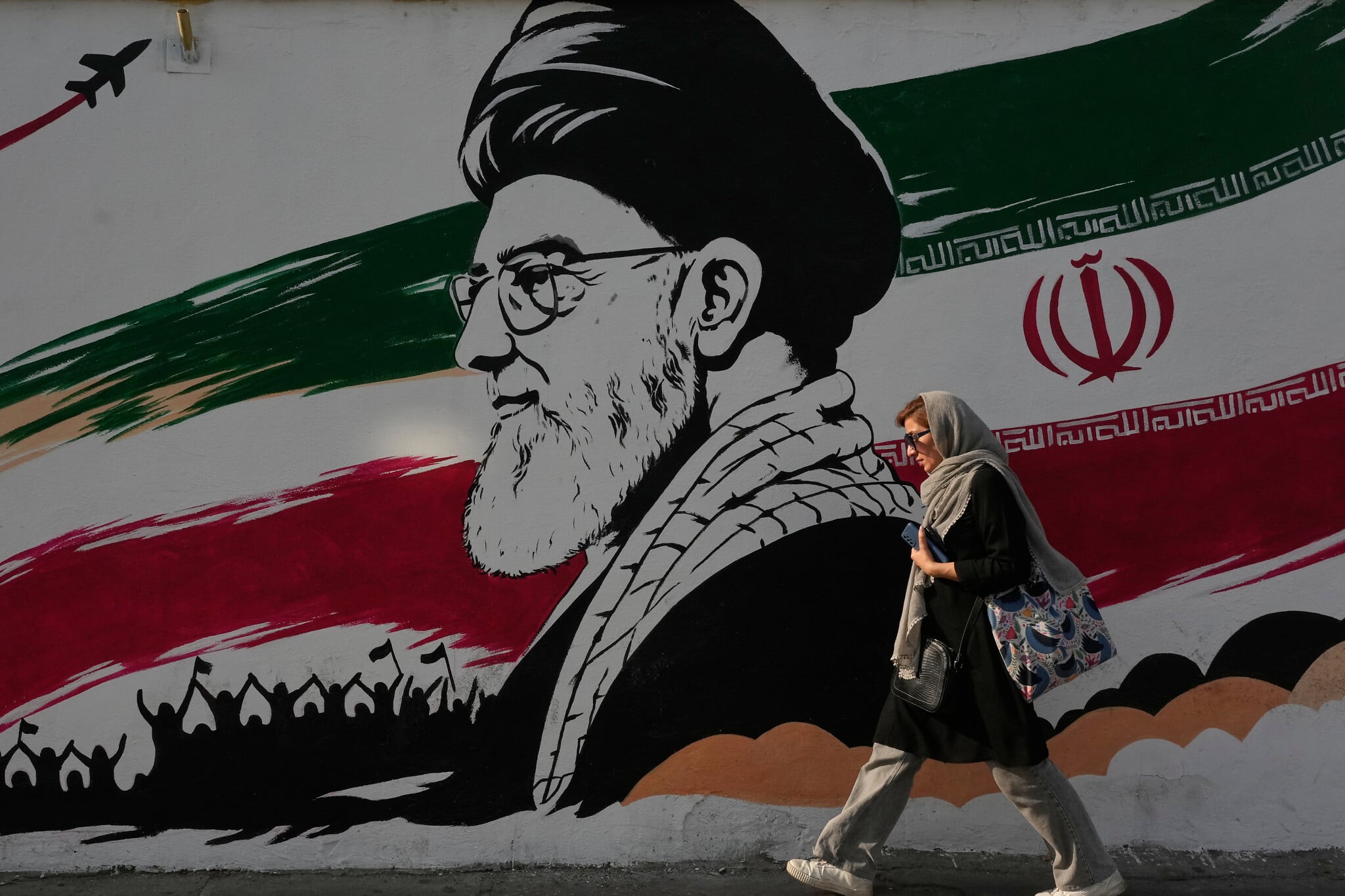
A woman walks past a mural depicting a portrait of the late Iranian Supreme Leader Ayatollah Ali Khamenei, who was killed in the US and Israel strike on February 28, at Azadi (Freedom) street in Tehran, Iran, July 29, 2026. (AP Photo/Vahid Salemi)
Kuwait intercepts Iranian drones
The US last struck Iran early Thursday, a day after Iran targeted American troops in the region with ballistic missiles. Mediator Pakistan insisted later that day that negotiations were ongoing. But Iranian strikes continued on Friday and into Saturday.
The Kuwaiti defense ministry said Saturday that it intercepted drones fired by Iran that targeted “vital” sites, including an unspecified government facility in the Gulf state’s north and vehicles of a civilian company on Kuwait’s Bubiyan Island.
Shrapnel caused some material damage, but no one was hurt, the Kuwaiti ministry said, vowing to “safeguard the sovereignty of the homeland.”
We can’t do this work alone.

The war with Iran has been draining for all of us in Israel. But when I heard about a high casualty incident – ballistic missile impacts in Arad and Dimona that left nearly 200 people wounded – I drank a cup of coffee, packed a bag, and headed south.
There, I spoke with Shilgit, the head of an after-school program for underprivileged youth. Standing outside her destroyed center, Shilgit said it was a miracle that no children were hurt and spoke about the community coming together in the hours since.
As a Times of Israel reporter, I’m committed to telling stories of resilience like Shilgit’s. But my colleagues and I can’t do this alone. If you value work like this, please consider joining our reader support group, The Times of Israel Community. Your financial support is essential to keep real human reporting like this going.
— Stav Levaton, military reporter
Already a member? Sign in to stop seeing this
You’re a dedicated reader

That’s why we started the Times of Israel – to provide discerning readers like you with must-read coverage of Israel and the Jewish world.
So now we have a request. Unlike other news outlets, we haven’t put up a paywall. But as the journalism we do is costly, we invite readers for whom The Times of Israel has become important to help support our work by joining The Times of Israel Community.
For as little as $6 a month you can help support our quality journalism while enjoying The Times of Israel AD-FREE, as well as accessing exclusive content available only to Times of Israel Community members.
Thank you,
David Horovitz, Founding Editor of The Times of Israel