
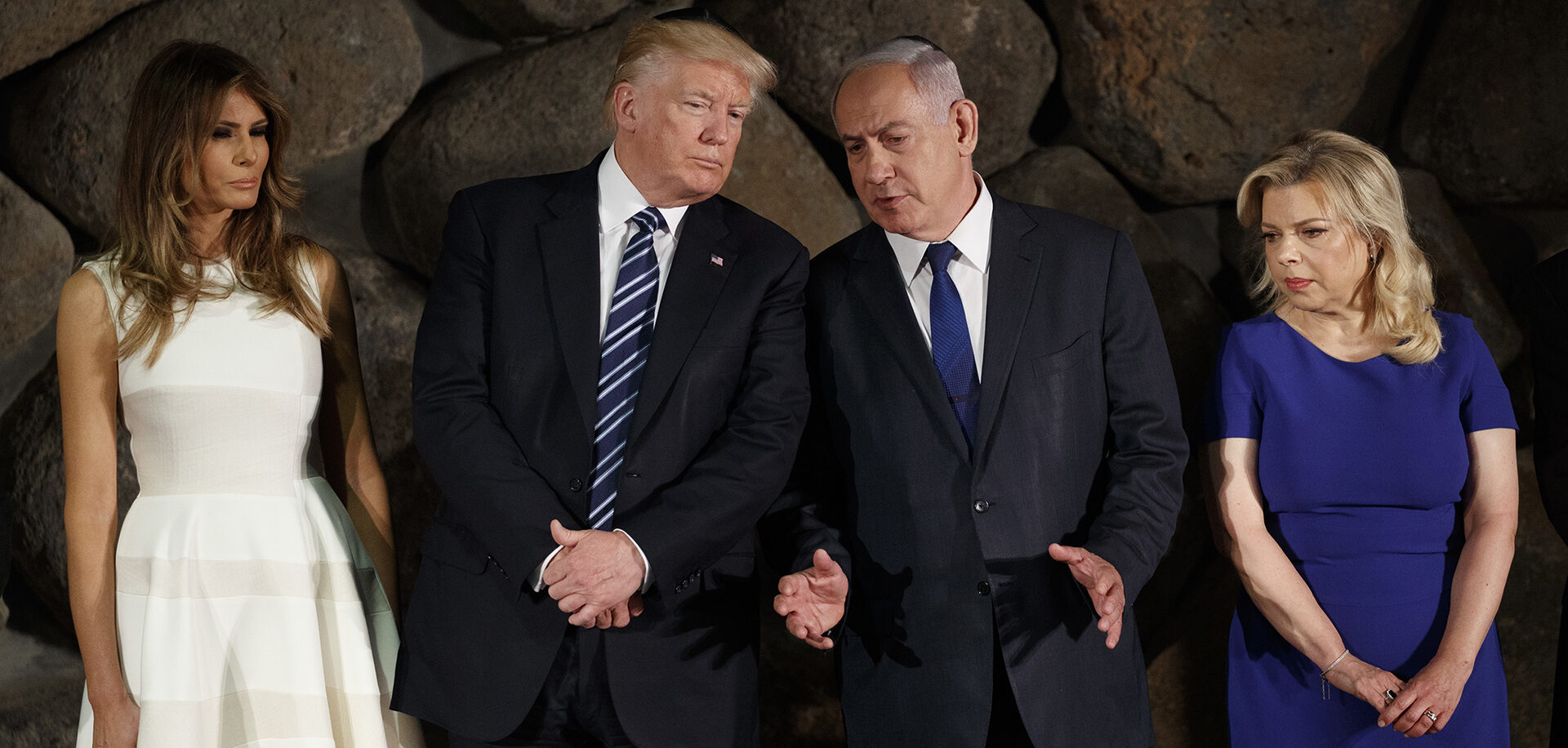
The timing may be right for a fresh look at the longstanding “special relationship” between the U.S. and Israel, the largest recipient of U.S. aid since the 1970s.
“Americans have increasingly negative views of Israel and its prime minister, Benjamin Netanyahu,” according to an April Pew Research Center report. Support plummeted as the war in Gaza killed 70,000 people and drew charges of war crimes from the International Criminal Court.
 Israel’s latest war with Iran, which President Donald Trump joined six months ago, makes clear that this special relationship is a bad deal for the U.S., claims Israel’s Lobby: America in the Grip of a Foreign Power.
Eli Clifton and Ian Lustick summarize the costs of that relationship: “The repeated sacrifice of American national interests, repeated betrayals of traditional American values, and repeated exposure of the United States to the risks of instability, war and loss of influence in the international arena.”
A small group of pro-Israel billionaire Jewish donors give unlimited political donations to a network of groups, led by the American Israel Public Affairs Committee, which had revenue of $156 million in 2024 and is the country’s second-most-effective lobbying group after AARP.
AIPAC money supports Israel’s agenda, not the agenda of American Jews, many of whom reject Netanyahu’s “radicalization of Israel’s domestic politics” and his unsettling impact om the region, say the authors.

Ian Lustick
The Trump-Netanyahu version of the special relationship is a prime example of the dangerous foreign entanglements first president George Washington warned his successors to avoid, they write. “The greatest story in geopolitics and in American domestic affairs is how the far-right government of a small Middle Eastern country came to hold a controlling interest in United States foreign policy.”
Israel has become a “rogue” and even “crazy state,” they write, and no matter what, the U.S. has become its lone global defender. This special relationship has contributed to “the failure of American foreign policy,” “our national distress,” and “our cultural polarization,” says Israel’s Lobby.
“Acting as a safety net for the consequences of Israel’s policies consumes resources, damages U.S. leadership on the world stage, weakens American condemnation of Russian aggression in Ukraine, feeds suspicion about Washington’s commitment to international law and multilateral institutions, and keeps the United States engaged in military conflicts in the Middle East.”

Eli Clifton
The U.S. Navy recently warned Israel that the war with Iran limits its ability to protect Israel from ballistic missiles.
While Israel’s Lobby dives deep into the Israel influence machine, it largely overlooks groups that receive Jewish donations and promote support for Israel to evangelicals as a way to save Western civilization and its Judea-Christian foundations from Islam and Marxism.
John Hagee’s Christians United for Israel, which claims 10 million members, gets only one glancing mention in the book. Turning Point USA gets two.
A decade ago, Jewish donors were some of candidate Donald Trump’s biggest supporters. In 2016, Trump ran on a platform that deleted any mention of a two-state solution for Gaza.
Once elected, Trump “enacted a series of wish list items for Israel, including a unilateral withdrawal from the Iran nuclear deal, recognition of Israel’s sovereignty over the Golan Heights … and the move of the U.S. embassy from Tel Aviv to Jerusalem,” say the authors.
The U.S. sold the beachfront embassy compound in Tel Aviv to Trump’s biggest Jewish donors, Sheldon and Miriam Adelson. They’ve continued their support in the second Trump administration, as he told a 2024 gathering of Jewish lobbyists: “Miriam and Sheldon would come into the White House probably almost more than anybody outside of people that work there. … As soon as I’d give them something, they’d want something else. I’d say, ‘Give me a couple of weeks, will you please?’”
“Israel’s Lobby shows how pro-Israel activists range far beyond politics to achieve influence.”
The Israel lobby also seeks to influence U.S. foreign policy by going after members of Congress it doesn’t like. U.S. Rep. Cori Bush lost her seat after AIPAC supported her primary challenger in 2024. This year, AIPAC spent $3 million opposing her effort to return to Congress.
Israel’s Lobby shows how pro-Israel activists range far beyond politics to achieve influence. One goal is “establishing, and enforcing, strict limits on the range of opinion that can be publicly voiced by American politicians, journalists and academics on topics pertaining to Israel and Palestine.”
While Israel has developed a defensive Iron Dome that protects it from inbound missiles, the Israel lobby has built a “verbal ‘Iron Dome’” that “protects Israeli officials from having to reassess or even defend the country’s policies and actions,” the authors contend.
The goal is not to win a debate but to shut it down before it begins. Trump has gone after universities for alleged antisemitism. The Israeli lobby has been doing that for decades.
Part of the verbal Iron Dome involves redefining anything anti-Israel as antisemitic. Some U.S. students have experienced this “criminalization of criticism of Israel’s policies,” while some foreign students have had their visas revoked.
With this expanded definition of antisemitism, the Anti-Defamation League nearly tripled its reports of antisemitism.
Israel’s Lobby releases Aug. 11.