
What better way to rebuild the Jewish people than with more Jewish children?
I returned recently from two and a half weeks studying at the Shalom Hartman Institute in Jerusalem with one overwhelming impression: Israel is under construction.
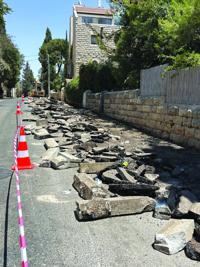
The evidence is everywhere. Construction cranes fill the Israeli skyline as apartment towers rise to address the country’s housing shortage. Roads have been torn open to make way for new light rail lines. In Tel Aviv, I walked through an entire city block awaiting demolition after an Iranian ballistic missile strike. In the Gaza Envelope, bulldozers and cement trucks moved steadily through kibbutzim devastated on Oct. 7, preparing the ground for families determined to come home and rebuild.

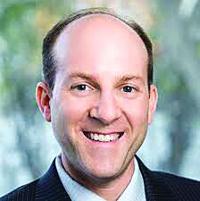
Rabbi Aaron Starr
Anyone who has ever lived through a renovation knows the experience. Dust covers everything. Walls come down before new ones go up. Rooms become temporarily unrecognizable. Progress often looks like disruption before it can become an even more beautiful home.
Israel today feels very much like that kind of renovation.
The construction extends far beyond buildings. After nearly three years of war, repeated missile attacks, reserve duty, evacuations and relentless political turmoil, Israelis themselves are rebuilding. Anger, grief and exhaustion are among the raw materials from which a post-Oct. 7 society is being formed. So are determination, faith and hope.
Throughout my visit, I heard the same sentiment expressed in different ways: many Israelis feel unseen. They wonder whether the world understands what it means to live under the constant threat of rockets, drones, terrorism and now ballistic missiles.
They wonder whether anyone outside Israel appreciates that Oct. 7 was not simply another tragic day in an ongoing conflict but a national trauma that fundamentally altered their sense of security. Many also feel increasingly isolated, wondering whether much of the world now sees Israel only through the lens of its most radical critics rather than through the fears and realities Israelis themselves experience.
Even with recent military successes, few Israelis believe the dangers have disappeared.
Residents of the Gaza Envelope are slowly returning home, often to newly rebuilt houses designed with reinforced safe rooms. Many communities in the north are unable yet to rebuild because of ongoing evacuations. The threat of air raid sirens hangs heavy every day throughout the country.
Perhaps that is why the deepest construction project now taking place may be within Israeli society itself. Everywhere I went, Israelis spoke passionately about the country’s future. Soldiers and reserve families questioned the fairness of military service in light of others’ refusal to serve. Religious and secular Jews debated their shared responsibilities. Palestinian citizens of Israel spoke about their desire to contribute more fully while also expressing frustration over inequality, crime and the persistence of extremism.
Nearly everyone I met believed the status quo could not continue. They were not simply debating today’s government. They were wrestling with tomorrow’s Israel.
Those conversations were often intense. They were also remarkably hopeful.
Despite everything they have endured, I encountered remarkably few Israelis interested in living as victims. Instead, I met people determined to build. The Start-Up Nation continues to innovate in medicine, defense, technology and artificial intelligence. Communities continue planting vineyards, opening businesses, teaching children, celebrating weddings and planning for the future. Israelis possess an extraordinary confidence that tomorrow is worth investing in, even when today remains uncertain.
What struck me most, however, were not the headlines but the ordinary moments. One morning in Tel Aviv, my wife, Rebecca, and I watched as a long-haired surfer stepped onto the balcony of his apartment wearing nothing more than a tank top and shorts. He admired his surfboard for a moment before pulling a tallit over his shoulders and wrapping tefillin around his arm and head for morning prayers.
In Jerusalem at the Hartman Institute, I shook hands with Jon Polin, father of murdered hostage Hersh Goldberg-Polin, who had come to hear a lecture on Zionism by the Israeli philosopher Micah Goodman. At Kibbutz Be’eri, Kibbutz Re’eim and Kibbutz Ein HaShloshah, I met people who had lost friends, neighbors and family members yet spoke not only about what had been destroyed but also about what they intended to build next.
Perhaps the most moving moment came during Shabbat dinner with Rebecca’s sister and her family in Jerusalem. Our niece, expecting her fifth child, smiled as we wished her b’sha’ah tovah. After all the loss of these past years, she told us, the Jewish people need more life. More joy. More hope.
What better way to rebuild the Jewish people than with more Jewish children?
In Psalm 118 we read, “The stone the builders rejected has become the chief cornerstone.”
Israel today is, in many ways, still under construction. Its buildings are rising. Its roads are being rebuilt. Its communities are healing. Its democracy continues wrestling with difficult questions. Its people are grieving, arguing, dreaming, praying and building. Perhaps the builders of Psalm 118 understood something timeless. The stones most easily dismissed are sometimes the very ones upon which the future is built.
Construction sites are rarely beautiful in the moment. They are noisy. Dusty. Inconvenient. They can even appear chaotic. But they exist because someone believes the finished structure will be worth the effort.
That is the Israel I encountered this summer: an Israel under construction.
May all its building projects be blessed.
Rabbi Aaron Starr is a spiritual leader of Congregation Shaarey Zedek in Southfield.
The Detroit Jewish News has been supported by readers like you since 1942. Support independent, local, Jewish journalism with a donation today.