
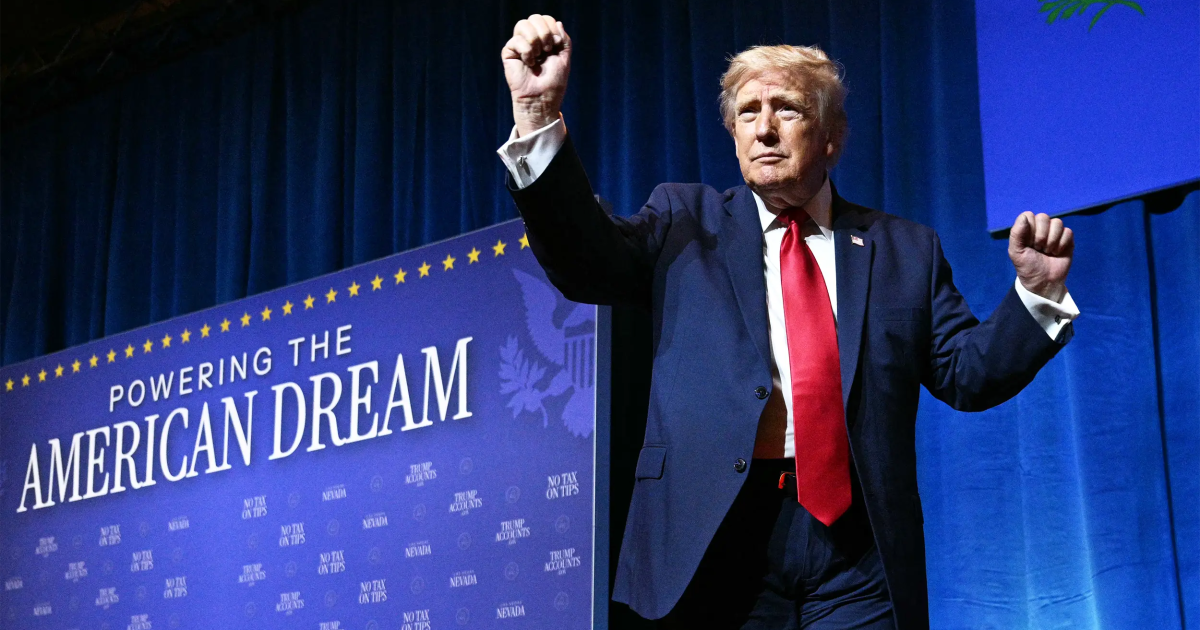
Long before becoming president of the United States, Donald Trump coveted other nations’ oil fields. In years past he’s talked about America seizing oil in Libya and Iraq after those wars ended, arguing that anything less than full-on resource acquisition was a boneheaded mistake. Trump seems determined to correct that supposed error in his second term — no matter the costs to his country and party.
At a rally in Las Vegas on Wednesday, Trump boasted that the U.S. is “taking a lot of oil from Venezuela.” Since the American military raid that deposed Venezuelan leader Nicolás Maduro and replaced him with a more obedient authoritarian in Delcy Rodríguez, the Trump administration has assumed effective control over the sale of Venezuelan oil and the revenue it generates.
“We paid for the war with what we’ve taken out many, many, many times. That’s the old-fashioned way,” he told the crowd. “To the victor belong the spoils, right?”
Politically, the president is struggling with his worst approval ratings of either term, due in no small part to his war with Iran raising gas prices.
The comments are a fresh reminder of a key principle of Trump’s foreign policy: Might makes right. It’s a modern spin on the 19th and early 20th century imperialism that exploited the resources of colonized regions and carved borders at a whim. It evokes the “jet-propelled technocrats” that Uruguayan journalist Eduardo Galeano singled out as a key group managing “mechanisms of plunder” in his 1971 book “Open Veins of Latin America.”
Trump spelled out this same belief verbatim in April when asked about his endgame with Iran and its sizable oil reserves. “To the victor belong the spoils,” Trump said at a White House news conference at the time. He also previously suggested in the early stages of the war that “when oil prices go up, we make a lot of money.” For Trump, oil is the ultimate prize to win. In his zero-sum world, he is the oilman-in-chief.
The president’s unyielding belief in displaying hard power against Venezuela, Iran and beyond, coupled with a conquistador’s appetite for plunder, does come with real consequences.
Play
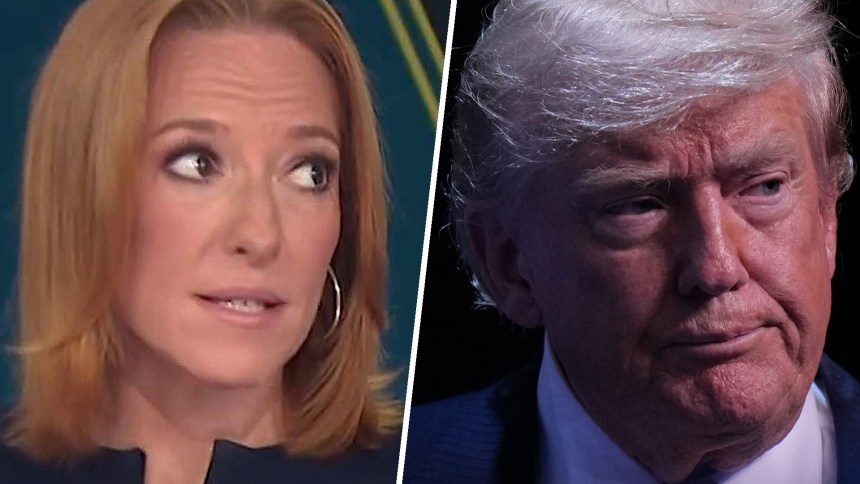
Politically, the president is struggling with his worst approval ratings of either term, due in no small part to his war with Iran raising gas prices. A Pew Research Center survey last month, for instance, gave him a 34% approval rating. He’s especially underwater when it comes to his management of inflation, with spiking gas prices largely to blame given their visibility. The national average price of a gallon of gas crossed into $4-per-gallon territory again just over two weeks ago — and most Americans blame the president for higher prices at the pump.
There’s also the human cost. Eighteen U.S. soldiers have been killed in the Iran war along with at least 1,700 Iranian civilians so far. The toll could well grow, given the apparent half-hearted attempts to move beyond the ceasefire into diplomatic negotiations that yield an end to the war.
Most large U.S. oil companies have been timid about expanding their operations in Venezuela.
It’s a good opportunity to take stock of how much the political landscape has changed since the last Republican president, George W. Bush, resided in the White House. In the run-up to the Iraq War in November 2002, Bush was asked by a reporter about his motivations in pursuing an invasion, including whether he coveted Iraq’s plentiful oil fields. “Those are the wrong impressions,” he responded.

Joseph Zeballos-Roig
Joseph Zeballos-Roig is a reporter who has covered economic policy and politics for Semafor, Business Insider and Quartz, among other publications.

© 2026 Versant Media, LLC
