
Your support helps us to tell the story
From reproductive rights to climate change to Big Tech, The Independent is on the ground when the story is developing. Whether it’s investigating the financials of Elon Musk’s pro-Trump PAC or producing our latest documentary, ‘The A Word’, which shines a light on the American women fighting for reproductive rights, we know how important it is to parse out the facts from the messaging.
At such a critical moment in US history, we need reporters on the ground. Your donation allows us to keep sending journalists to speak to both sides of the story.
The Independent is trusted by Americans across the entire political spectrum. And unlike many other quality news outlets, we choose not to lock Americans out of our reporting and analysis with paywalls. We believe quality journalism should be available to everyone, paid for by those who can afford it.
Your support makes all the difference.Read more
Benjamin Netanyahu has rejected Donald Trump‘s Gaza peace plan, insisting Israel will not withdraw until Hamas fully disarms.
The US president claimed last month that there had been a breakthrough in his plan to end the war, which both Israel and Hamas agreed to last year and which started with the ceasefire.
Trump said that Hamas, which ruled Gaza for nearly two decades before carrying out the October 7, 2023 attack on Israel that triggered the Gaza war, had agreed to lay down its weapons.
“Israel rejects the 15-point document,” Netanyahu said at a cabinet meeting on Sunday.
The Israeli military “will not carry out any withdrawal until Hamas is genuinely disarmed and will continue to thwart threats against our forces and our citizens,” he added.
The Israeli prime minister added he is now discussing with US officials about how to go forward, deeming some ideas “acceptable” while some “are not”.
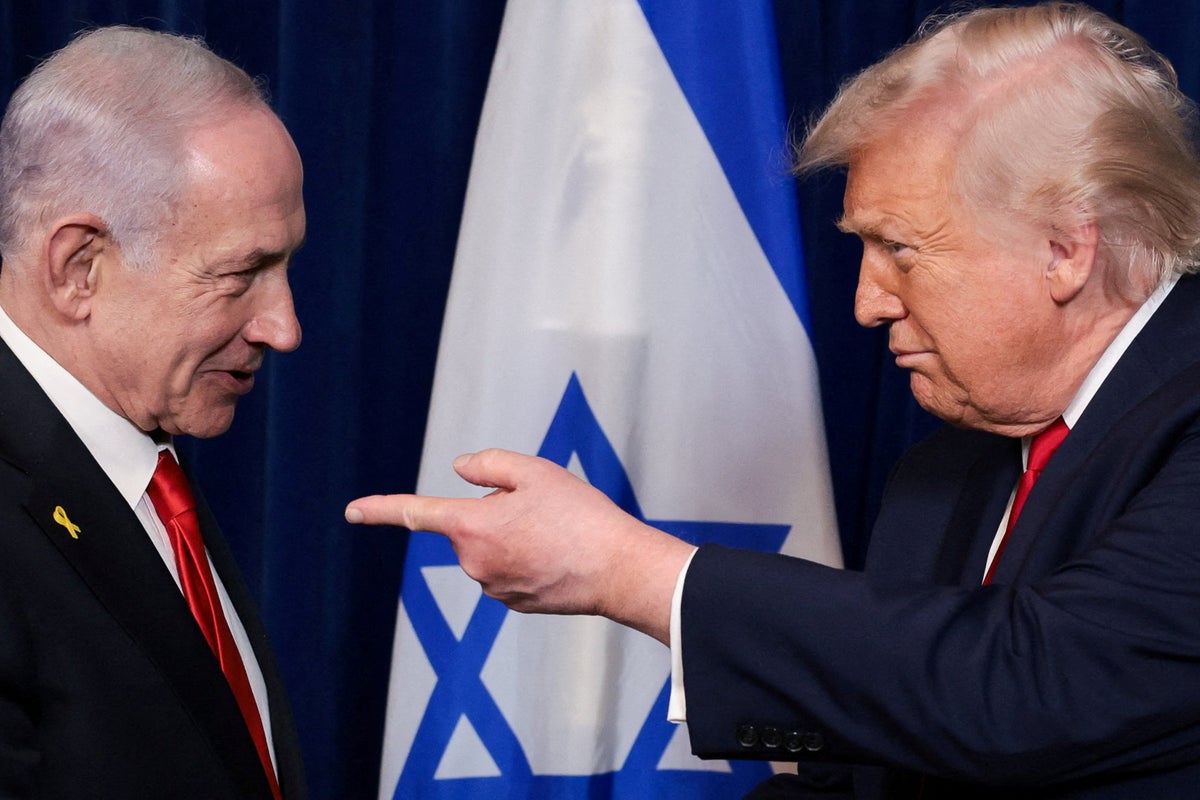
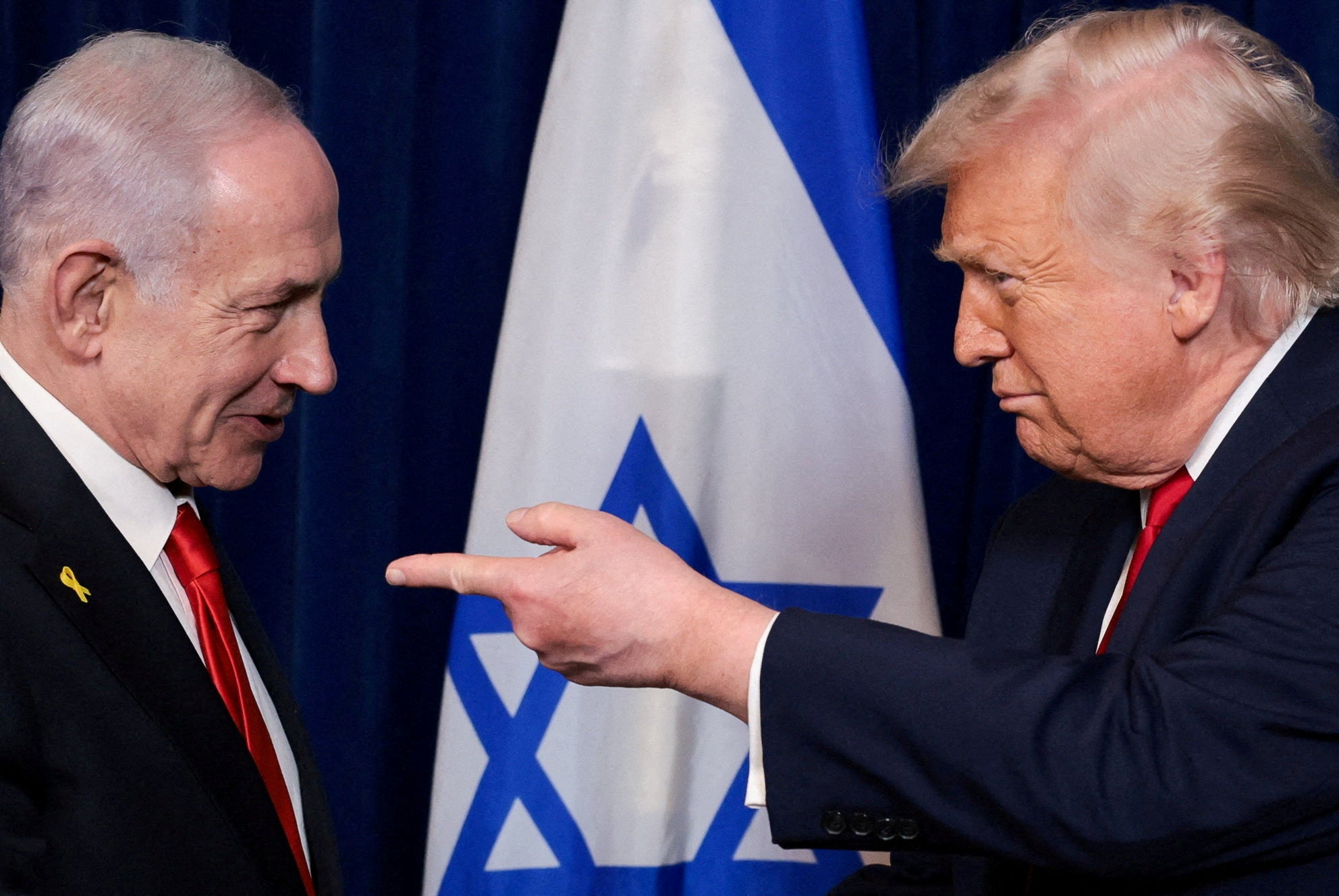 Benjamin Netanyahu has rejected Donald Trump’s Gaza peace plan (Reuters)
Last month, Egypt, which is mediating discussions between Israel and Hamas, said that both sides had agreed to a new 15-point roadmap and that a future meeting would be held in Cairo “to discuss implementation mechanisms”.
Trump had thanked Egypt, Qatar and Turkey for mediating the agreement and called the deal “historic”.
A senior Hamas negotiator said at the time that the group’s disarmament is conditional on Israel fulfilling its commitments under the agreement, including withdrawing from Gaza and allowing the establishment of a national committee and reconstruction efforts.
Senior Hamas official Ghazi Hamad said: “The agreement contains a clear provision stating that Israel must commit to and implement its obligations. If Israel does not implement the agreement, neither will we.”
 Gaza has been reduced to rubble after Israel’s relentless attacks of the strip (Reuters)
Israel’s rejection of the plan is a further block for Trump who announced his Gaza peace plan in September last year.
Just months away from Israeli elections, Netanyahu is unlikely to pull back from his hardline stance.
Last month, Netanyahu told his cabinet that he would not agree to requests from the US to withdraw troops from locations in Syria, Lebanon, and Gaza, according to Channel 13.
Sources told the broadcaster that Netanyahu said he would “stand on my own two feet and resist” amid growing pressure from the Israeli far-right for the military campaign to continue.
What is in Trump’s 15-point plan for peace in Gaza?
The deal included the total disarmament of Hamas and other groups in Gaza as well as the withdrawal of Israeli forces from the territory.
It also stipulates that Hamas and ‘other factions’ agree that “all civilian governance and security functions in Gaza shall be handed over” to a new technocratic body set up to run the enclave.
With that, the technocratic body will take over responsibility for handling “internal security incidents.”
The 15-point plan also says that that process will be “linked” to an Israeli withdrawal “in phases”, towards a complete withdrawal from the Palestinian enclave. There is no mention of a reconstruction process.
.jpeg) The Israeli PM is unlikely to pull back from his hardline stance ahead of the country’s elections (GPO)
The Israeli PM is unlikely to pull back from his hardline stance ahead of the country’s elections (GPO)
Under the initial deal to end the war, Israel was supposed to pull back to a demarcation termed the Yellow Line, separating 47 per cent of the land controlled by the Palestinians from the 53 per cent controlled by Israel. Israel was supposed to steadily withdraw from its position, but has instead increased its area of control to around two-thirds.
The Board of Peace on Monday had hailed a “constructive and detailed” meeting between Netanyahu, Israeli officials and Gaza envoy Nikolay Mladenov.
The Board noted that the full withdrawal of the Israeli military beyond the Yellow Line “will take place only once decommissioning is complete, as Hamas committed to the mediators”.
Hamas rejects the word “disarmament” but has said it will hand over its weapons for storage under the control of a US-backed Palestinian administration after Israel halts operations and withdraws its forces in line with last year’s ceasefire.
A conflict continues to surround the order in which Hamas and Israel implement their respective de-escalations.