
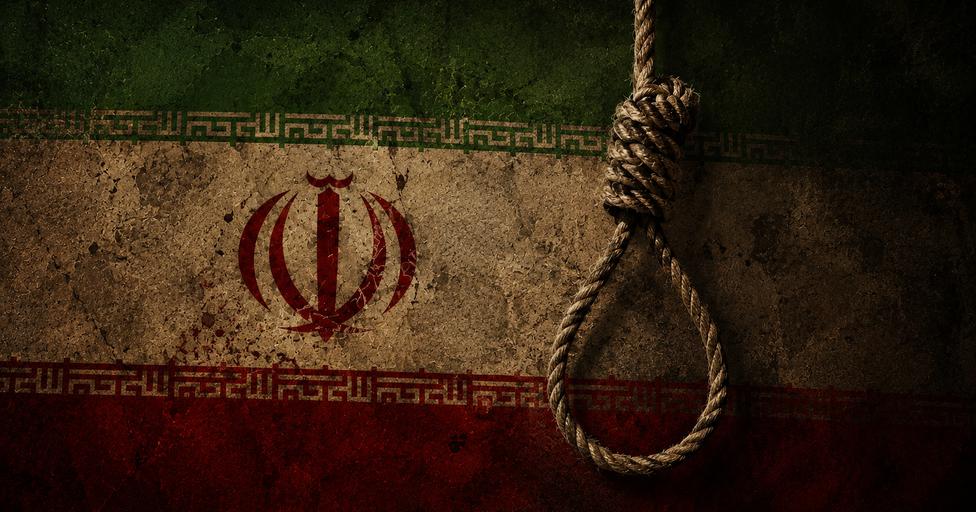
From February 28 to the time of this report, at least 12 people on espionage charges, 26 detainees from the January 2026 protests, two protesters from the “Woman, Life, Freedom” movement, and 13 political prisoners affiliated with opposition groups have been executed in Iran. The most recent cases were Omid Behzad and Pourya Safvat, two protesters accused of “espionage and intelligence cooperation with the Zionist regime,” whose sentences were carried out at an undisclosed location.
Following the executions of these two little-known young men, the judiciary released a video of their forced confessions.
In an interview with IranWire, Maryam Mirza, a journalist and women’s rights activist whose work focuses on documenting the stories of political prisoners executed following the January protests, examines the process behind issuing and carrying out these death sentences.
As a journalist, Mirza strives to tell the stories of those whose lives were cut short – individuals whom the judiciary, through the intimidation of their families, has sought to reduce to mere “names” and “numbers.” She highlights their hopes, their struggles, and the brief court sessions that led to their executions.
Writing about the fate of the forcibly disappeared, about individuals whose names were never heard until after their executions, about state-sanctioned killings where bodies are withheld from families, and about young people tortured into “confessing” so those very statements can be used to justify their death sentences, is a daunting task.
Yet journalist Maryam Mirza has chosen to focus on those executed during this specific period, a time when the regime has unleashed unprecedented violence, routinely taking the lives of protesters, opponents, and critics following the passage of the “Law Heavying Penalties for Spies and Collaborators with the Zionist Regime and Hostile States Against National Security.”
“The number of political executions linked to protests rose significantly after the 12-Day War and has increased further following the crackdown in January,” Mirza tells IranWire. “When I started writing, I hoped to document the lives of all those executed after the January protests, but I soon realized the sheer volume of cases was overwhelming, making it painful to keep pace.”
Giving a Face to the Executed
Mirza says her main objective, along with that of her colleagues, is to “give a face to those who have been executed.”
“In execution reports, we often hear that two people were executed, but only one name appears in the news,” she explains. “We try to document each individual separately with their photograph and life story, aiming to restore the humanity that the government stripped away from them. We want to show that they were human beings living under the same sky, with hopes, dreams, and unaddressed grievances.”
Mirza emphasizes that reducing the executed to mere statistics allows their cases to fade quickly from public memory, given the high number of convictions. “I focus directly on cases involving security and political charges,” she adds. “The natural human response to these cases is a feeling of powerlessness.”
Official Narratives Expose Perpetrators
Gathering information about executed individuals remains difficult despite informal sources such as social media, electronic search tools, and artificial intelligence. Mirza notes that the government intimidates not only the families of death row prisoners but also their defense attorneys.
“A critical part of this work involves reading the judiciary’s official narratives carefully, because they contain details that expose the perpetrators,” she observes. “For example, in a video re-enacting the crime scene of Mohammad Salehi, a 19-year-old and one of the earliest executed, the item placed in his hand as a weapon accidentally brushed against a bystander, and he immediately apologized. How can anyone believe the regime’s claim that he was involved in a horrific crime when he showed remorse for a minor, accidental bump?”
Distorted Narratives and Unannounced Executions
The Islamic Republic has a documented history of secret executions. In the 1980s, numerous political prisoners, including those serving defined sentences or nearing the end of their terms, were executed without public announcement, with families learning of the tragedy much later.
Highlighting the censorship surrounding execution cases, Mirza points out that official reports remain heavily controlled: “There is usually only one official account available, the judiciary’s. It publishes an execution report, and other state outlets copy it verbatim. In other instances, no official report is released at all, such as the execution of Arvin Kheirkhah in Shahroud, which was reported solely by human rights organizations and informal sources. This silence heightens concerns that others are being executed without any public announcement by the judiciary.”
Ruhollah Zam’s Words to the Interrogator: A Historical Record
Watching videos of forced confessions from death row prisoners brings immense pain. What the Islamic Republic proudly presents as evidence for issuing death sentences are videos that are blatantly edited.
“If anyone watches these videos, in many cases it becomes obvious that they have been cut repeatedly to splice words together,” says Maryam Mirza. “Or the accused makes vague statements like ‘Yes, I accept,’ but it remains completely unclear which charge they are accepting. Despite enduring harassment and torture to give forced confessions, many of them ultimately refuse to say on camera what the interrogators demand.”
According to the journalist, these videos contain specific keywords that reveal the statements were fed to the accused: “Many of them say, for instance, ‘Yes, I participated in the riots [eghteshashat].’ Ruhollah Zam’s response to the IRIB interrogator-journalist when he said, ‘You call it riots; we call it protests,’ became an enduring historical record. Every time an accused person uses the word ‘riots,’ it serves as a reminder that this is a forced confession: ‘My hands are tied, but those of you in the free world, do not forget me.'”
Execution Is an Irreversible Punishment
Gholamhossein Mohseni-Ejei, the Head of the Judiciary of the Islamic Republic, issued an order on March 29, mandating that all cases related to “cooperation with the U.S. and Israel” during wartime conditions be processed urgently and out of turn. During a meeting with members of the Supreme Judicial Council, Ejei called for accelerating these proceedings, emphasizing that maximum legal penalties, including execution and full asset confiscation, would be carried out without “leniency or compromise.” He claimed this step was necessary to “sever the espionage chain of the American-Zionist enemy.”
Reflecting on her personal experience covering these cases, Maryam Mirza shares: “Those executed during the 1980s massacres, or even earlier in Kurdistan, belonged to our parents’ generation. But every time I calculate the age of these recent young people, I realize they could have been our children, and that is deeply painful. I am among those who categorically say no to the death penalty. But even if execution is applied as a penalty, it is irreversible. A case must be examined thoroughly, transparently, and with sufficient time. Yet the Islamic Republic’s judiciary prides itself on killing these young people rapidly in minutes-long, opaque trials, leaving us with cases where the truth has been distorted, and several young lives have been lost.”
“I Want Us to Remember the Humanity Lost in Every Execution”
There was a time not long ago when the families of the executed were utterly alone, so isolated that even neighbors and close relatives remained unaware that a family member had been executed for political reasons or opposition membership.
Mirza believes we must constantly remember the humanity destroyed by every execution: “We should not limit ourselves to case files alone. The fact that Arvin Kheirkhah loved riding motorcycles is part of my report. For one of the executed individuals, I wrote that we know nothing about him; we do not know if he had a child or if someone was waiting for him at home. We must remember the dignity stolen from these individuals, because the Islamic Republic uses its narrative solely to convince us that the person was a terrorist, a traitor, or a mercenary. Our duty is to know them as they were – as people who lived beside us – even if they have been executed.”
Public Reaction to Capital Punishment
During the public execution of three individuals convicted in the “Alikhani Square” case in Isfahan, videos emerged showing citizens protesting in the streets. At dawn, traditionally the time executions are carried out in the Islamic Republic, the sound of hooting and shouting from the crowd could be heard.
According to Mirza, this reflects a shifting public attitude toward capital punishment: “This shows that people have become more sensitive and are less inclined to accept the official narrative. Even so, as journalists, our focus must remain on reiterating the unfairness of the courts, the denial of legal representation, the absence of neutral, transparent reporting, and the regime’s censorship of facts.”
Addressing the view held by many that violence should be processed through a proper court, the journalist concludes: “We must continuously highlight the reality of these judicial proceedings so the public understands the nature of the courts issuing these sentences, courts that, rather than delivering justice, serve as one of the largest instruments of injustice in Iranian society.”