
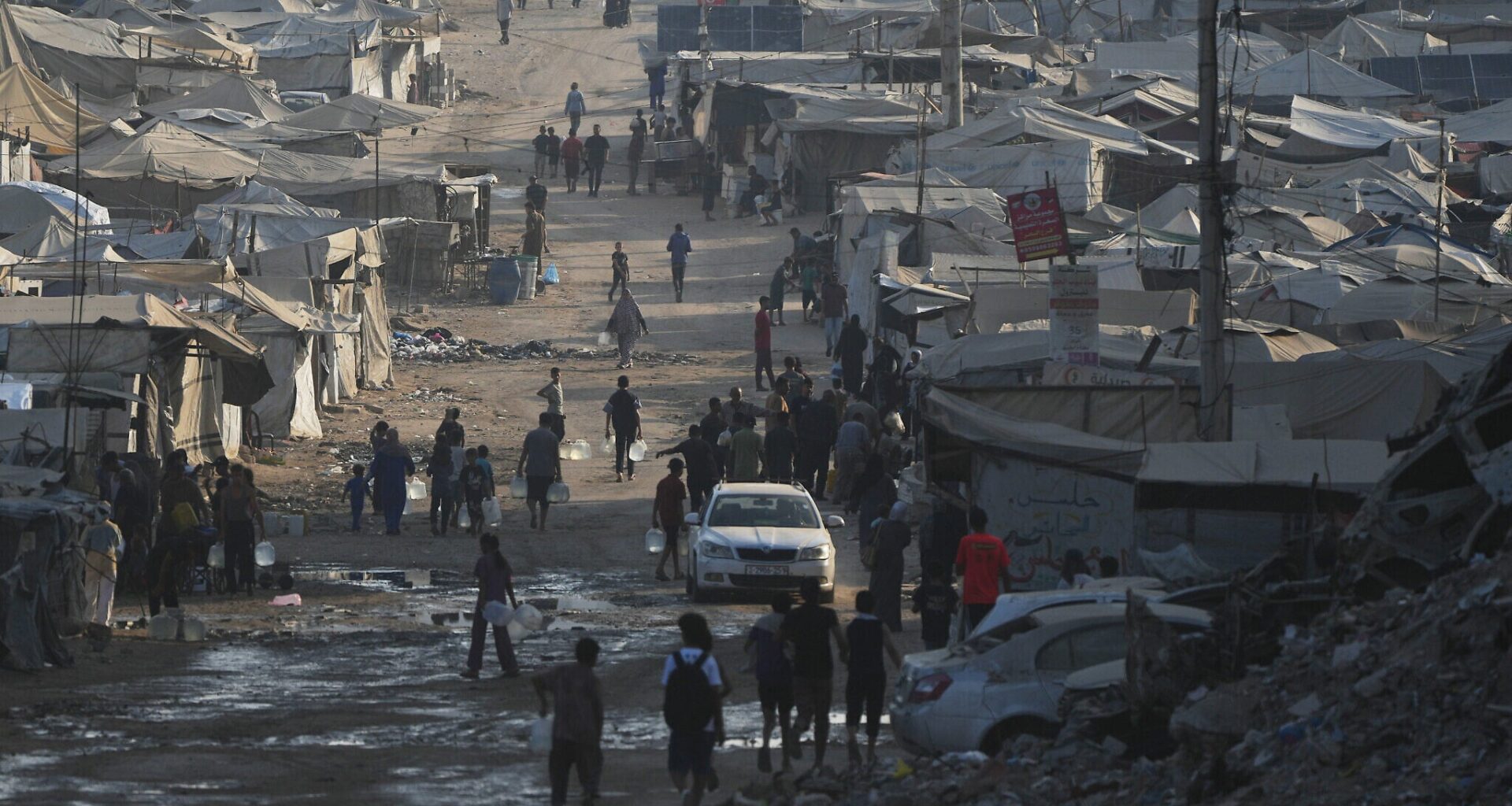
Surveillance soldiers on the Gaza border were reportedly sounding the alarm on Thursday about armed terrorist activity inside the Gaza Strip, in what they said feels like a repeat of their unheeded warnings before the October 7, 2023, onslaught.
Leading up to that Hamas-led invasion and massacre, the surveillance soldiers sent alerts about terrorists training for the attack, and were infamously ignored. Some of the surveillance soldiers, who are women, said sexism was a factor in their warnings being brushed aside.
Five female surveillance soldiers (tatzpitaniyot) from IDF Unit 414 were killed, and seven were taken captive when the Nahal Oz military base near the Gaza border was overrun. Noa Marciano was killed in captivity. Ori Megidish was rescued alive. The other five were eventually released during subsequent ceasefires.
On Thursday, Channel 12 quoted a number of unnamed soldiers who described a feeling of deja vu. They reported watching armed terrorists operate and lay explosives along the Gaza Yellow Line that divides the territory between Israeli and Hamas control.
“We’re really seeing that they know we won’t fire on them. The Gazans aren’t idiots. In the end, they’re constantly testing us and seeing if we react or not. It’s just like before October 7,” one of the soldiers was quoted as having said.
Get The Times of Israel’s Daily Edition
by email and never miss our top stories
By signing up, you agree to the terms
Another soldier told the network she feels “helpless” in the face of the terrorist activity she sees over the border. A different soldier said she and her comrades “feel a little unnecessary. If I know that, in any case, they won’t do anything with my identification [of terror activity], what’s the point of sitting eight hours a day and monitoring the area super-super-closely?”
A surveillance soldier quoted by the network went on to complain that combat soldiers stationed in Gaza are being used as “human shields.”
“In the end, the soldiers are stationed a few hundred meters from these terrorists,” one of the surveillance soldiers said of the combat troops in Gaza. “We can’t just abandon them.”
Amid efforts to advance a US-backed plan to disarm Hamas in the Strip, Israel quietly halted airstrikes in Gaza for a week before resuming them on Wednesday.
The strikes then multiplied on Thursday, with Israel said to have killed a Hamas company commander in a strike on southern Gaza’s Khan Younis and a senior Hamas police officer in a Gaza City strike.
Kushner to visit Israel, lean on PM to advance Hamas disarmament deal
Against that backdrop, a source familiar with the matter told The Times of Israel on Thursday that US President Donald Trump’s son-in-law and top aide Jared Kushner was slated to travel to Israel next week to meet with Prime Minister Benjamin Netanyahu, aiming to lean on him to allow the advancement of the Board of Peace’s plan to disarm Hamas in Gaza.
Kushner will be joined by Board of Peace Gaza envoy Nikolay Mladenov, the source said, adding that the exact date of the visit has not yet been finalized.
Hamas accepted the Board of Peace’s disarmament plan two weeks ago, but its advancement has been clouded after Netanyahu came out against it.

US Special Envoy Steve Witkoff (L) shakes hands with Board of Peace top envoy Nickolay Mladenov, right, next to US President Donald Trump’s son-in-law and key adviser Jared Kushner, during a meeting of the Board of Peace at the World Economic Forum (WEF) annual meeting in Davos, Switzerland, on January 22, 2026. (Fabrice COFFRINI / AFP)
Kushner and Mladenov are planning to lean on Israel to restore its halt on Gaza strikes in addition to adhering to a series of humanitarian-related commitments that it made as part of an October 2025 ceasefire deal with Hamas, the source says.
Once those commitments are upheld, the Board of Peace believes that it will be able to approach Hamas and ask the group to begin handing over its weapons, the source said.
However, an Arab diplomat expressed speculation that such progress will be possible only if Netanyahu publicly walks back his opposition to the agreement — something that is unlikely to occur as the October elections approach.
Both Kushner and Mladenov are frustrated with Netanyahu’s public posturing against the Board of Peace’s disarmament plan, the diplomat said.
Kushner hasn’t visited Israel since last year when he brokered the October 2025 ceasefire and hostage release deal between Israel and Hamas.
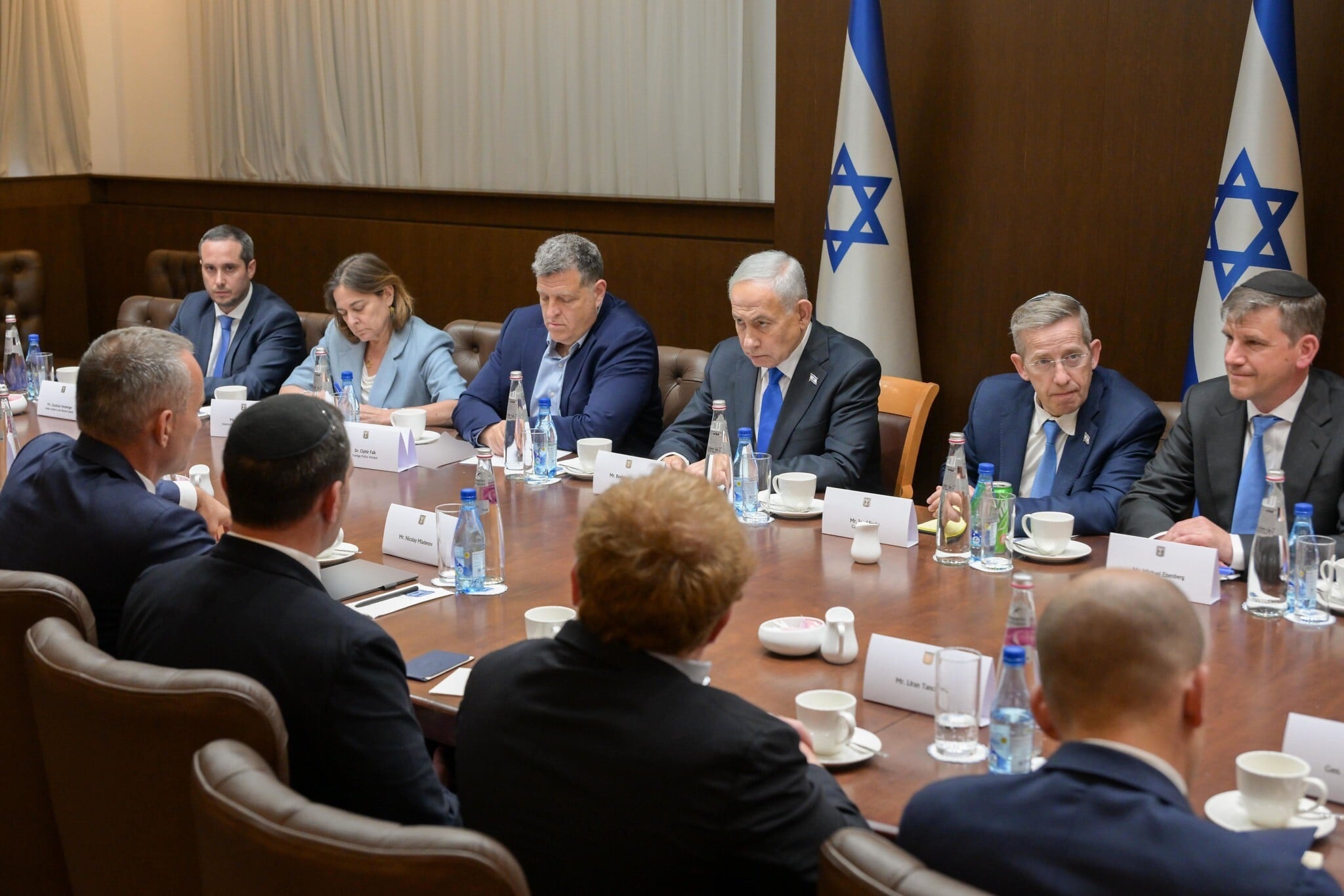
Prime Minister Benjamin Netanyahu meets with Gaza Board of Peace envoy Nickolay Mladenov in Jerusalem on May 13, 2026 Foreign policy aide Caroline Glick is seated second from the left. (Maayan Toaf/GPO)
Asked for comment on the potential Kushner visit, a Board of Peace official told The Times of Israel, “We are in constant conversation and coordination with our Israeli partners and will be continuing our discussions at all levels to accelerate progress on the president’s comprehensive peace plan.”
“Our conversations encompass the many areas of agreement and mutual concern that we are working through together. What is critical is that we both agree on the desired outcome and are finding ways to accelerate progress,” the official said.
IDF appears to ease restrictions on Gaza strikes
On Wednesday, Israel carried out its first strike on Gaza since August 3. The IDF said it killed a Hamas commander in the Strip’s north.
Also on Wednesday, troops of the Paratroopers Brigade shot dead a Palestinian who approached them “in a manner that posed an immediate threat,” the IDF said.
The soldiers opened fire “to remove the threat,” the army said.
Meanwhile, Palestinian media reported an Israeli airstrike on a motorcycle west of Khan Younis. The Hamas-affiliated Gaza civil defense agency said the strike killed one person, and the city’s Nasser Hospital confirmed the arrival of a body following the attack.
The person killed was identified in Palestinian media as a man named Hudhaifa Kawarea.
The IDF later confirmed carrying out the Khan Younis strike, saying Kawarea was a Hamas company commander who was planning attacks on Israeli troops in the Strip.
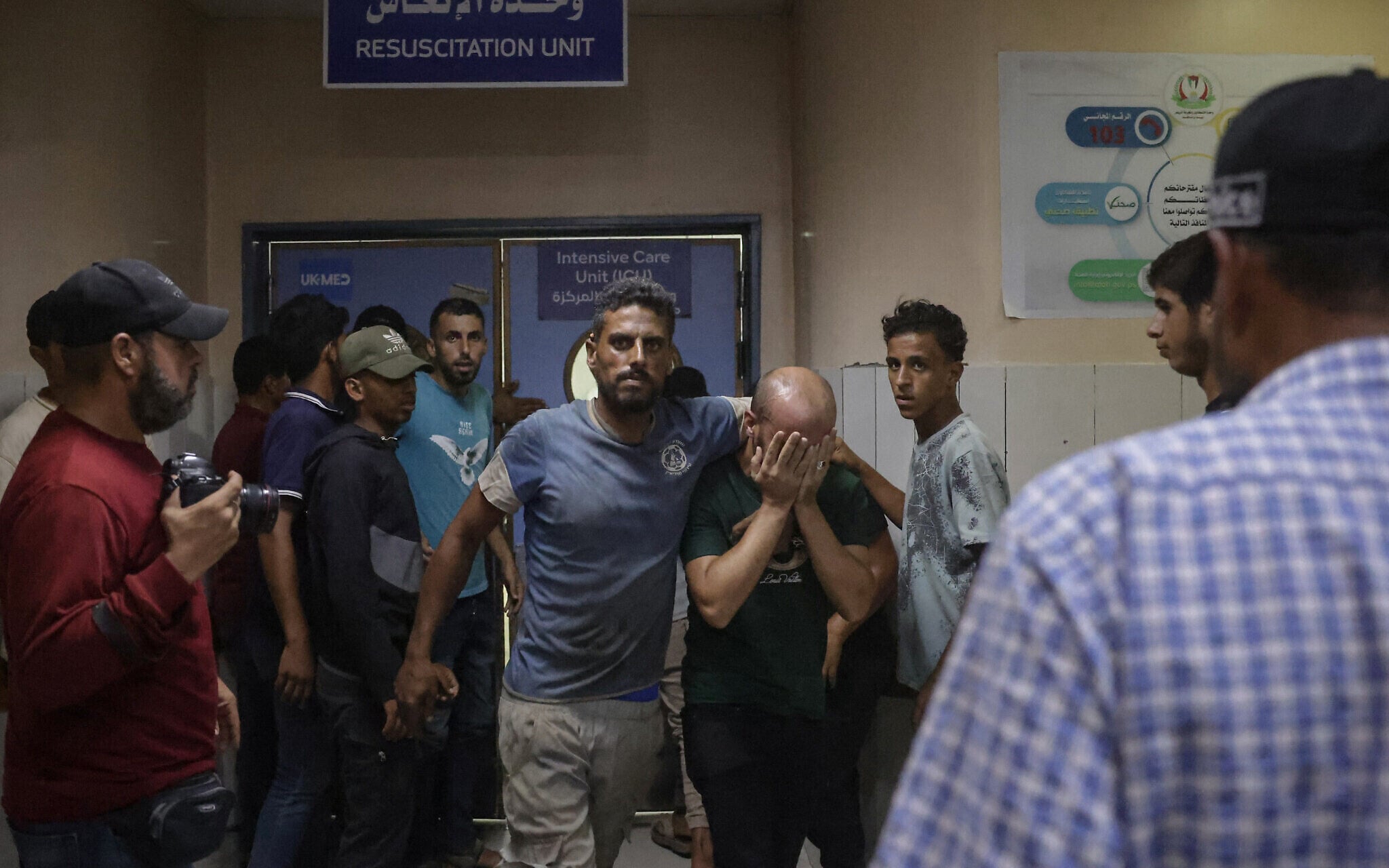
A man grieves at the funeral of a Palestinian killed in an Israeli strike on Khan Younis, at the southern Gaza city’s Nasser Hospital on August 13, 2026. The IDF says the man killed was a company commander in Hamas. (Bashar Taleb/AFP)
Later Thursday, Palestinian media reported the IDF struck a vehicle in Gaza City’s Sheikh Aljin neighborhood.
The civil defense agency said one person was killed and several others were wounded. Gaza City’s Al-Shifa Hospital said it had received the body of Jamal Abu Kamil, head of police in the Gaza City governorate.
Hamas’s Interior Ministry also said Abu Kamil “was assassinated in an Israeli airstrike targeting his vehicle on Al-Rashid Street, southwest of Gaza City.”
⭕️ متابعة | أفادت مصادر فلسطينية ، باستشهاد جمال أبو كميل مدير شرطة محافظة غزة، اثر استهداف من طائرات الاستطلاع الإسرائيلية على مركبة قرب الميناء الجديد في حي الشيخ عجلين جنوب غربي مدينة غزة . pic.twitter.com/8YNwOpoUt1
— ilkhanews | عربي (@ilkhanewsarabic) August 13, 2026
The IDF later confirmed the airstrike, claiming Abu Kamil had also invaded Israel during Hamas’s October 7 onslaught.
While the Board of Peace has pushed Israel only to act against imminent threats following Hamas’s acceptance of its disarmament proposal, the IDF claimed Abu Kamil was advancing attacks against troops and was therefore targeted to “remove a threat.”
EU welcomes Israeli renewal of bloc’s Rafah border mission
Separately, the European Union’s top diplomat on Thursday welcomed what she said was Israel’s extension of the mandate for the bloc’s border assistance mission at the Rafah crossing between Gaza and Egypt, which Israel shut down during the war but reopened on a limited basis in January.
The mandate of EUBAM was extended through the end of June 2027, according to Kaja Kallas.
Also extended was an EU program that provides training for Palestinian police forces and advice on rebuilding Gaza’s judicial system, Kallas said.
Initially set up in 2005 to help monitor the key crossing, the civilian EUBAM mission was put on standby for nearly two decades after Hamas took control of Gaza in 2007.
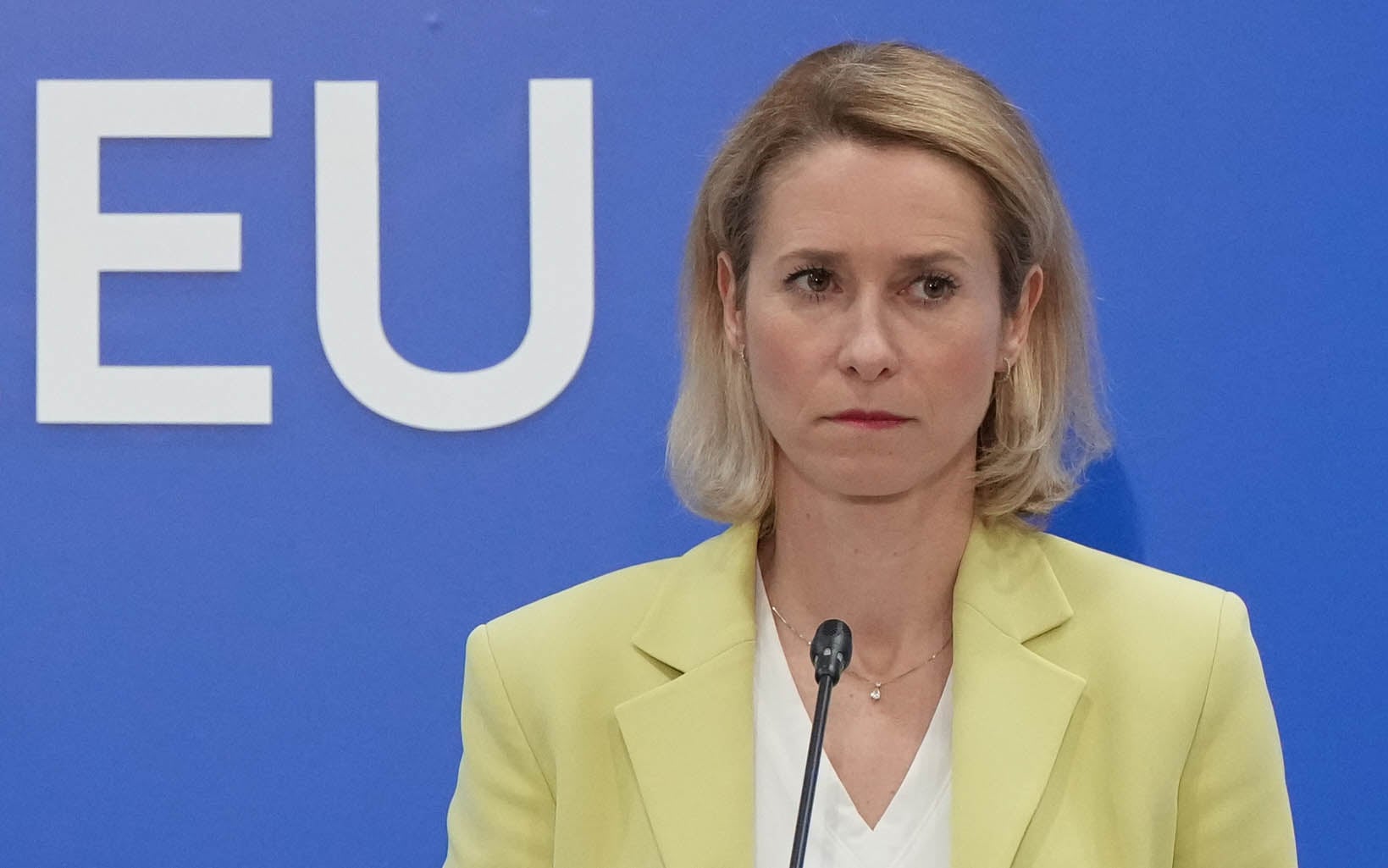
European Union foreign policy chief Kaja Kallas talks to the media during an informal EU defense meeting in Nicosia, Cyprus, June 8, 2026. (Petros Karadjias/AP)
EU monitors were stationed at the Rafah crossing again in February, and the EU announced last week that more than 10,000 people have since passed between Gaza and Egypt.
Kallas called the extensions “an important step after months of diplomatic negotiations.”
“The missions have a clear purpose: to help make crossings safer and more effective, support Palestinian police, and contribute to stability in the region,” she wrote.
Israel’s Foreign Ministry did not immediately respond to an AFP request for comment.
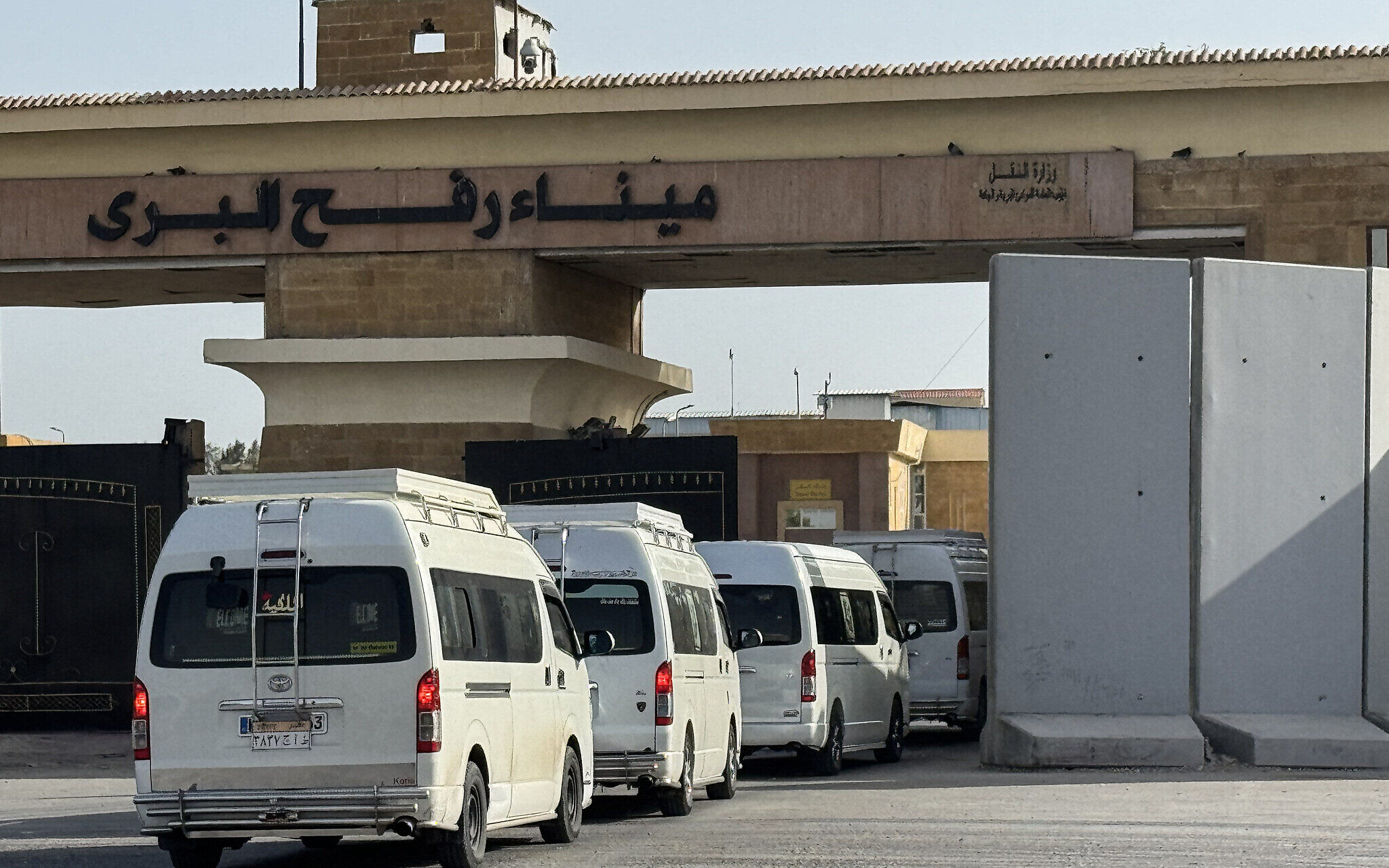
Minibuses carrying Palestinians wishing to return to the Gaza Strip line up on the Egyptian side of the Rafah border crossing on March 19, 2026. (Amr ADEL / AFP)
The EUBAM monitoring mission aims to provide a neutral, third-party presence at the Rafah crossing and involves police from Italy, Spain and France.
Israel’s green light clears the way for EU states to formally extend the mandates, which the EU states had agreed in June to prolong until September this year.
Israel had been expected to renew the authorization for the mission’s deployment in late June, but did not do so, as disagreements with the EU over the war in Gaza have strained Israel’s relations with the bloc.
Times of Israel staff contributed to this report.