
Kushner pushes disarmament
Kushner’s push centered on sequencing, with Israel insisting Hamas must surrender its weapons before Israeli forces withdraw while Washington pushed for the two processes to move forward in parallel.

In Egypt on Sunday, Kushner met Hamas leader Khalil al-Hayya as part of efforts to translate the roadmap’s commitments into “concrete, verifiable steps,” and Hamas left the meeting saying it remained committed to the American framework while demanding Israel fulfill its side of the agreement.
The dispute remained unresolved after Netanyahu reiterated his opposition to the new U.S.-backed roadmap, insisting that the Israeli military would not withdraw from Gaza until Hamas and other armed groups had been fully disarmed.
The Hill reported that Netanyahu and the Board of Peace agreed to set up two working groups, including one on disarmament and demilitarization that Israel said should be prompt and completed before any reconstruction happens in Gaza.
Quotes and diverging frames
Kushner told Fox News that there could be “progress in as little as 30 days, hopefully, on starting to take some of [Hamas’s] weapons out,” while adding that “we do need cooperation from both sides,” after his meeting with Netanyahu.
Netanyahu’s office, as quoted by the BBC, struck a diplomatic tone and said Netanyahu and the Board of Peace “agreed to establish two working groups,” with one focused on disarmament and demilitarisation that both sides said should be prompt and completed before any reconstruction happens in Gaza.

Hamas, meanwhile, said it accepted the plan but that implementing it would depend on Israel first meeting its own commitments, including withdrawing its forces and halting attacks, and Hazem Qassem said Trump’s statements reaffirmed the commitment to the ceasefire process.
The Hill described Netanyahu’s last-week rejection of a 15-point roadmap as his insistence that Israel was not prepared to withdraw before Hamas gives up its weapons, while the BBC framed Kushner’s effort as restarting the stalled US-backed Gaza peace plan.
NBC News reported that a senior Israeli official said Netanyahu and Kushner agreed that Gaza’s “demilitarization” should start with a Hamas weapons handover supervised by an American military general, and it noted Netanyahu’s office did not confirm the details beyond agreeing to two working groups.
What’s at stake next
The next phase of the agreement remained blocked as Washington sought to preserve the cease-fire and set the stage for a new administration of Gaza, with a national committee supposed to assume responsibility and “no role for Hamas in its governance.”
“with no role for Hamas in its governance”
 الحرة
الحرة
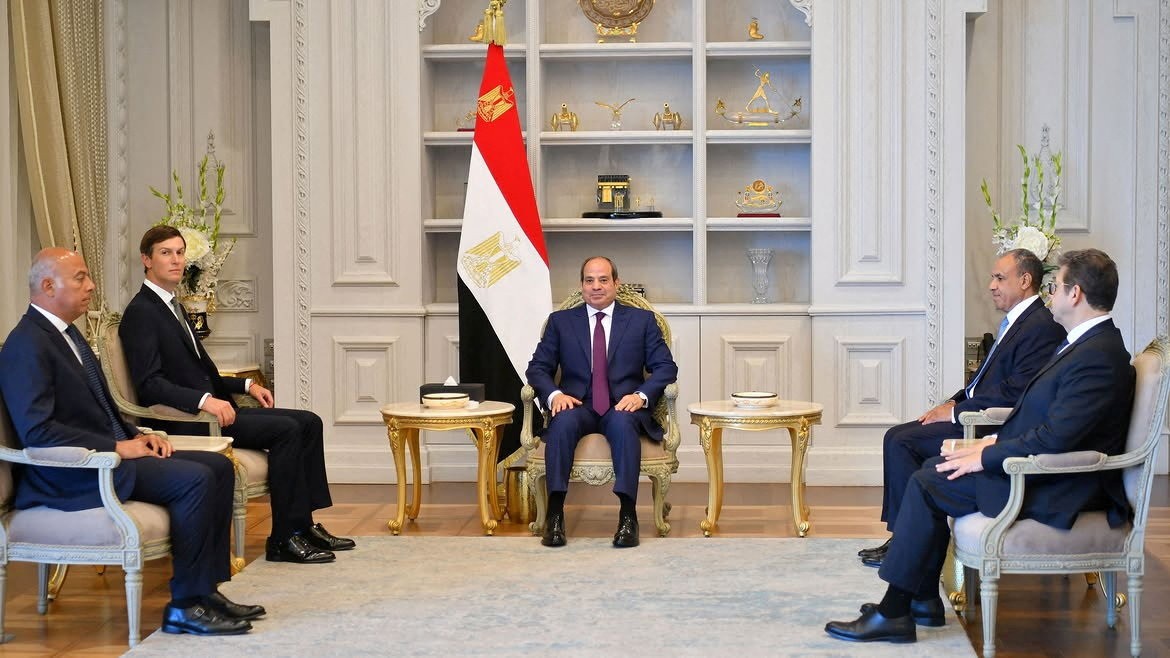
El Alamein, Egypt, hosted a separate push by Egyptian President Abdel Fattah al-Sisi, who received Kushner accompanied by Foreign Minister Badr Abdelatty and intelligence chief Hassan Rashad, as the Egyptian presidency said Sisi stressed the need for all parties to fulfill obligations under the agreement reached at the Sharm el-Sheikh Peace Summit in October 2025.
The Guardian reported that the plan’s verification and sequencing questions remained central, while Al Jazeera reported that Kushner’s rare talks with Hamas aimed at translating the roadmap’s obligations into “concrete, verifiable steps.”
Inside Israel, the stakes were sharpened by domestic politics and hardline rhetoric, with NBC News reporting that National Security Minister Itamar Ben-Gvir condemned efforts to advance the ceasefire deal and called for the “targeted” killing of “30 or 40” people in Gaza every night.
The Hill warned that the Trump administration faced an uphill battle in getting Netanyahu to meaningfully commit to the peace plan ahead of Israeli elections set for late October and the anniversary of Hamas’s Oct. 7, 2023, attack, when Hamas killed an estimated 1,200 people in southern Israel and took 251 people hostage.