
Iran’s repression follows survivors through three places: into the hospital, where their wounds may identify them; into their bodies, where pellets and pain remain; and into exile, where scars, flashbacks and fear continue years later.
Every injured protester I advised feared the healthcare system; not the physicians trying to help them, but what might happen if their wounds identified them.
Healthcare should be a red line. Patients must be able to seek treatment without being punished for their wounds, and clinicians must be free to treat them without intimidation. Yet UN experts reported that Iranian security forces entered medical facilities, attempted to arrest wounded protesters and detained people in and around them.
From Los Angeles, I joined physicians working through MAHSA Medical to provide free, confidential telehealth guidance to injured civilians. I also worked through a network of doctors in the United States connected to colleagues and relatives practicing inside Iran.
Through WhatsApp and Telegram, I spoke directly with injured civilians and examined them on live video whenever security and connectivity allowed. We reviewed photographs, medical imaging and prerecorded audio and video from homes where protesters were hiding.
Patients told us they feared that even seeking antibiotics or pain medication from a pharmacy could flag them as protest casualties. They suffered silently at home while we tried to provide what limited care we could from thousands of miles away.
During one live video call, I saw a young man with a deep wound across his right hand and significant active bleeding. He said security forces had attacked him with a machete-like blade, cutting to the tendons. The injury required formal evaluation and likely surgical repair, but he feared its pattern would identify him as a protester.
Instead of a hand-surgery suite, we discussed temporary stabilization using household materials. Even while bleeding and in severe pain, he remained remarkably composed. After years of treating catastrophic trauma, I had never witnessed that combination of physical pain, acute fear and resolve. This was not equivalent care. It was harm reduction when seeking ordinary care felt dangerous.
The pellet injuries were even more pervasive. Patients ranged from teenagers to women in their 70s. Some had clusters of 20 or more fragments in one region; others carried more than 100. I reviewed pellets involving the face and eyes, neck, chest, hands, hips, upper thighs and urogenital region—near structures whose injury can cause blindness, catastrophic bleeding, nerve damage, sexual or reproductive harm, disability or death.
In the cases I reviewed, I estimated that more than 95% of the retained pellets could never safely be removed. Fragments were embedded between the small joints of hands and knuckles, within or beside larger joints and near delicate neurovascular structures. Searching surgically for each tiny fragment could damage a nerve, blood vessel, tendon or joint and cause more harm than leaving it in place.
That does not make the pellets harmless. They can chronically irritate nerves and joints, causing pain, stiffness, reduced mobility and recurrent inflammation. Unlike a single projectile with one wound track, a shotgun discharge can scatter dozens of permanent foreign bodies across tissues too delicate to explore safely.
The eyes reveal the scale of this harm. During the January 2026 crackdown, more than 400 gunshot-related eye injuries were documented at a single Tehran hospital, according to physicians cited by the Guardian.
Doctors described permanent blindness and eyes damaged beyond repair. This continued a pattern seen during the 2022 Woman, Life, Freedom uprising, when ophthalmologists reported at least 580 significant eye injuries. The nationwide toll remains unknown.
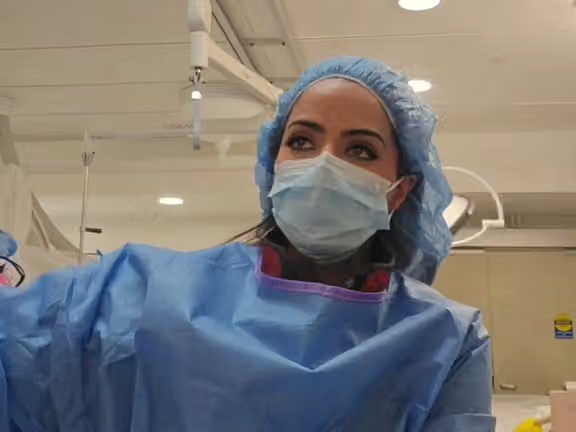 As a trauma and vascular interventional radiologist in Los Angeles, I stop catastrophic bleeding within minutes. Still, I wasn’t prepared for the injuries suffered by victims of Iran’s January protests.
Years after the streets fall silent, a pellet lodged beside a nerve or within a joint can turn an ordinary movement into both pain and memory. Each bend of a finger can evoke the gunfire, fear and moment the survivor was wounded.
But the wounds can also become evidence against the wounded. Reuters reported that Revolutionary Guards and police sought hospital records to find protesters who had already been discharged. The Associated Press reported that some physicians removed pellets or altered records to help patients avoid detection.
A retained pellet does not prove a person’s beliefs or conduct, but in this environment it can become a physical marker of suspected protest participation. Identification can expose a survivor to arrest, detention and prosecution, including proceedings carrying the death penalty.
Medical records, scans and forensic examinations should be preserved securely, not transformed into instruments of surveillance. When the injured avoid hospitals, they lose not only treatment but contemporaneous documentation of what happened.
I encounter the other end of this process as a volunteer physician evaluator with the Physicians for Human Rights Asylum Network. In a forensic medical evaluation, I assess whether an asylum seeker’s scars, chronic injuries and psychological symptoms are medically consistent with the history of persecution the person reports.
Medicine cannot decide whether someone legally qualifies for asylum, identify an assailant from a scar alone or prove every detail of an event. It can document findings, consider alternative explanations and explain how closely the clinical evidence corresponds to the account provided.
One man, now in his early 40s, reported that his persecution began in his mid-20s and recurred over nearly two decades. His family operated a wedding hall where music and men and women celebrating together drew repeated Basij or IRGC intervention. He described repeated detention, including solitary confinement without meaningful legal process. In one assault, he suffered penetrating knife wounds to his thigh and posterior chest, requiring emergency vascular surgery and about a month in hospital.
Years later, I documented extensive scarring, diminished pulses, muscle loss and chronic vascular and neurological complications medically consistent with severe penetrating trauma near the femoral artery. Such an injury can cause massive hemorrhage, shock, loss of the limb and death. A wound cannot prove an assailant’s subjective intent, but it can establish that the violence was life-threatening.
Nearly two decades after the persecution began, he still reported pain, nightmares, insomnia, flashbacks and hypervigilance. News from Iran and disrupted communication with his family impaired his concentration and work. He had escaped the immediate danger, but the danger continued to organize his life.
I have seen the same continuum in other survivors: scars medically consistent with accounts of beatings and lashings, alongside panic, dissociation, depression and hypervigilance that can persist long after someone has escaped. Not every enduring injury is visible, and no single symptom can prove what happened. But trauma-informed forensic evaluation can document what violence leaves behind.
Executions and deportation remain part of the stakes, but they are not the center of this medical story. Amnesty International has documented protesters subjected to incommunicado detention, denial of medical care and torture-tainted proceedings, including cases carrying the death penalty. For survivors seeking protection abroad, return can mean renewed exposure to the institutions they identify as their persecutors.
The response must begin with protecting the independence of medicine. Iranian clinicians must be able to treat patients without intimidation or punishment. International investigators should document attacks on patients, health workers and facilities. Governments reviewing asylum claims should protect confidentiality and provide access to qualified forensic evaluation.
No one should have to choose between leaving a disabling injury untreated and revealing themselves to those they fear.
As an Iranian American, this work is personal. But my medical conclusions must rest on examinations, imaging, clinical evidence and candor about what those findings can and cannot establish. A wound is not merely a mark of what happened to one body. Properly treated and independently documented, it can become part of the record of what happened to a society.
Iran’s authorities may try to frighten the wounded away from hospitals, intimidate those who treat them and suppress the evidence left behind. Medicine cannot stop that machinery alone. But it can care for the injured, protect the integrity of their stories and preserve what repression is designed to make disappear.