

 Close
Close
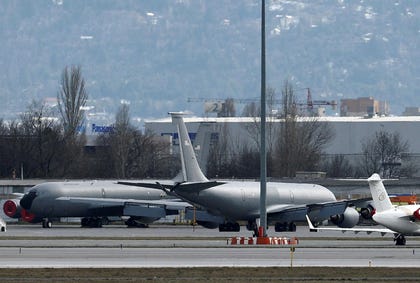
U.S. Air Force aerial refueling tankers on the tarmac at Sofia Airport, Bulgaria, in February. Credit: Stoyan Nenov/Reuters
U.S. Air Force aerial refueling tankers on the tarmac at Sofia Airport, Bulgaria, in February. Credit: Stoyan Nenov/Reuters
Iran considered striking U.S. military assets in Europe, including in Cyprus and Bulgaria, should U.S. President Donald Trump choose to escalate the war, The Financial Times reported Wednesday, citing two Iranian regime sources.
Bulgaria agreed in July to host up to eight U.S. aerial refueling tankers, while Britain agreed to allow the U.S. to launch defensive strikes against Iran from its two bases in Cyprus.
According to the report, Iranian forces also considered striking undersea fiber-optic cables in the Strait of Hormuz. One source said Iran would consider expanding its targets should Trump fulfill his threats to strike Iranian infrastructure.
Speaking to the FT, the second source said Iran would not limit itself in response to U.S. aggression.
“Should the U.S. go too far, Iran will defend itself at any price, go beyond the region and hit Europe too,” the source said.
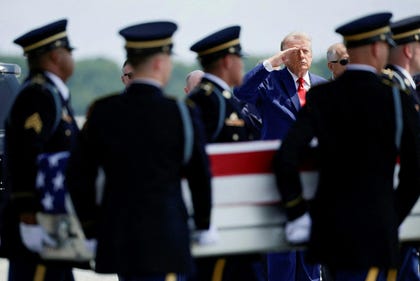
Iran’s strike on a U.S. base in Jordan in July, which killed three U.S. soldiers, was the most precise long-range attack its forces had carried out, sending a message that Iran was capable of hitting targets over farther distances, the sources told the newspaper.
 Close
Close
U.S. President Donald Trump salutes during a dignified transfer of the remains of U.S. Army service members killed during an attack on Muwaffaq Salti Air Base in Jordan in July. Credit: Evan Vucci/Reuters
U.S. President Donald Trump salutes during a dignified transfer of the remains of U.S. Army service members killed during an attack on Muwaffaq Salti Air Base in Jordan in July. Credit: Evan Vucci/Reuters
“This was also a message to Europe: It can receive missiles, so it should know where it should stand in this war,” the first source told the FT.
Regime insiders reportedly believe Iran might be overextending itself, while some hardliners, including Mohsen Rezaei, the country’s top security official, say Iran must exact a higher price from the U.S. to ensure it meets its obligations under a final agreement.
Analysts told the FT that top officials such as Parliament Speaker Mohammad Bagher Ghalibaf appear to have been sidelined as hopes a lasting agreement could be reached faded.
“The message is, ‘Don’t be mad, because I’m madder than you are,'” the second source told the newspaper. “If you don’t reach an agreement with Ghalibaf, you have to deal with Rezaei.”