
Your support helps us to tell the story
From reproductive rights to climate change to Big Tech, The Independent is on the ground when the story is developing. Whether it’s investigating the financials of Elon Musk’s pro-Trump PAC or producing our latest documentary, ‘The A Word’, which shines a light on the American women fighting for reproductive rights, we know how important it is to parse out the facts from the messaging.
At such a critical moment in US history, we need reporters on the ground. Your donation allows us to keep sending journalists to speak to both sides of the story.
The Independent is trusted by Americans across the entire political spectrum. And unlike many other quality news outlets, we choose not to lock Americans out of our reporting and analysis with paywalls. We believe quality journalism should be available to everyone, paid for by those who can afford it.
Your support makes all the difference.Read more
An American tourist died after being struck by lightning on Sicily‘s Mount Etna while hiking in an area closed to visitors due to recent volcanic activity, Italian firefighters said on Monday.
The 29-year-old man from Kansas was rescued by helicopter after being hit Sunday evening in an exposed section above the tree line, officials said.
Medical personnel later declared him dead.
His identity has not yet been released while next of kin is still being reached.
Authorities have closed large sections of the volcano’s slope to hikers due to prolonged volcanic activity, which also forced the airport in nearby Catania to close for most of last week.
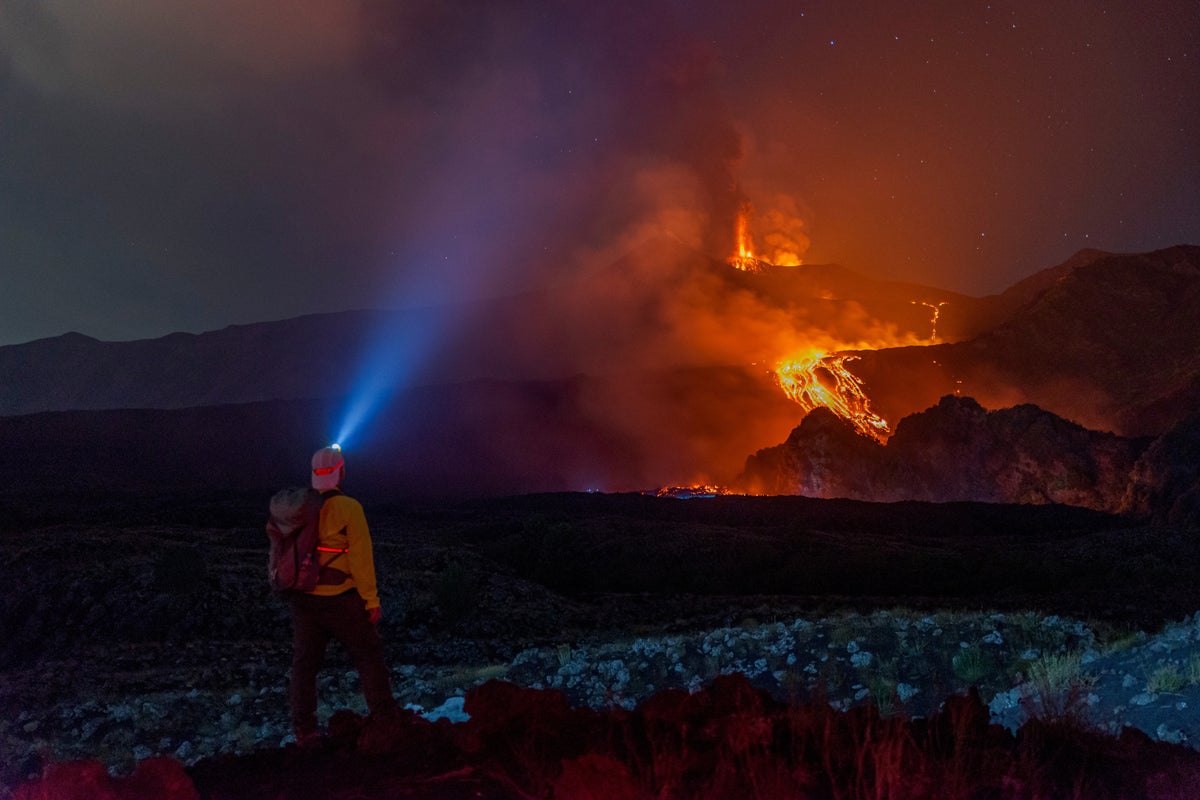
 Lava is ejected from a crater during an eruption of Mount Etn (Reuters)
Etna’s activity often interrupts flights at the airport, situated 30 kilometres (20 miles) south; the current closure was the longest emergency since 2002.
“Volcanic ash can be a great risk for aircraft,” said Boris Behncke, a researcher at the National Institute of Geophysics and Volcanology’s Etna Observatory.
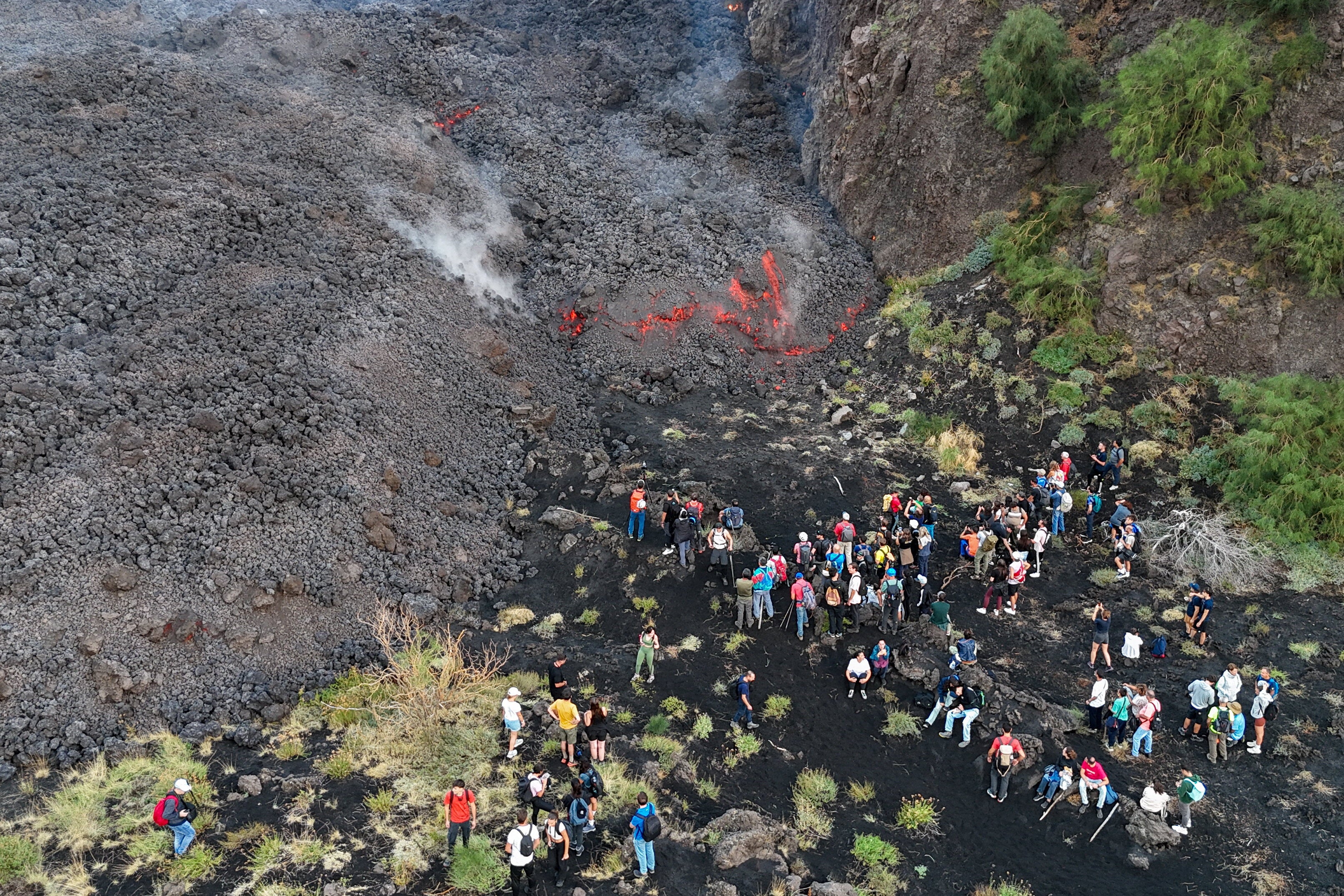 A drone view of people observing a volcanic eruption at Mount Etna (Reuters)
“It can be sucked into the motors, and force them to stall. This is why everyone is so very cautious with aircraft when there is a volcanic ash emission.”
As Europe’s largest active volcano, Etna’s recent unrest is unusual for its persistent ash emissions.
Northerly winds have carried light amounts of volcanic ash across to Malta and northern Africa.
“There have been many shorter interruptions — and stronger eruptions — over the past few decades, but this event is different because the ash emission from Etna’s summit has been much more persistent,” Behncke said.
Catania airport resumed flights on Saturday following the volcanic alert downgrade.
Officials noted that lightning strikes have killed more people on Etna in recent decades than volcanic activity.
The airport is Italy’s fifth-busiest hub by passenger traffic, with nearly 2,000 flights canceled or rerouted.
The last fatalities linked to an eruption on Europe’s most active volcano occurred nearly 40 years ago in 1987.