
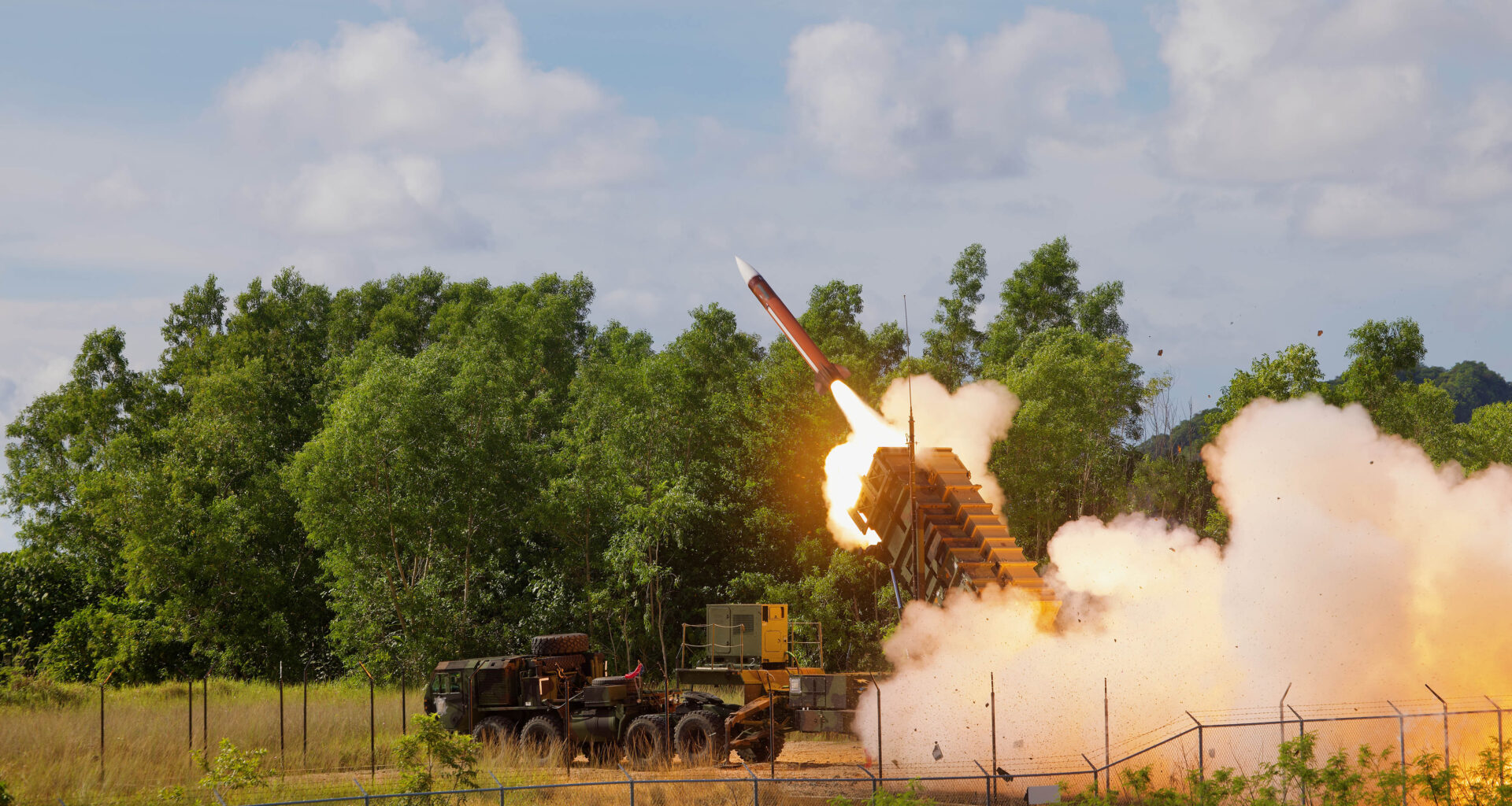
The United States’ shortage of key munitions has entered the national debate and reportedly become a major element in presidential decisionmaking in the ongoing U.S. conflict with Iran. Use during the war against Iran is indeed a major driver of the issue, but it is not the only one. There are other reasons—strategic, industrial, institutional, and operational—why the Department of Defense (DOD) lacks the depth of munitions inventories that it needs today. Understanding the full history is necessary to fix the problem.
1. The war against Iran is an important driver.
This is obvious but bears reviewing. CSIS has documented the effects of the war on seven munitions used extensively in the war against Iran and that would also be used in a conflict in the western Pacific against China. These fall into two groups: missile defense and long-range ground attack.
The United States has used about half of the initial inventory for three of these munitions (Patriot, THAAD, and PrSM) and about one-third of the initial inventory for the rest (JASSM, SM-2/3/6, and Tomahawk). Even so, enough remains for any plausible scenario in the war against Iran. The risk comes from potential future wars, particularly with China—but potentially also with Russia or North Korea. Even before the current war, many analyses showed a need for larger munition inventories. Operation Epic Fury has exacerbated this munitions problem, and a multiyear rebuild now looms ahead.
Not all munitions are in short supply because of the war. As CSIS has described, the United States has deep inventories of cheaper alternatives, but these come with trade-offs. JDAM, for example, has the same precision and explosive yield as Tomahawk or JASSM. However, it is short-ranged and requires aircraft to overfly adversary territory, resulting in greater vulnerability and potentially greater losses.
Other munitions are in short supply, but not because of the war with Iran. Long-range anti-ship munitions, such as LRASM, Maritime Strike Tomahawk, and the Naval Strike Missile, would be critical in a war against China. They have not been used at all or only in small numbers against Iran. While their inventories have been largely unaffected by this war, existing inventories would rapidly dwindle in a war against a near-peer naval power.
2. The post–Cold War strategy required fewer munitions.
During the Cold War, the United States faced a superpower competitor in the Soviet Union, so a potential conflict required a large munitions inventory. When the Cold War ended, the strategy and requirements changed. Instead of a great power war, the United States would prepare for two limited regional conflicts. The notional adversaries were Iraq and North Korea. These wars were expected to be relatively short and therefore required far fewer munitions than a war against the Soviet Union. Munitions procurement shrank substantially. Expectations began changing in 2014 when Russia invaded Crimea and the Donbas, and as China continued its aggressive actions in the South China Sea. However, it was not until Russia invaded Ukraine in 2022 that the need for larger munitions inventories became clear and pressing.
3. The industrial base was designed for efficient peacetime production, not surge.
When the Cold War ended, the DOD realized that the smaller budgets of the post–Cold War world would not support the large existing defense industrial base. In 1993, then-Deputy Secretary of Defense William Perry gathered defense industry executives for what became known as “the Last Supper.” He told them to merge or diversify. They did. The result was a much smaller defense industrial base. The number of aerospace and defense prime contractors, for example, decreased from 51 to 5; the number of subprimes decreased commensurately. The whole structure got smaller.
The defense industry not only got smaller but, driven by the change in strategy, restructured itself for efficient production at peacetime rates. Surge capability was regarded as unnecessary and wasteful. As a result, very little spare capacity was available when the DOD decided to surge some production in 2022.
4. Munitions compete poorly in the Pentagon’s budget process.
Regardless of the defense budget’s size, the military services must always make trade-offs. In procurement, they face a trade-off between buying munitions or platforms such as aircraft, armored vehicles, and ships. Platforms have the advantage of operating for 30 years, being highly visible, and therefore contributing to deterrence. Munitions go into a bunker after production and only come out if there is a war or their service life has expired. Thus, munitions have often served as bill payers for higher-priority needs despite recognition of their importance.
5. The use of munitions in recent wars has reduced inventories.
Wars fought by the United States in the past half decade have required high-end munitions at levels not needed during the counterterrorism campaigns of the early twenty-first century.
Both the Biden and second Trump administrations expended munitions in the Middle East to deal with the regional war precipitated by Hamas’s October 7 attack on Israel.