
As President Donald Trump attempts to land a decisive blow against Iran with an intensified economic campaign, another battle is brewing on the sidelines of the six-month war that could prove even more challenging for the United States.
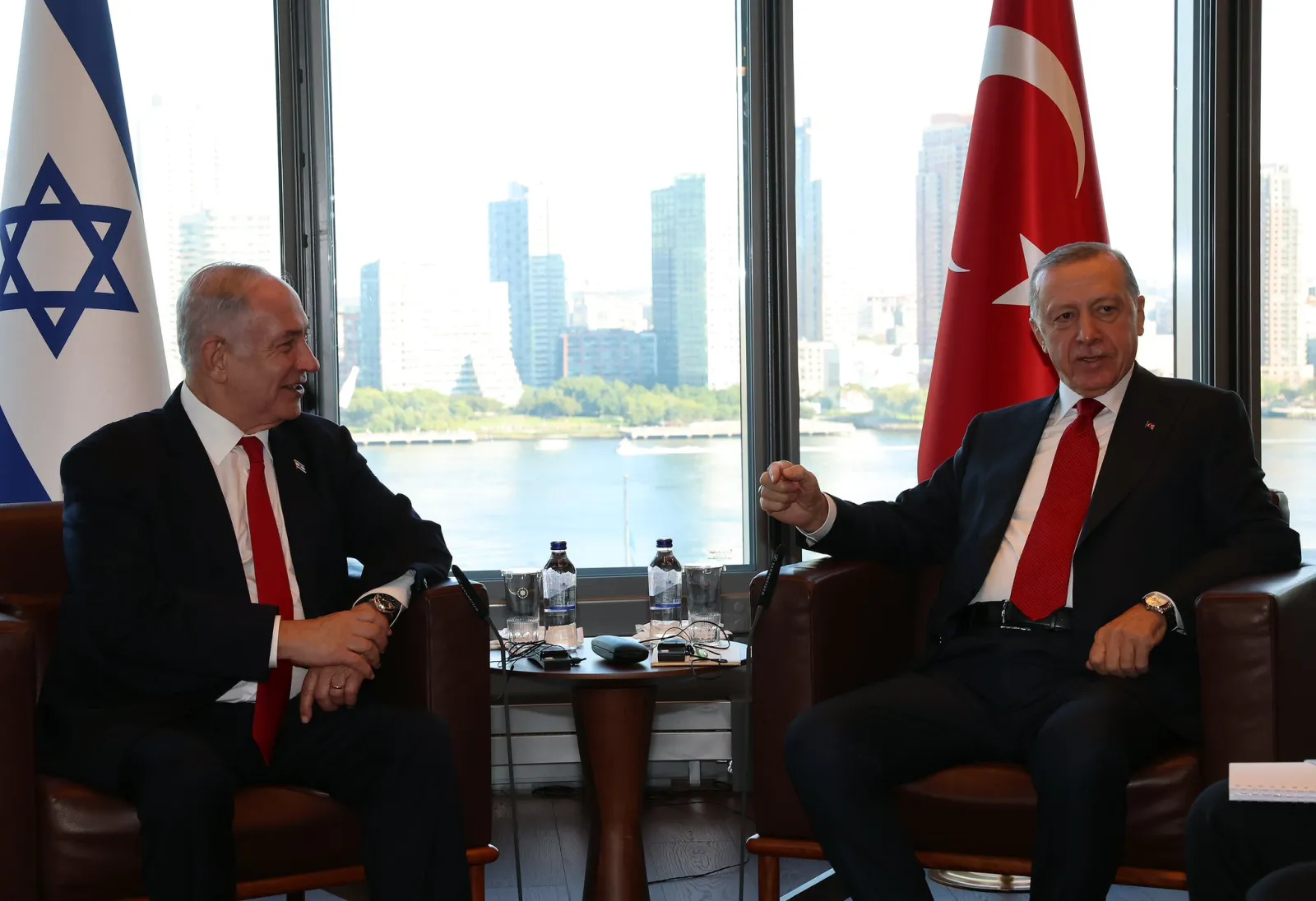
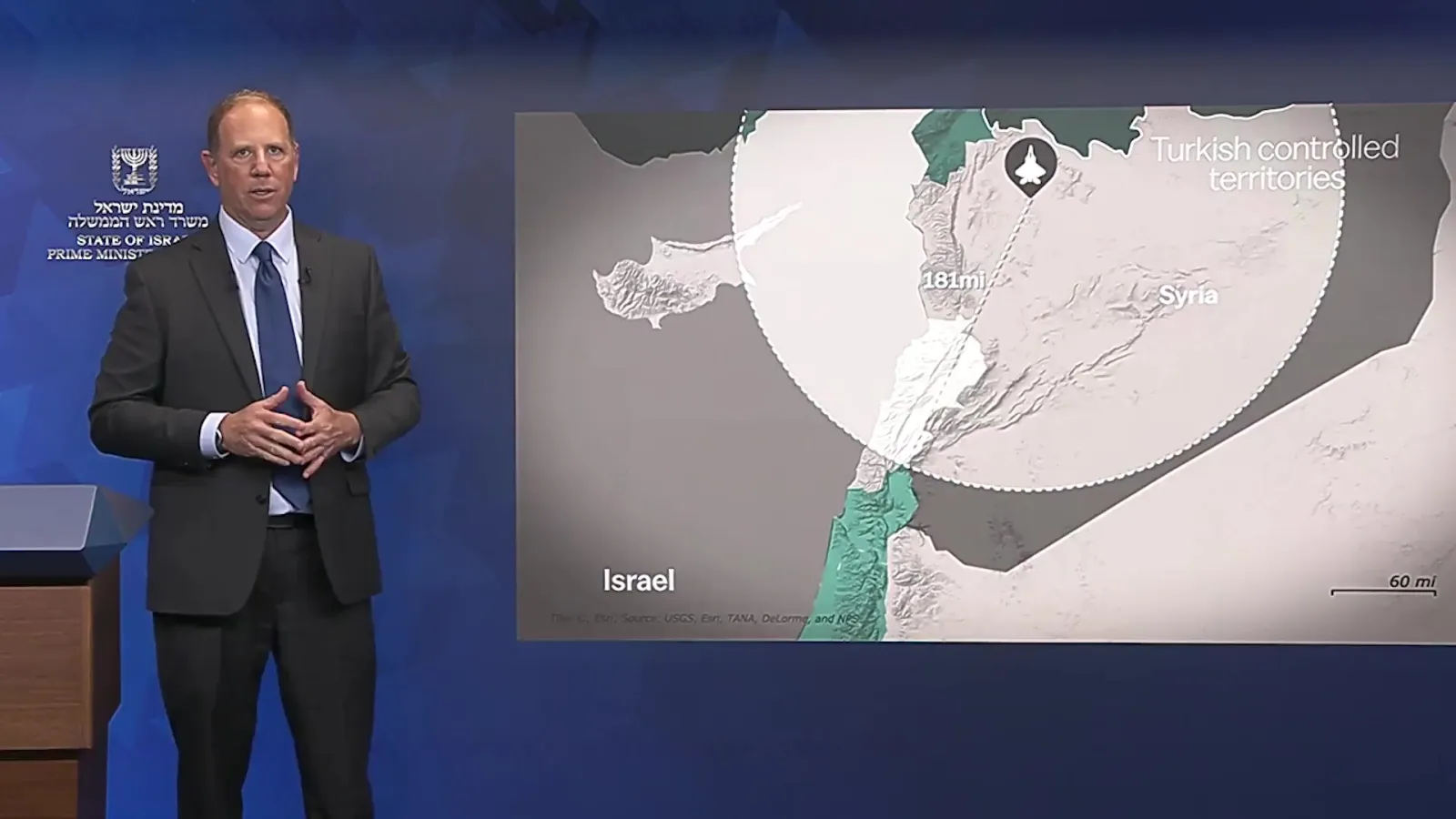
The feud between Israel and Turkey took a new turn last week with an Israeli strike against a Syrian airbase reportedly visited just hours earlier by a Turkish defense delegation. Israel accused Damascus of moving to violate security arrangements by inviting Ankara’s military presence, while the Turkish government railed against the Israeli move as a violation of Syria‘s sovereignty and called for the Israeli premier’s arrest on charges of genocide and other crimes.
As the war of words escalated on Friday, Israeli Prime Minister Benjamin Netanyahu‘s office slammed Turkish President Recep Tayyip Erdogan as an “antisemitic dictator” behind a “pathetic attempt to intimidate the leaders and soldiers of Israel,” to which Erdogan’s communications office soon hit back at Netanyahu’s “petty political tactics” and efforts “to present Türkiye as a new threat.”
Read More on World
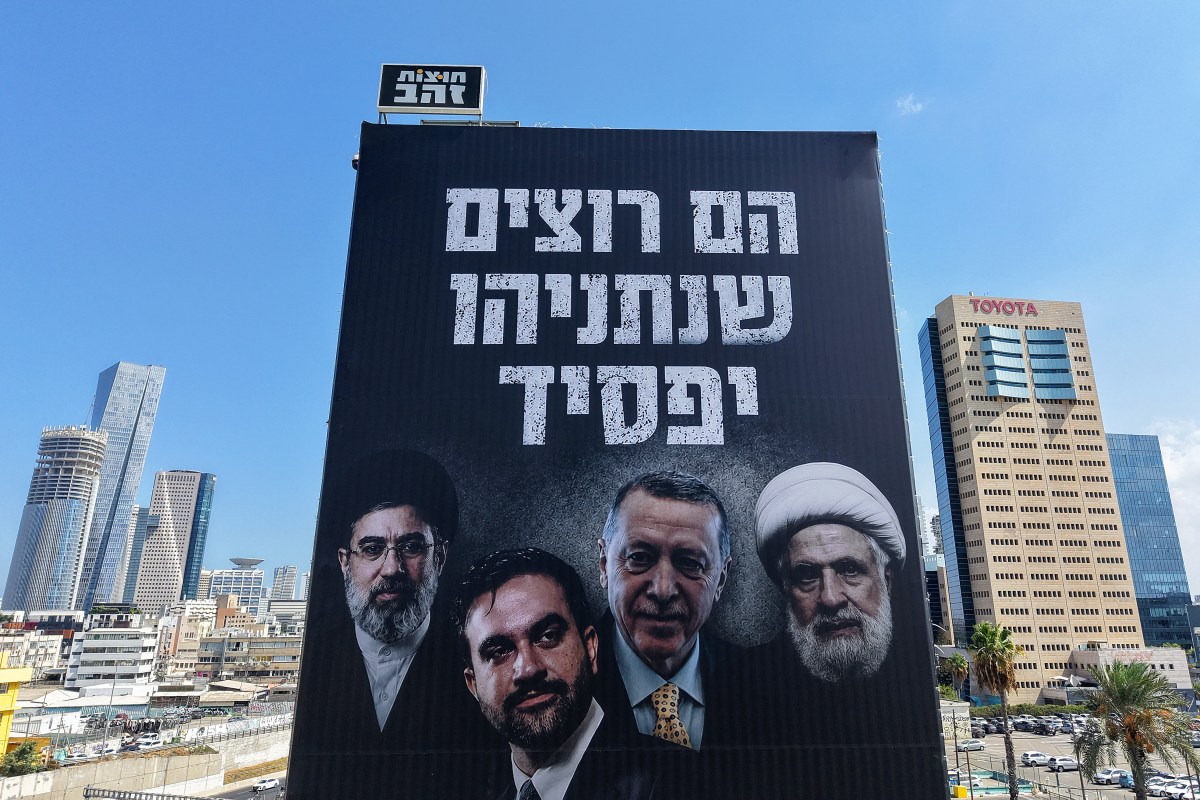
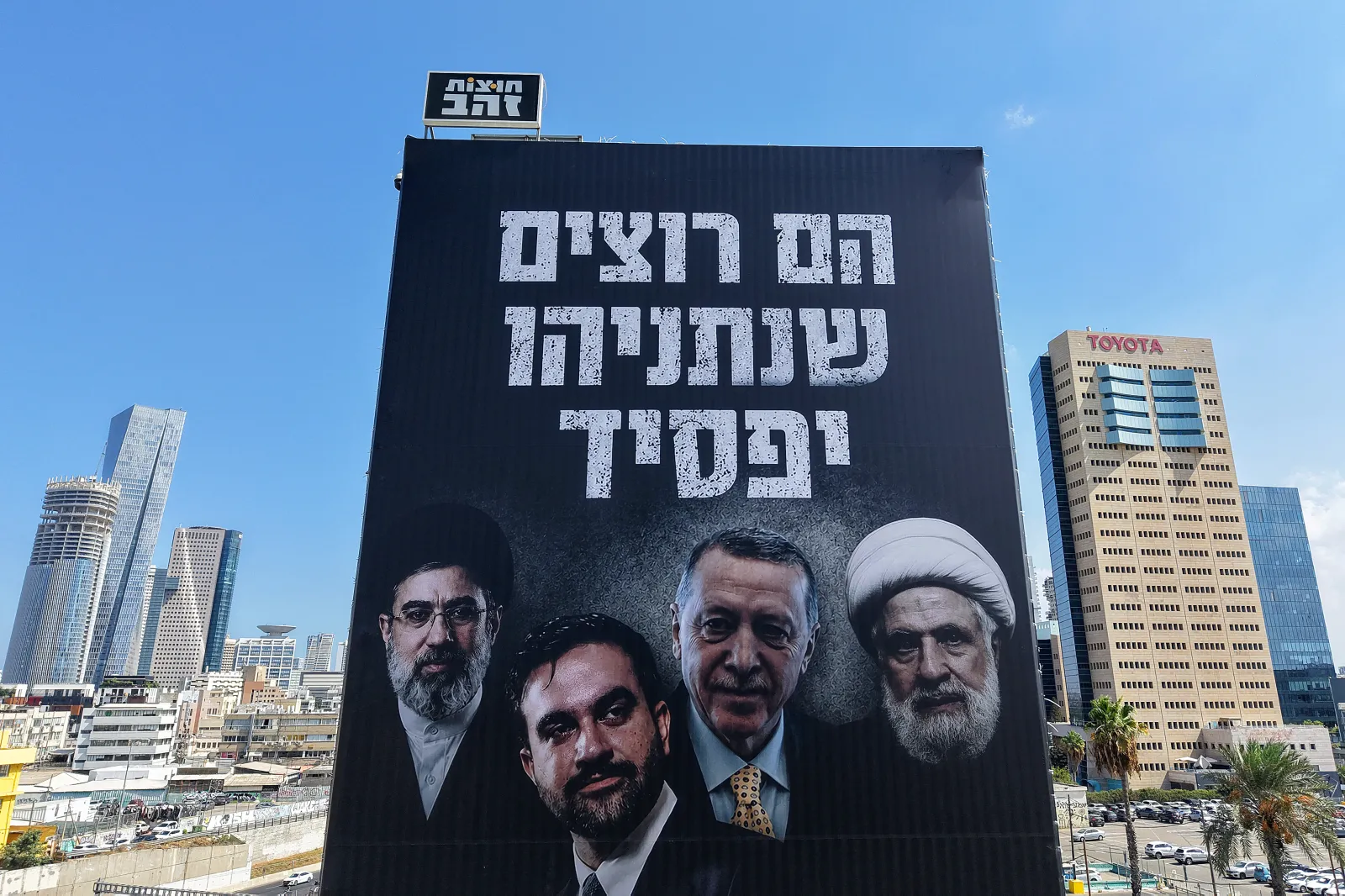
The tensions show little sign of subsiding. As a heated election approaches for the Israeli premier in October, Erdogan’s face adorns a billboard near Tel Aviv beside the likenesses of Iranian Supreme Leader Ayatollah Mojtaba Khamenei, New York City Mayor Zohran Mamdani and Hezbollah Secretary-General Sheikh Naim Qassem, along with the message, “They want Netanyahu to lose. Don’t let them win.”
Now, some analysts say the possibility of a direct clash cannot be dismissed.
Ismail Numan Telci, director of Ibn Haldun University’s Center for Gulf Studies and Global Policy in Istanbul, argued that a direct military confrontation between the two U.S. allies is not “the expected outcome” at this stage, though “ruling it out entirely would be premature.”
“And I wouldn’t want to give false comfort on that point,” Telci told Newsweek. “The Syrian theater is dense with actors, short on margin for error, and increasingly shaped by domestic political calendars, which adds an unpredictable variable to an already volatile environment.
“A limited flare-up cannot be taken off the table completely, particularly if Israel decides to test Turkish resolve near an airbase again.”
Roots of Israel-Turkey Rivalry
Relations between the two nations were not always this bad. Turkey was the first Muslim nation to recognize the newly established State of Israel in March 1949, weeks after the end of the first Arab-Israeli War.
Ties often fluctuated throughout the Cold War era as Ankara aligned itself with the West by joining NATO in 1952 while remaining supportive of Palestinian self-determination. Even when Erdogan rose to power in 2002, he initially pursued positive engagement with Israel.
By 2009, however, following the first major war in Gaza, a tense exchange between Erdogan and then-Israeli President Shimon Peres in Davos and Netanyahu’s return to office months later, relations began to sour decisively.
Several attempts at reconciliation and normalization were made, but dueling accusations between Erdogan and Netanyahu went on to dominate the bilateral dynamic. Some of the harshest rhetoric has emerged since the onset of the current Middle East crisis brought on by Hamas’ October 2023 attack against Israel and the ensuing war in Gaza.
A number of Israeli officials, such as Consul General in New York Ofir Akunis blame Erdogan for adopting a hostile outlook. In a recent interview with Newsweek, Akunis described Erdogan as “extreme” and “insane,” referencing his support for activist flotillas attempting to break the blockade of Gaza and accusing him of aiding and abetting Israel’s foes.
“So maybe one day, maybe I don’t know, in the near future, something will happen in Turkey as well,” Akunis said at the time, “And we can find ourselves in a much better situation, like it was until this crazy man actually changed his mind toward the State of Israel and encouraged terror attacks.”
Turkish officials are similarly critical of Israel’s direction under Netanyahu, with the Turkish Communications Directorate having recently slammed accusations by the Israeli prime minister and his officials as “another indication of the helplessness of an administration seeking to evade accountability for war crimes and crimes against humanity.”
Syria marks a particularly volatile flashpoint for the feud. Erdogan and Netanyahu opposed the country’s longtime leadership under former President Bashar al-Assad, but the man who would oust him in December 2024, former Islamist militant chief-turned-pragmatic leader President Ahmad al-Sharaa, has aligned closely with Turkey while drawing direct intervention from Israel.
Should Israel continue to target Turkish interests in Syria, Telci warned that “Türkiye’s options are considerable, ranging from deepening its footprint alongside Damascus, to tightening its own air defense posture along the Syrian border.
“Ankara has so far chosen firm rhetoric over retaliation on the ground, and that reflects restraint rather than weakness, a distinction that tends to get lost in Israeli commentary on this.”
Assaf Orion, a former head of the Israel Defense Forces General Staff’s Planning Directorate Strategic Division and now a senior researcher at the Institute for National Security Studies, argued that Assad’s downfall marked “a positive development for Israel” in that it severed a key route linking Iran’s Axis of Resistance coalition to Israel’s frontlines.
“However, the vacuum created in Syria is increasingly being filled by Sunni actors with roots in jihadist movements, who enjoy the support of Turkey, whose policy toward Israel has become increasingly hostile,” Orion told Newsweek.
“Against this backdrop, a perception has developed in Israel in recent years that a Turkish-backed Syria could become a significant challenge to Israeli national security and, in some respects, an even more complex challenge than the one posed by Iran,” Orion said. “Turkey is a NATO member with a large military, a substantial economy and defense industry, deep ties with the West, and clear ambitions to expand its presence and influence in Syria and the Levant.”
 Where Trump Comes In
Erdogan is not the only world leader to have embraced Sharaa’s rise to power and promises to oversee a new future for Syria. Trump has repeatedly credited his Turkish counterpart with having helped lay the groundwork for a reset in relations between Washington and Damascus, which has increasingly emerged as a new U.S. partner in the region.
Trump has since met Sharaa three times, most recently at last month’s NATO summit in Ankara. The warming of ties has led to deepening security cooperation and the lifting of U.S. sanctions, most recently demonstrated by the State Department’s decision to remove Syria’s designation as a state sponsor of terrorism for the first time since the list was established in 1979.
But Trump’s oft-expressed admiration for Erdogan and Sharaa has frustrated Netanyahu, who has sought to portray Syria as a target of a hostile and expansionist Turkish agenda.
Given the degree to which Ankara has invested in expanding its presence in Syria, Orion said that “President Trump’s support for Erdogan and President al-Sharaa is indeed a source of concern in Israel.”
The developments come at a time when signs have already emerged of strains in Trump and Netanyahu’s relationship six months into their joint war against Iran. Trump also has a history of criticizing Israel for strikes in Syria, most notably during Netanyahu’s efforts last year to aid Druze militias clashing with Syrian security forces and tribal militias.
The latest Israeli attack in Syria also drew U.S. criticism, specifically from Tom Barrack, who serves as U.S. ambassador to Turkey and special envoy for Syria. He decried an “unnecessary escalation” on Israel’s part and went on to state that Israel gave no prior warning for the attacks despite contradictory claims by Israeli Defense Minister Israel Katz.
Barrack’s recent comments on Syria also drew controversy, however. After stating in an interview Friday that Israel “still” occupies Syria’s Golan Heights since the territory’s seizure in 1967, Barrack acknowledged on Monday the decision taken by Trump in 2019 to recognize the disputed region as Israeli land.
Still, Telci described Barrack as a key figure in U.S.-Turkey relations and referred to the U.S. diplomat’s initial statements on Syria as a “clear example” of a shift in traditional U.S. support for Israel.
Meanwhile, Orion saw grounds for worry should the current trajectory of these relationships continue.
“The problem is not the mere existence of disagreements between Jerusalem and Washington, which are nothing new, but the possibility that a deeper strategic divergence is emerging: The Trump administration sees Erdogan and al-Sharaa as potential partners in shaping and stabilizing the new regional order, whereas Israel also sees Turkey and the emerging Syria as sources of risk that need to be contained,” he argued.
 Bigger Picture
This new regional order is not limited to the Ankara-Damascus alignment. This month, Turkey signed a mutual defense pact with Saudi Arabia and Pakistan, a move Trump welcomed as evidence “that the Middle East is coming together and how Countries will finally be able to defend themselves in a more meaningful way.”
The Israeli reaction was more muted. Shortly after the announcement, Netanyahu held a phone call with Prime Minister Narendra Modi of India. The two countries work together directly alongside the United Arab Emirates and the U.S. through the quadrilateral I2U2 cooperation mechanism.
Israel has also boosted ties with Greece and Cyprus as part of what Netanyahu has referred to as a “hexagon of alliances.” Both nations have their own disputes with Turkey in the Eastern Mediterranean, with Greek Foreign Minister Giorgos Gerapetritis responding to Turkey’s recent designations of two “maritime parks” in the northern Aegean Sea by warning on Monday that “any attempt to violate our sovereign rights will be met with every means at our disposal.”
At a time when Netanyahu has pursued his own vision for a “new Middle East,” Orion viewed the implication of the Turkey-Saudi Arabia-Pakistan “Mecca Agreement” as “the potential emergence of a regional architecture that competes with the Israeli vision based on the Abraham Accords, normalization with Saudi Arabia, and a network of partnerships with moderate Arab states.”
Even if the pact was not explicitly aimed against Israel and may just as well seek to deter threats from Iran, which has directly targeted Saudi Arabia and other U.S. partners in the region in a bid to raise the costs of the conflict, Orion argued that the coalition “brings together three important Sunni powers—including a nuclear-armed state—within a new security framework.”
“If Turkey succeeds in positioning itself at the center of a Sunni bloc that includes Saudi Arabia, Pakistan and perhaps additional states in the future, Israel’s ability to shape the emerging regional order in accordance with its interests could diminish,” he added.
However, he also warned of a potential “self-fulfilling prophecy” given Israel’s military approach to the problem, one in which “Israel acts to prevent Turkey and Syria from becoming a threat, but its actions may instead reinforce perceptions of Israel as a common threat and encourage greater cooperation between them against it.”
Can Conflict Be Avoided?
Should tensions persist, the consequences of even a limited clash could prove even more serious for Washington than the vastly disruptive and destabilizing ramifications of the U.S.-Israeli war against Iran.
Rich Outzen, a former U.S. State Department civilian and military adviser and later at the office of the special representative for Syria during the first Trump administration, warned that “in one sense, the likelihood of conflict is quite high, given Israel’s aggressive stance since 2023 on not only deterring but preemptively striking perceived potential threats throughout the broad geography of the Middle East.”
“When applied not only to Iran-aligned proxies who actually target Israel but against U.S. allies with the potential to target Israel —or restrict Israeli military operations over other countries’ sovereign airspace and territory—this brand of forward deterrence is a recipe for perpetual low-level combat that can easily escalate into something worse,” Outzen told Newsweek.
“It also conflicts directly with Ankara’s intent on stabilizing and economically developing regional countries such as Syria, Lebanon, and Iraq, places where Turkish companies and military advisors would like to build institutions and reinforce state structures.”
As to how the White House might avoid such a catastrophic outcome, Outzen pointed to the possibility of mediation, including a de-confliction channel previously proposed by Barrack. And with the U.S. already focused on attempting to find a resolution to the war against Iran, he argued that resolving the Israel-Turkey feud would also entail significant diplomatic attention toward de-escalation and reinforcing economic cooperation.
But he noted the political atmosphere in the U.S. appeared to be trending in another direction.
“The mood in the U.S. is on both sides of the political aisle averse to direct management of the Middle East—we want allies to do more and to take the initiative in improving economic and security conditions,” Outzen said. “Strong allies are good; but when we have two strong allies organizing regionally and they are not talking, we may be contributing to the formation of antagonistic blocs.”
Contact Newsweek editors on this story: Tom O’Connor and Dave Siminoff.