
When President Donald Trump got tired of trading offers with Iran at the beginning of the year, he decided to ditch talks in pursuit of a full-blown war. When the war produced consequences that were entirely predictable and predicted — Iran shutting down the Strait of Hormuz, becoming more belligerent with its Gulf Arab neighbors and rallying around an even more hard-line leadership — he switched to diplomacy again, hoping the June memorandum of understanding would nip escalation in the bud before it got any worse. And when that agreement fell apart weeks later, Trump changed tack and went back to airstrikes.
Now, seemingly out of options, the Trump administration appears ready to take a full swing. In his first term, Trump relied on maximum-pressure sanctions to compel the Iranians to give up their nuclear aspirations. Years later, that same maximum-pressure strategy is again at the forefront.
On Monday, Treasury Secretary Scott Bessent unrolled “Operation Economic Outcast,” a new initiative meant to cut off all revenue streams to Tehran and squeeze the regime into submission. The message: Any country that dallies with Iran in any capacity is at risk of being shut out of the U.S. financial system. “We are level-setting with every country to tell them our expectations,” Bessent said during the news conference. “We know who they are. They know who they are.”
Play
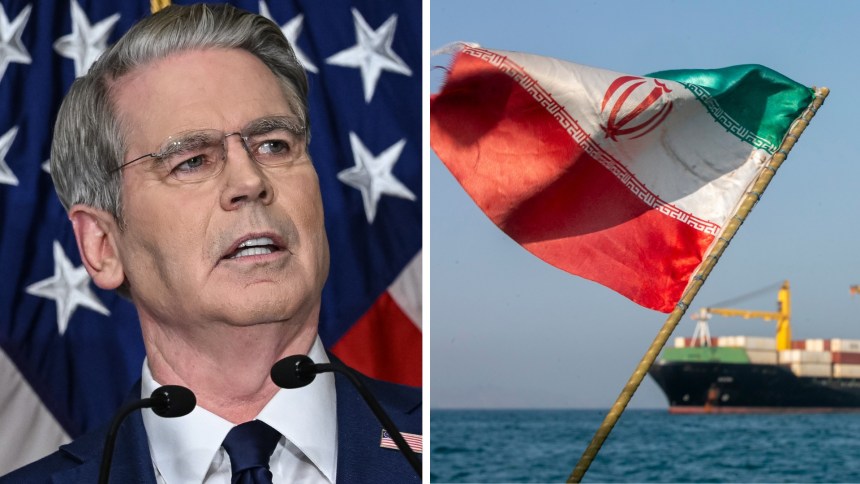
The Iranians, of course, can’t assume the Trump administration is bluffing. Tehran warned Washington’s Arab partners to refrain from participating in the scheme, blacklisted dozens of ships from transiting the strait and disabled yet another tanker near the coast of Oman hours after Bessent’s speech.
Trump, however, should think long and hard before pulling the trigger on a full-bore economic war. Such a course of action not only is destined to instigate even more Iranian retaliation — up to and including a return of missile and drone attacks against the Gulf states — but also risks soiling other key components of his foreign policy. This caution is all the more important as Americans increasingly chafe at higher costs for everything from groceries to gasoline, and as the global economy continues to suffer hemorrhages due to a war of Trump’s creation.
The mechanics of strangling the Iranian economy aren’t the problem. The U.S. Treasury Department has plenty of experience enforcing U.S. secondary sanctions around the world. Imposing export bans, seizing accounts and prohibiting a country from using U.S. dollars have long been favorite tools for the United States to penalize adversaries for any number of perceived offenses.
The issue, rather, is prioritization. There’s no doubt that Trump is intent on coercing Iran into meeting his policy demands: bringing shipping traffic through the strait back to normal levels and handing over its stockpile of enriched uranium.
If Trump is genuinely serious about driving Iran’s economy into a ditch, he will have to go after China, which before the war purchased approximately 90% of Iran’s crude, netting the Iranian government billions of dollars it wouldn’t otherwise have had due to U.S. sanctions on its oil industry.
But Iran isn’t the be-all and end-all. Trump also has other foreign policy goals that go above and beyond the war, including maintaining a workable strategic relationship with China at a time of economic upheaval and improving ties with India, the South Asian giant that some officials inside the U.S. national security establishment view as a critical bulwark against Chinese power. Unfortunately, with the advent of Trump’s self-proclaimed economic D-Day, all these priorities are now set to clash.
More articles

Daniel R. DePetris is a fellow at Defense Priorities and a syndicated foreign affairs columnist at the Chicago Tribune.