
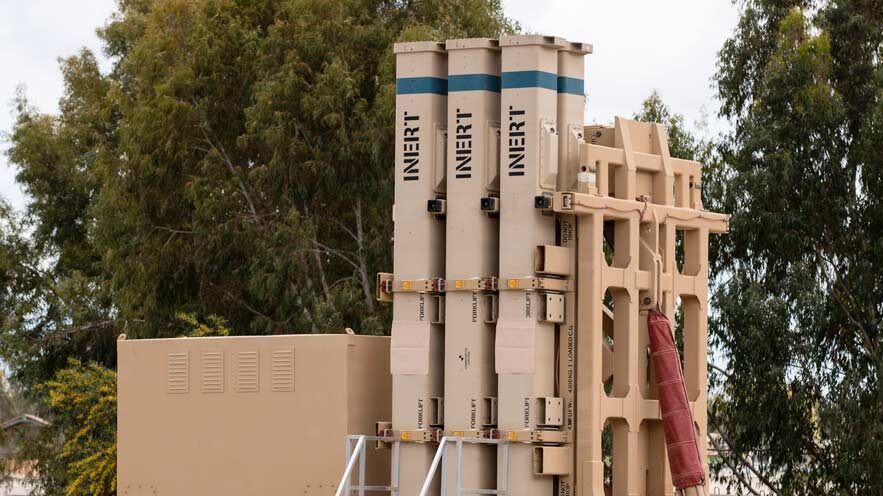
Greece is preparing to overhaul its air defenses with a $3.6 billion Israeli-built network combining missile, aircraft, and drone defenses into a single system.
The “Achilles Shield” agreement, set to be signed with Israel’s Defense Ministry in Tel Aviv after three years of discussions, will bring together several major Israeli systems. Rafael Advanced Defense Systems will provide David’s Sling to intercept heavy rockets and ballistic missiles and SPYDER systems to counter UAVs and drones. Israel Aerospace Industries will supply Barak MX for defense against aircraft and missiles.
AI-powered command-and-control software will connect the systems and integrate Greece’s existing Patriot batteries, creating a multi-layered network capable of evaluating threats and coordinating responses.
The project will also replace much of Greece’s aging Russian-built air defense inventory, including S-300 and Tor-M1 systems that have become increasingly difficult to maintain.
Greek companies will handle at least 25% of the project, worth more than €700 million. The agreement also provides for source-code transfers intended to give Athens national operational control.
The timing carries a broader strategic dimension. Although Achilles Shield has been three years in the making, its finalization follows the Mecca Joint Defence Agreement between Saudi Arabia, Turkey, and Pakistan.
Israel and Greece view that pact as a direct security threat. Israel fears its NATO-style collective defense clause could restrict Israeli military freedom of action. Greece sees Turkish ambitions gaining the backing of Saudi financial resources and Pakistani strategic depth.
The Achilles Shield agreement moves Greece’s long-planned defense overhaul into implementation while further deepening its defense relationship with Israel.