
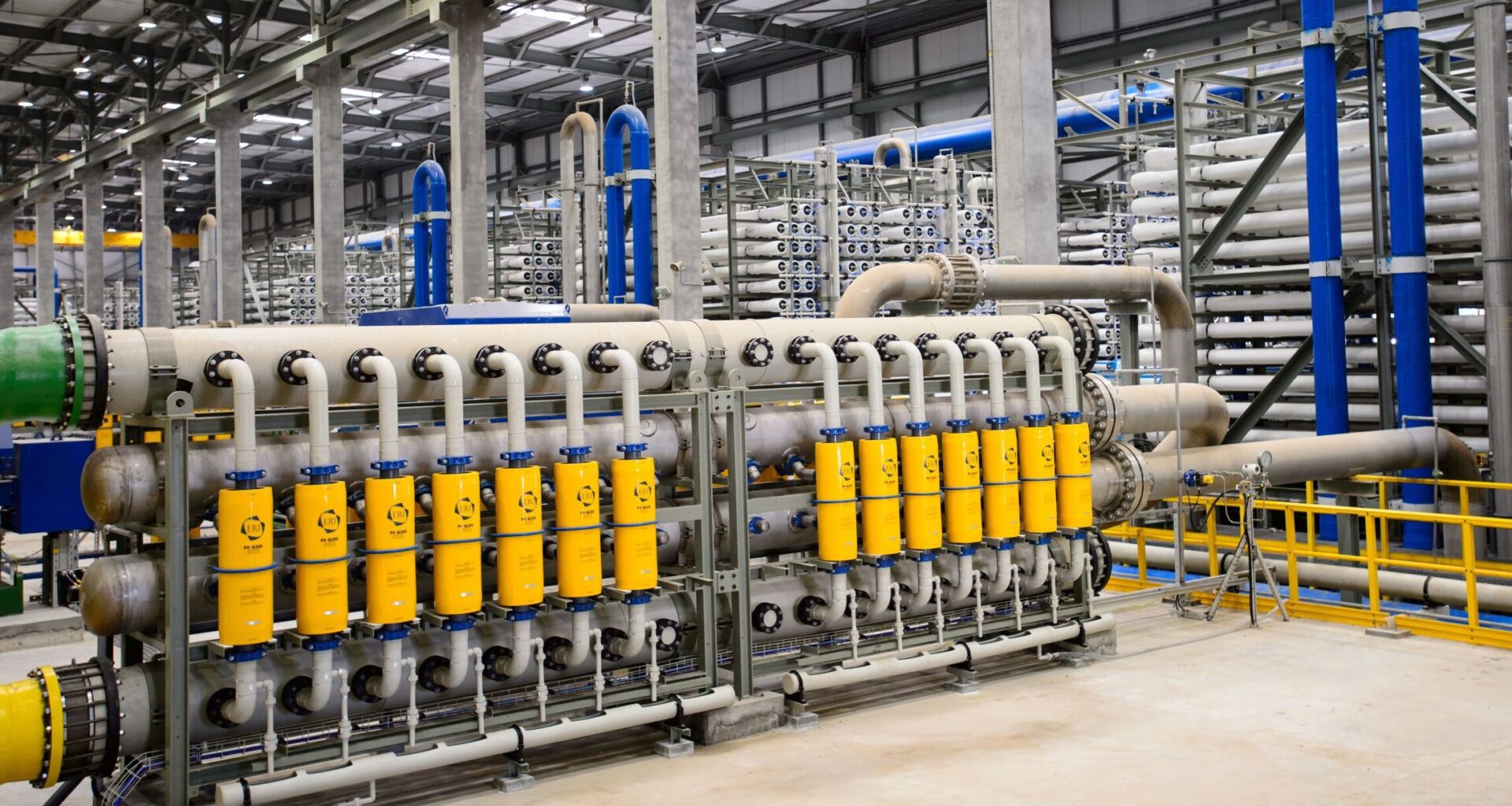
Israel’s water system is under unusual strain after a bloom of microscopic algae, likely carried from Egypt’s Nile Delta by sea currents, clogged filtration membranes, forcing five of the country’s six major desalination plants offline over the weekend. By Monday afternoon, only Hadera remained in operation, while Ashkelon, Ashdod, Sorek, and Palmachim sat idle.
However, by Monday evening it was announced that The Sorek A and B desalination plants were resuming full operations, while the Palmachim and Ashdod facilities were expected to return to full capacity in the evening, the Mekorot Water Authority announced following a situational assessment led by Energy Minister Eli Cohen and ministry Director General Yossi Dayan, together with the Water Authority and Mekorot.
Initial reports had blamed the disruption on storms stirring up the Mediterranean. But researchers at the Israel Oceanographic and Limnological Research Institute later identified the more precise cause: the algae are small enough to slip past intake filters, and their unusual concentration is what triggered the abnormal turbidity.
The Water Authority disclosed the shutdowns only on Monday, days after they began Saturday, and stressed the outage stems from natural causes, not sabotage—explicitly ruling out a cyber incident amid public speculation. A Water Authority spokesperson likened the mixing of turbid water to “a cup of coffee that got stirred up,” explaining that plants were deliberately halted to avoid irreversible damage to costly filtration systems, which could have taken months to repair had they kept running.
With the offline facilities normally supplying the bulk of the country’s drinking water, authorities have prioritized households over agriculture. Southern Israel has been hit hardest: the Ramat Negev Regional Council halted all agricultural freshwater use for several hours, and the Eshkol Regional Council urged farmers and landscapers to slash consumption immediately.
The disruption also rippled into Jerusalem, where several central neighborhoods—including the Bukharian Quarter, Geula, Ramot Eshkol and Mea Shearim—lost water supply Monday afternoon. The city’s Gihon Corporation opened emergency public water-filling stations at locations across the capital. Tel Aviv also cut nonessential use, including beach showers and irrigation, as officials called the near-total shutdown an “extremely rare” step for a system that normally relies on desalination for most of the nation’s drinking water.