
By Freddie Gower
For the people of Gaza, the line between life and death is all too real. It’s marked out by large concrete blocks, spray painted yellow. Cross it and you risk instant death.
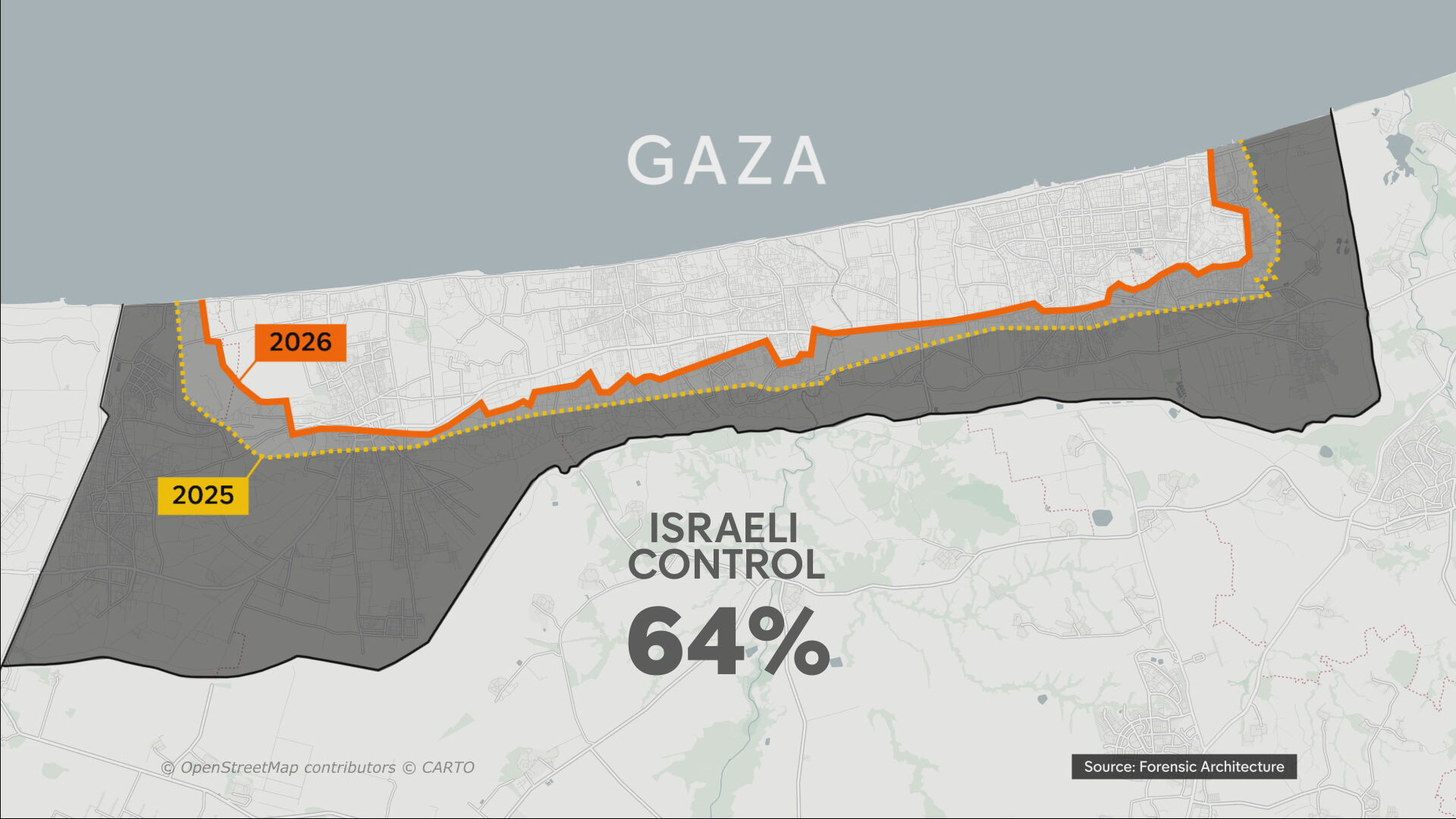
This is the ‘Yellow Line’, the demarcation between the area of Gaza being occupied and controlled by Israeli forces and what is still run by Hamas.
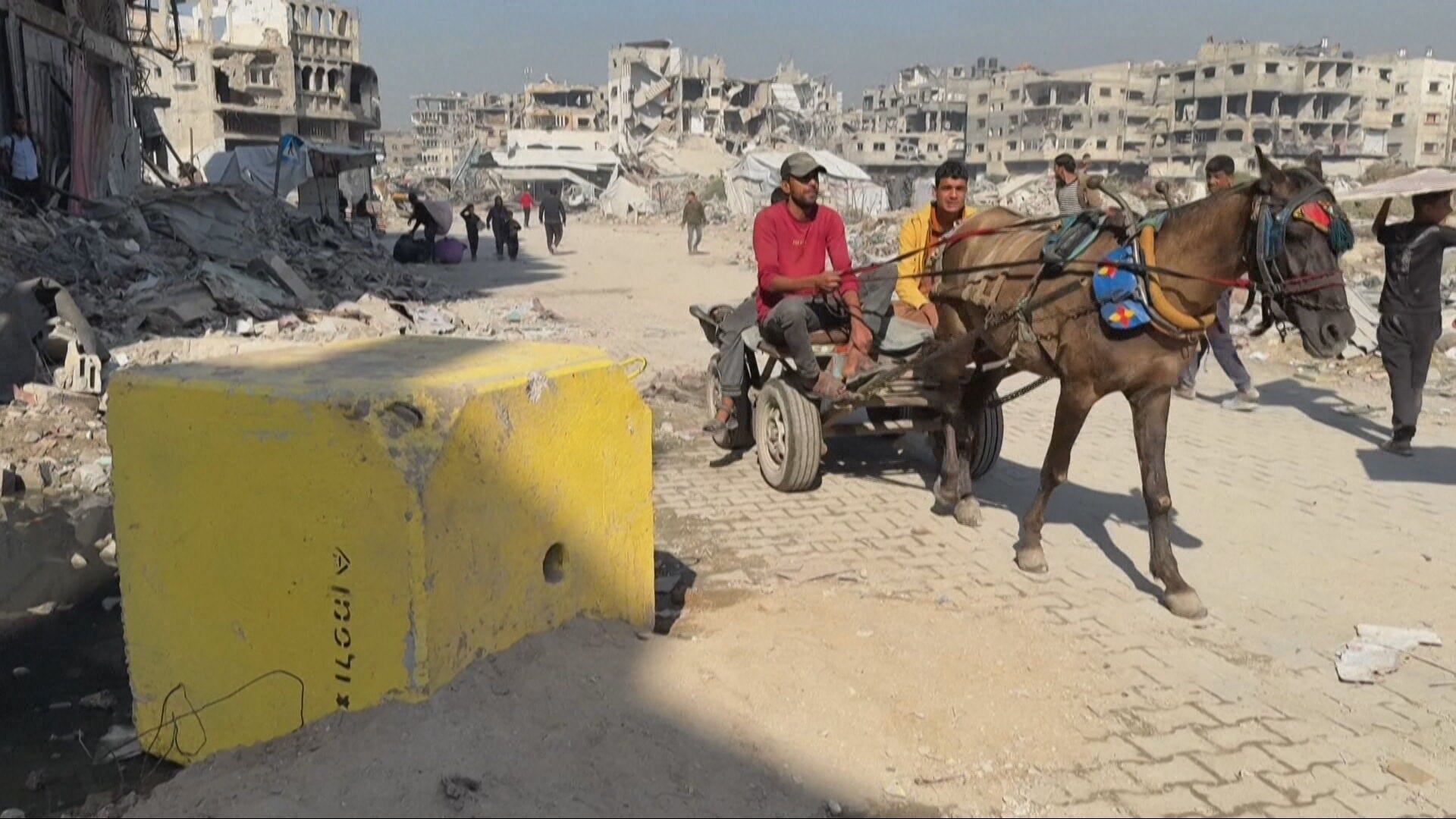
The ‘Yellow Line’ bisects ruins and rubble. It separates people from what’s left of their properties, possessions and the bodies of their loved ones.
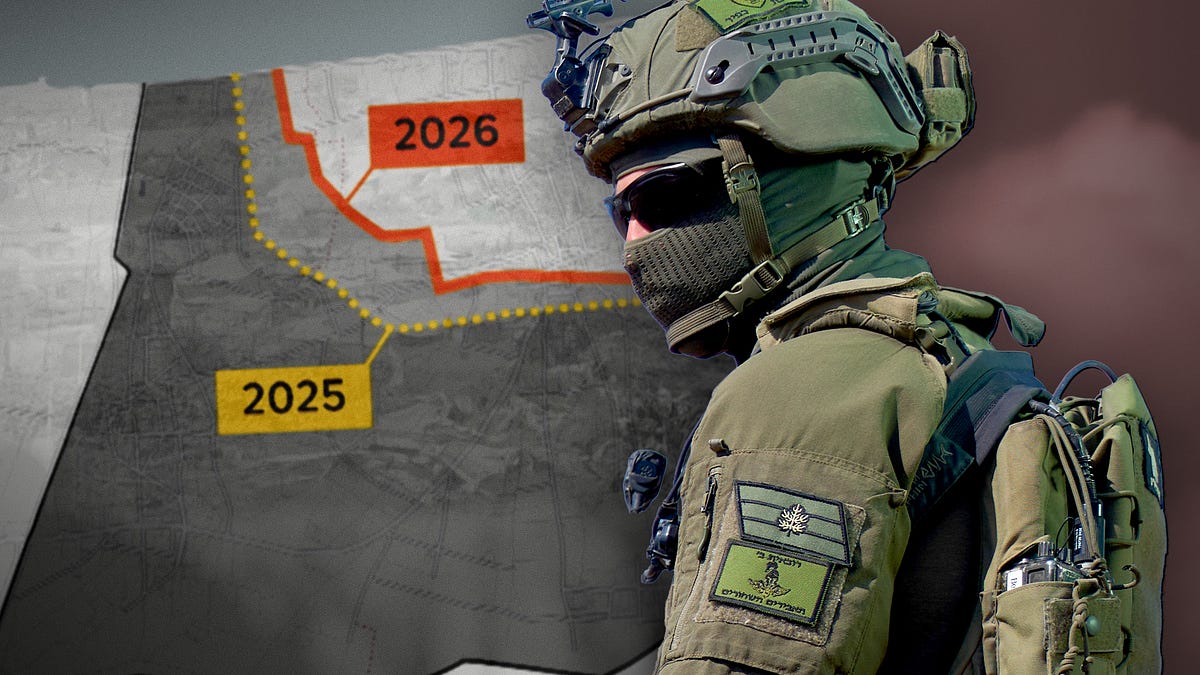
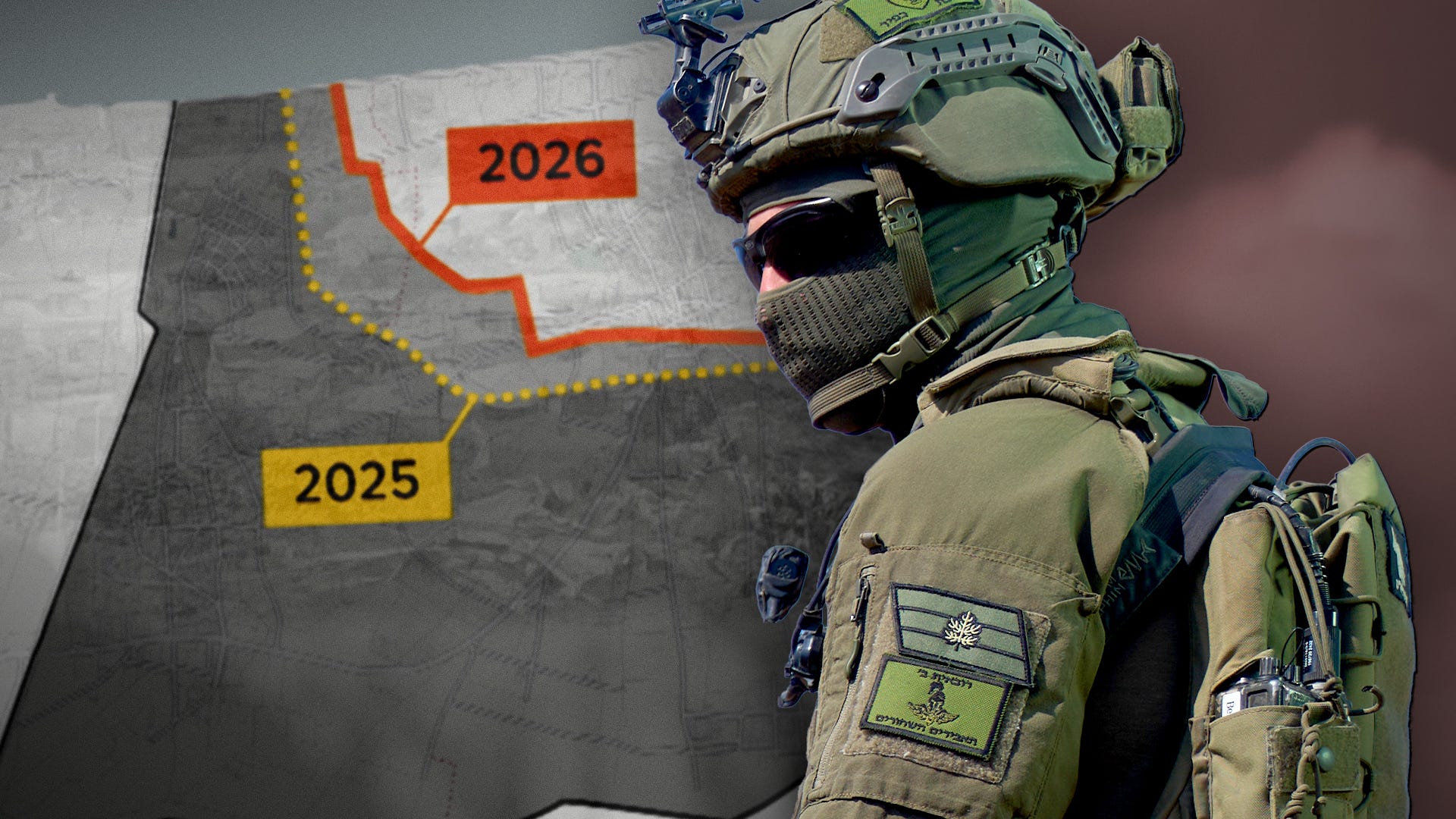
As Israel expands its control of Gaza, the line is moving – squeezing more than two million civilians into an ever-smaller space.
What is life like for Palestinians living close to the ‘Yellow Line’?
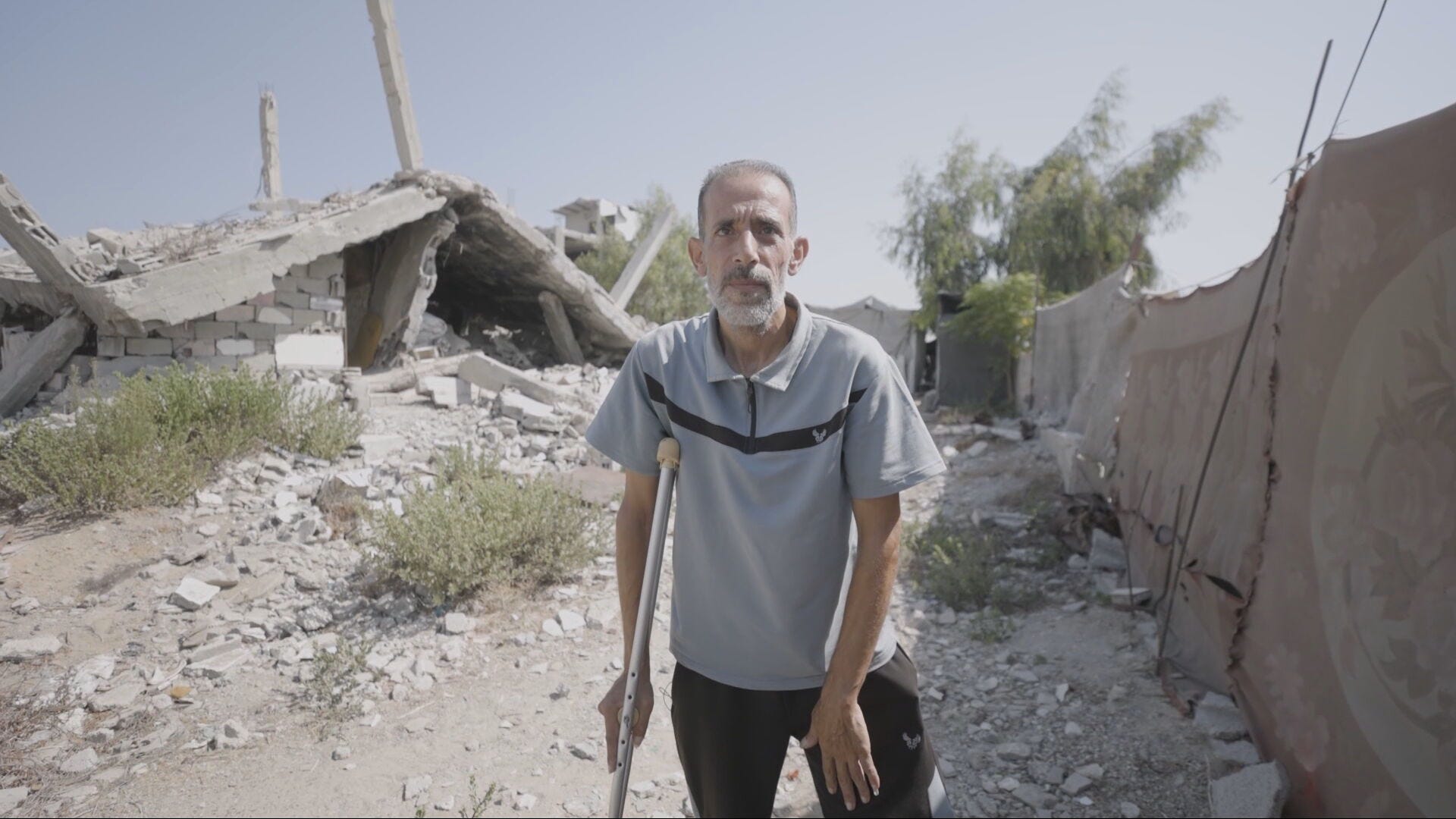
“When we first came here, the Yellow Line was about two kilometres away from us,” Wissam Arhaim, pictured below, tells us. “Then after a while, the shooting started every day.”
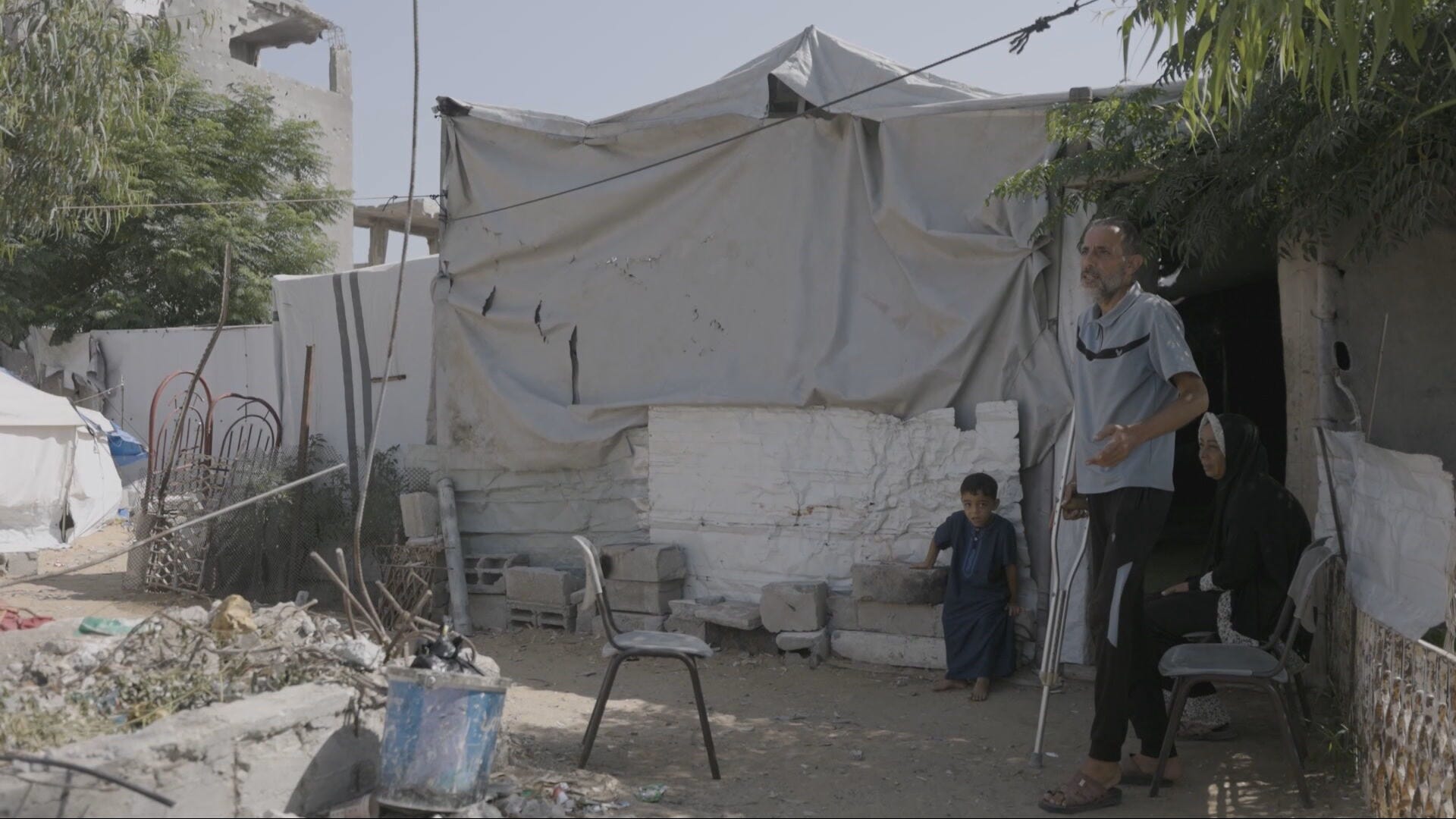
Like many Gazans, Wissam and his family are living in a makeshift shelter amid a sea of rubble in the north of the Strip. Next door, the ruins of a family home. He says the bodies of 34 people are still trapped underneath it, including his brother, uncle, their wives and children, following an Israeli strike late last year.
Since then, Israeli forces have edged to within 240 metres.
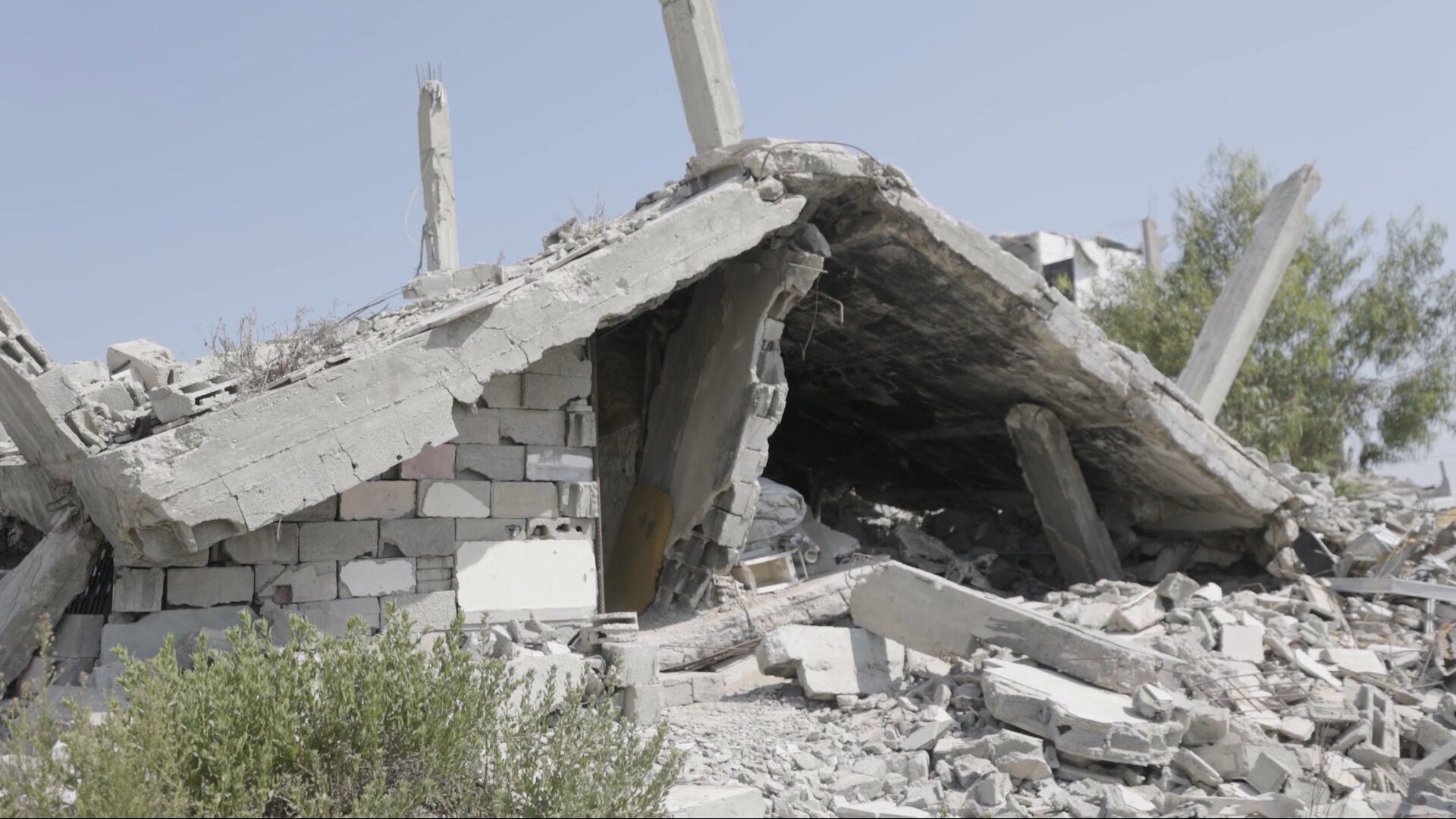
“All night long – bulldozers, shooting, demolishing, pulling, raising, dumping… any moment a tank could show up, at any moment shooting could start… we don’t know whether to stay put or go outside. There’s nothing to do except stay inside the tents, sitting, unable to lift your head because of the intensity of the gunfire,” he says.
Wissam knows the danger all too well. On two occasions, he says, he has been shot by Israeli forces close to the ‘Yellow Line’. His kidney was hit in the first incident last year. The second, in February, left him with a severe injury to his leg that limits his mobility.
“I collapsed right here in this spot,” he says, leaning on his crutch, pointing to the ground. “I started shouting: ‘I’ve been shot, help me!’”
In a statement, the IDF told us they “reject the claim that its forces knowingly fire at civilians who do not pose a threat”.
However, it’s clear that living in proximity to the ‘Yellow Line’ presents a lethal risk to Gazans. Wissam’s youngest son Rukhan, pictured below, is learning this, fast. He describes running and hiding behind a wall the last time there was shooting.
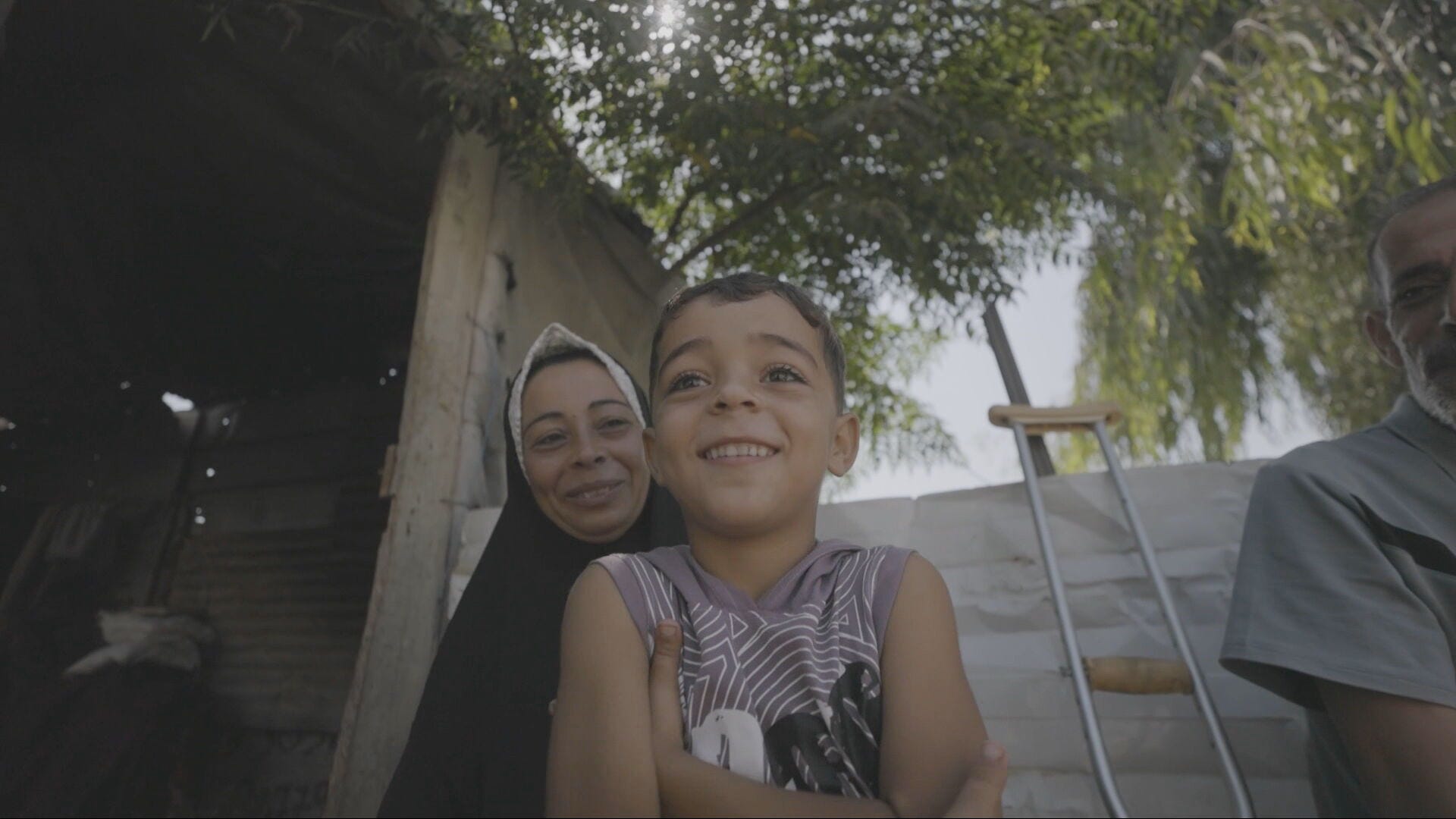
Why? “So I wouldn’t die,” says the five-year-old with a smile.
Dividing Gaza along the ‘Yellow Line’ was the outcome of the US-backed ceasefire deal between Israel and Hamas, signed last October.
The overall plan was designed by Donald Trump’s Board of Peace, backed by the UN. Phase One resulted in the release of the remaining Israeli hostages held in Gaza. But Phase Two has become badly deadlocked.
 Analysing US-Israel alliance as Trump’s Gaza peace plan rejected
It requires Israel to withdraw its forces from Gaza, and for Hamas to disarm.
However, the question of the order in which this happens has become a chicken-and-egg style headache for negotiators.
In the meantime, Israel has expanded control of Gaza from 53% to 64%. Analysis by the research institute Forensic Architecture shows how Israeli military infrastructure has grown, including new outposts and earth banks. The ‘Yellow Line’ is becoming a physical barrier.
A major breakthrough is required for the peace plan to move ahead – with a Palestinian technocratic government installed in Gaza, and a multinational peacekeeping force deployed there. But chances of that are slim.
Israel is heading into elections in October, and across the political spectrum there’s little appetite for a withdrawal from Gaza which leaves Hamas intact, albeit weakened.
For Gaza’s civilians, particularly those living along the ‘Yellow Line’, this process is a forlorn hope at best. At worst, a sham.
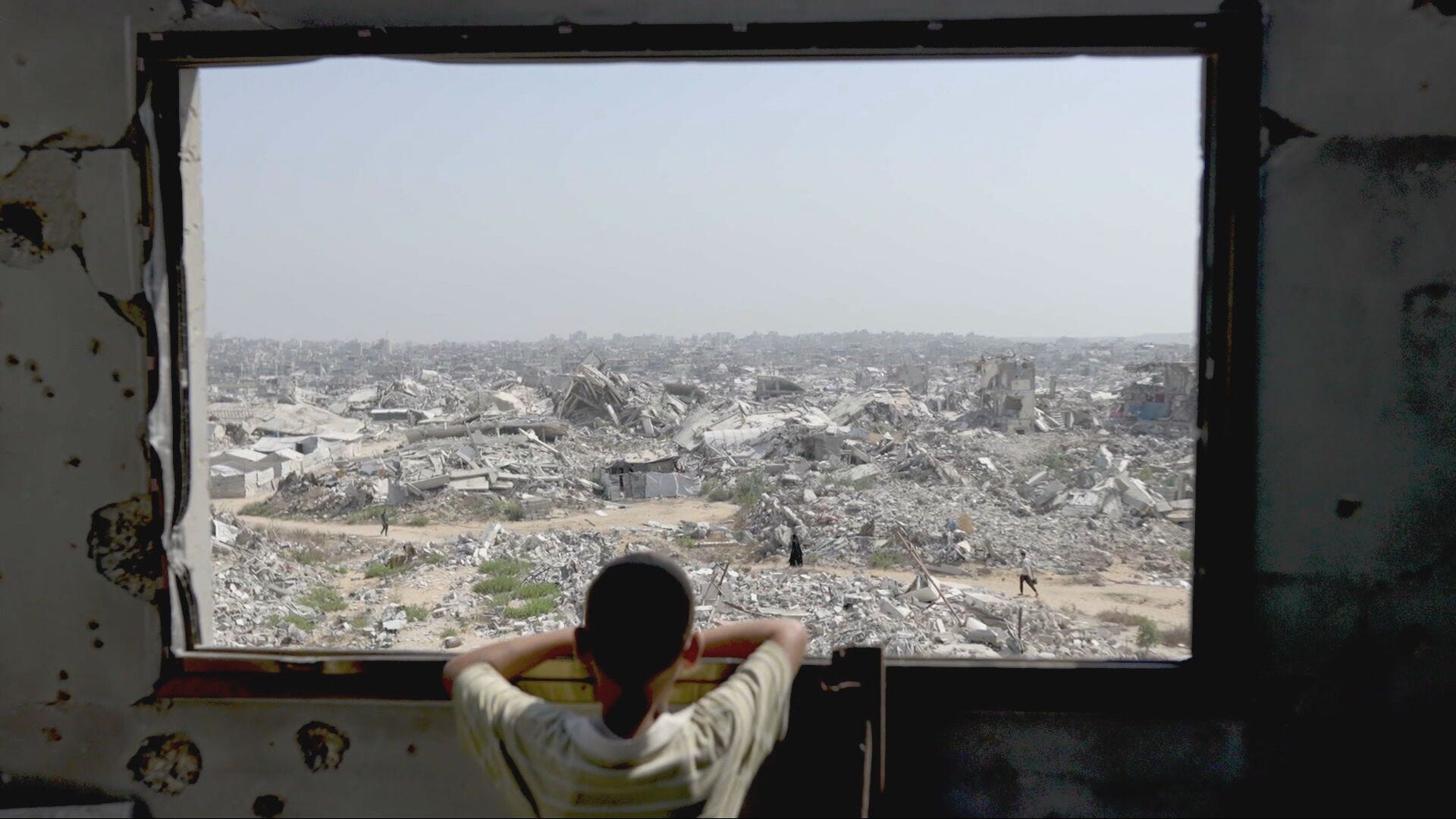
Once again, the life of a civilian population has been upended by a line drawn on a map by Israel. And, once again, it’s a line drawn in Palestinian blood.
Israel does not allow foreign journalists into Gaza, so our interviews were carried out by Gazan colleagues.
The Israel Defense Forces (IDF) said in a statement: “The area adjacent to the Yellow Line is a sensitive operational environment. Signs are posted in the area indicating that civilians must not approach IDF troops. The IDF has taken and continues to take measures to clearly and visibly mark the relevant lines and areas on the ground, in order to reduce friction and prevent harm to uninvolved individuals.
“These measures are intended to prevent infiltrations and hostile activity and to protect IDF troops and Israeli residents in the surrounding communities. For information security reasons, the IDF will not elaborate further on the components of the deployment, the barrier’s route, or its scope.”