
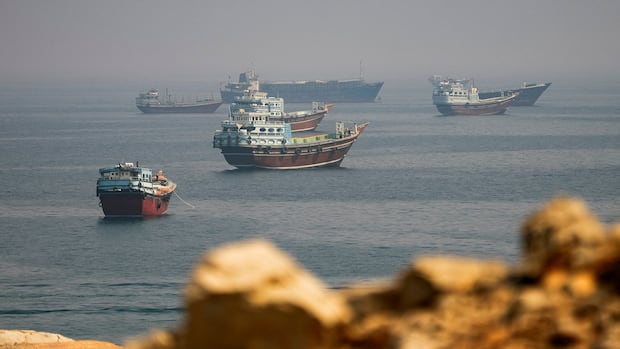
The U.S. military says it began striking Islamic Revolutionary Guard Corps targets in Iran on Tuesday.
The strikes follow “attempted attacks” by the Guard against “commercial shipping in the Strait of Hormuz and against American service members deployed to the region,” and began at 12 p.m. ET, according to a statement on X from the U.S. military’s Central Command. It did not provide further details.
Iran’s state broadcaster said there had been reports of explosions on Iran’s Qeshm Island, on the northern side of the strait.
The state-linked news agency Nour News said there had been reports of explosions in the port city of Bandar Abbas and in Chabahar, a port on the southern coast.
The attacks come after two supertankers carrying Saudi oil were struck by unknown projectiles within minutes of each other while transiting outbound through the strait late on Monday, according to shipping intelligence and tracking firms Marisks and Kpler.
“The near-simultaneous incidents represent a further escalation in the threat environment within the Omani corridor,” Marisks said.
The tankers each loaded two million barrels of Saudi crude at the Juaymah terminal last week, Kpler data showed.
WATCH | A look at sea mines: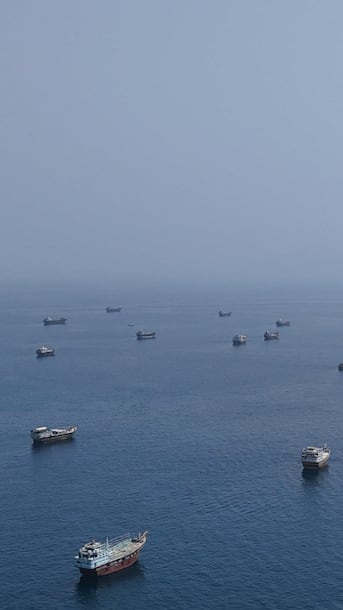
Can Iran really launch sea mines from rockets? | About That
U.S. Central Command says it carried out fresh strikes on Iran, claiming it was retaliation for Iran preparing to launch sea mines from rockets into the Strait of Hormuz. Andrew Chang digs deeper into what may be Iran’s novel ability to deploy underwater mines with missiles.
(Photo credits: The Canadian Press, CAT-UXO, Reuters, Adobe Stock and Getty Images)
The Saudi Arabian-flagged very large crude carrier Sidr was struck by unknown projectiles about 31 kilometres northeast of Khasab, Oman, at around 3:52 p.m. ET, Marisks said.
Minutes later, the Liberian-flagged VLCC Senegal Prosperity was reportedly struck by three unknown projectiles also approximately 31 km east of Khasab, Marisks said. All crew aboard were reported safe, it added.
The United Kingdom Maritime Trade Operations agency reported three projectiles striking a tanker in the same location as it sailed out of the Strait of Hormuz, in what appeared to be the same incident.
Bahri, the operator of Sidr, and Sinokor, operator of Senegal Prosperity, did not immediately respond to requests for comment.
On Tuesday, Iranian media reported that a Saudi oil tanker was stopped while transiting through the southern corridor of the Strait of Hormuz.
Oil prices gained on Tuesday after U.S. President Donald Trump threatened further strikes against Iran, following the first exchanges of fire since late July.
Energy exports curbed
Iranian and U.S. blockades of the Strait of Hormuz have sharply curbed energy exports from the Gulf as both sides tried to assert their authority over the waterway.
Efforts by mediators, including Qatar and Oman, to broker a deal to reopen the strait, which carried about a fifth of global oil supplies before the U.S. and Israel launched strikes on Iran more than six months ago, have so far proven inconclusive.
Iran said on Tuesday it would reciprocate if the U.S. honoured its commitments under a June interim deal on halting their conflict, but tensions remained high after Trump threatened Tehran with further strikes.
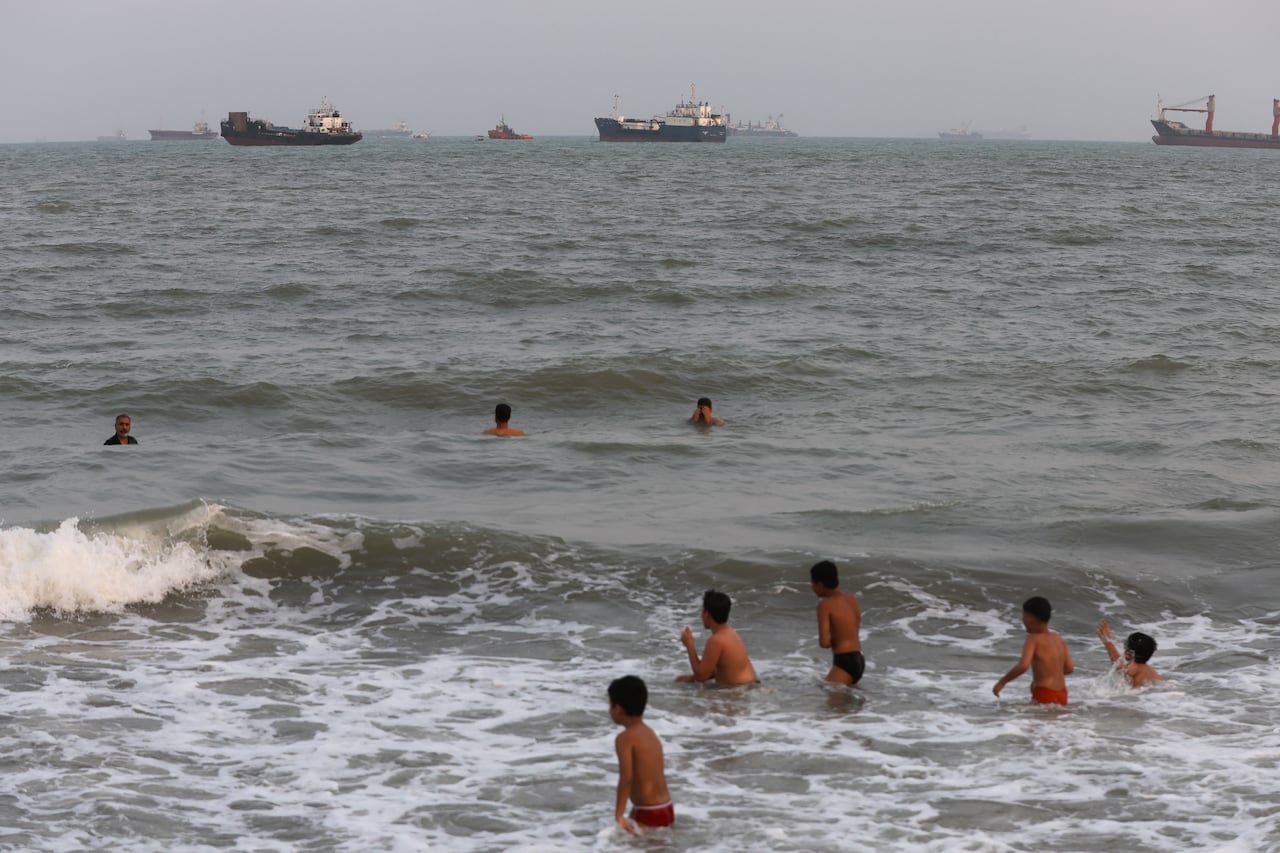 Children swim as ships are seen anchored in the Strait of Hormuz on Aug. 10, off the coast of Bandar Abbas, Iran. (Ali Saeedi/Getty Images)
The six-month-old conflict had shifted into an economic standoff before a U.S. attack on Iran’s Larak Island on Sunday, which Iran responded to by launching missiles overnight at two U.S. air bases in Jordan.
“We’re going to hit them hard … There will be a response,” a Fox News reporter quoted Trump as telling the channel on Monday, although the president separately told reporters that the renewed strikes did not signal a return to full-scale war.
A senior Iranian source told Reuters the exchanges of fire were a “limited and contained confrontation,” but said Tehran would deliver a harsh response if attacked again.
While neither side appears to want a return to all-out war, their pledges to respond to further attacks highlight how quickly a conflict that has increasingly been fought through sanctions, blockades and economic pressure could spill back into military action.
‘Run and run’
Tehran has repeatedly said it will allow free navigation through the strait only if Washington implements the terms of the deal that was signed by both sides in June, but quickly unravelled.
The agreement declared an end to fighting but deferred many of the most difficult issues and paved the way for a broader 60-day negotiation period — which passed without further agreement.
But the heightened tensions this week have renewed fears of oil supply disruptions from the world’s key crude-producing region.
“The tit-for-tat missile exchanges between the U.S. and Iran bring validation to those who believe that even if not a ‘forever war,’ this conflict will run and run,” said PVM analyst John Evans.
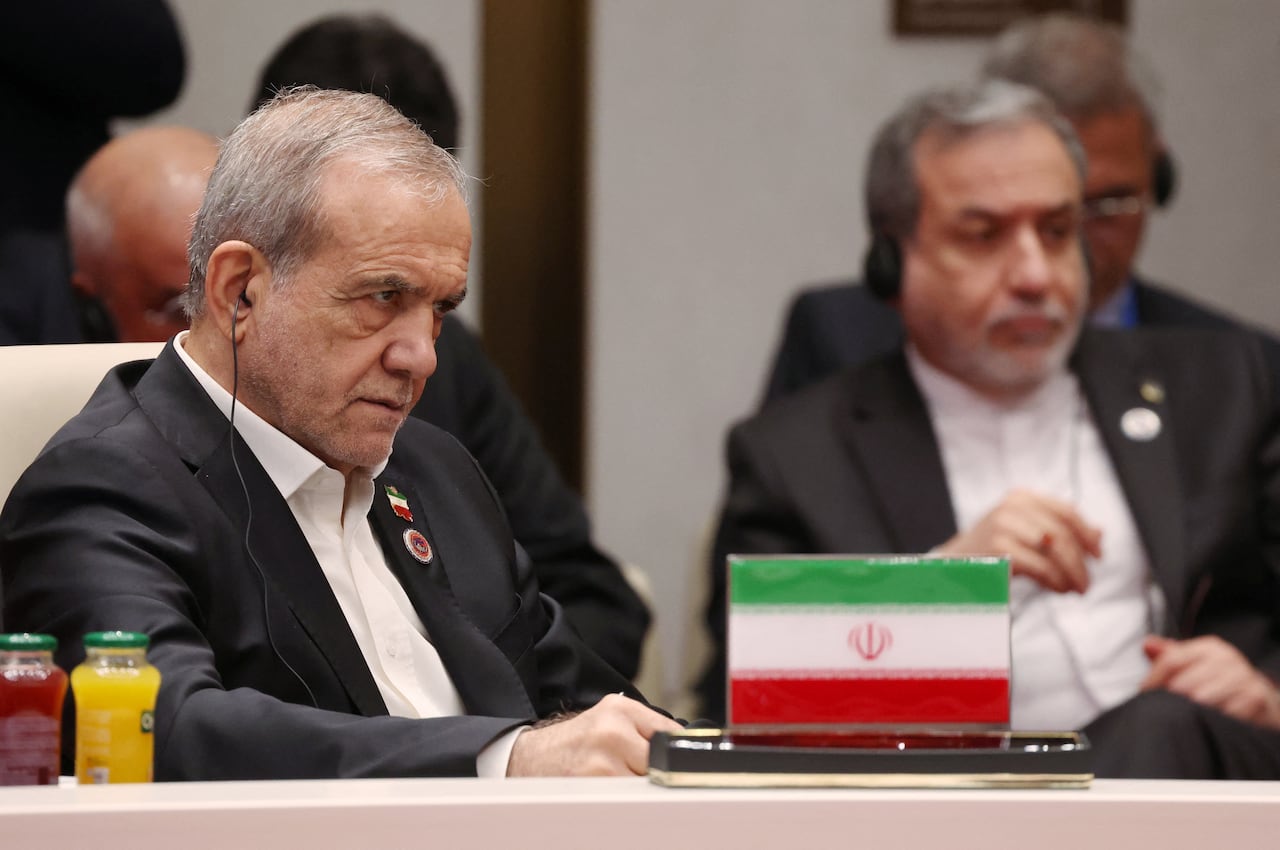 Iranian President Masoud Pezeshkian attends the Shanghai Co-operation Organisation summit in Bishkek, Kyrgyzstan, on Monday. (Vyacheslav Prokofyev/AFP/Getty Images)
Thousands have been killed in the conflict, mainly in Iran and Lebanon, since it began with U.S. and Israeli strikes on Iran on Feb. 28. Washington has increasingly relied on economic pressure to try to force Tehran to stop blockading the strait and end the war.
U.S. Treasury Secretary Scott Bessent said on Tuesday that the United States is likely to announce sanctions on a bank this week as part of its economic campaign against Iran. Another may follow the week after, Bessent said, as well as new secondary sanctions meant to increase economic pressure on the country.
“We are speaking to our allies here, who have all come forward, and we have had a great show of support,” he said at an event on the sidelines of the U.S.-hosted G20 finance leaders in Asheville, N.C.
He said the U.S. may also target airline leasing companies and others that did business with the Islamic Revolutionary Guard Corps, a section of the Iranian army.
“We have zero tolerance,” Bessent said. “We are going to economically asphyxiate this regime.”
Iran’s central bank governor, Abdolnaser Hemmati, said earlier on Tuesday that Tehran had sufficient foreign currency reserves.
LISTEN | The state of the U.S.-Iran war:
Front Burner27:28Is Iran becoming a ‘forever war’?
The central bank was ready to inject up to $2 billion US into the foreign exchange market to calm recent volatility, Hemmati was quoted as saying by the semi-official Tasnim news agency.
“I am telling the president of the United States: Iran has [foreign] currency and it has enough,” he said.
His comments appeared partly aimed at reassuring markets after Iranian officials pointed to growing difficulties for Iran’s economy.
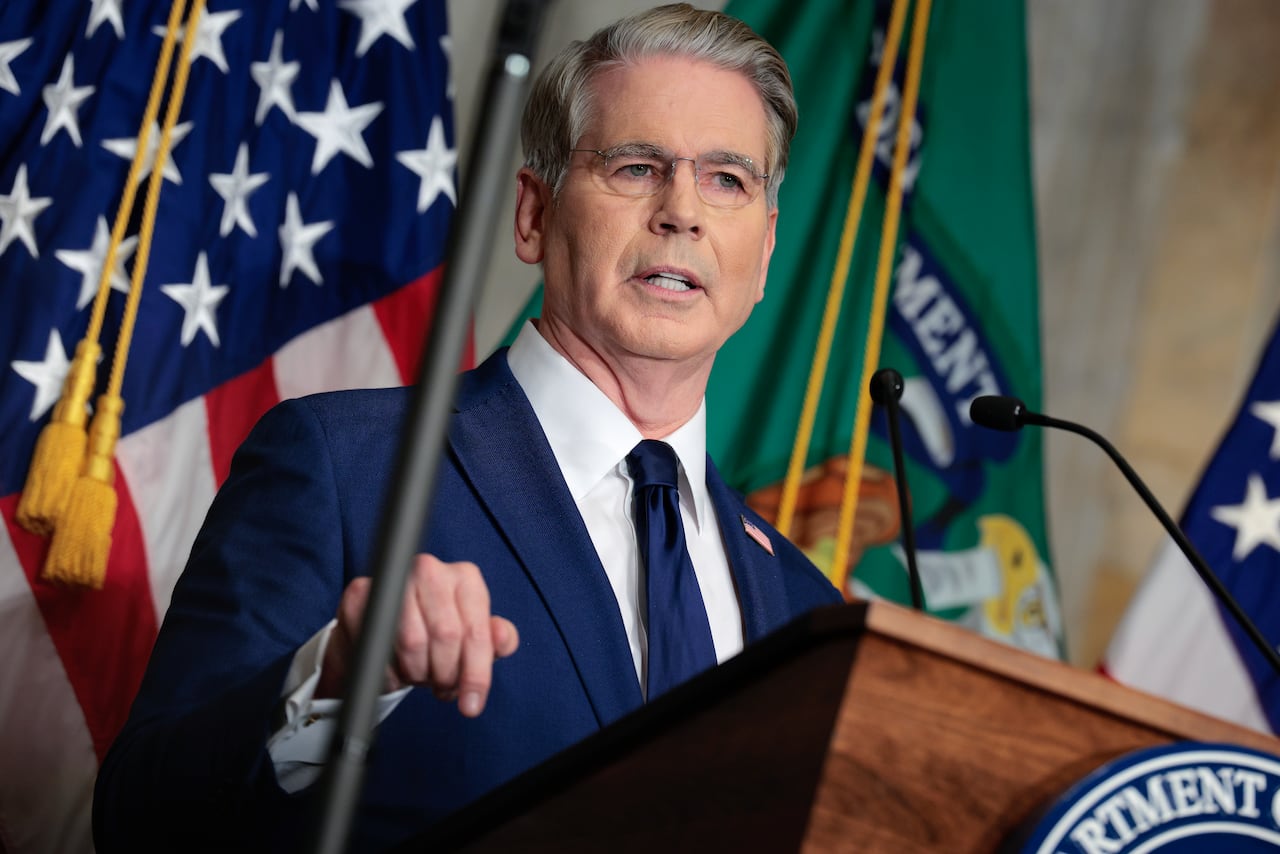 U.S. Treasury Secretary Scott Bessent announced a new set of sanctions against Iran, describing them as ‘an economic D-Day’ on Aug. 24. (Chip Somodevilla/Getty Images)