
After most of Israel’s water desalination facilities were shut down starting Monday morning because of high seawater turbidity, concerns are growing in the agricultural sector about severe crop damage and disruptions to Israel’s food production, particularly in the South.
The Water Authority and the Energy and Infrastructure Ministry said Tuesday morning that after the facilities operated overnight, most were shut down again after seawater turbidity rose.
Under water management guidelines, authorities were instructed to reduce public landscaping and agricultural activities and limit public water usage.
The Water Authority clarified that household water supplies are continuing, and that in areas experiencing localized problems, the authority’s operations center is handling the issue.
Energy and Infrastructure Minister Eli Cohen said the incident was a natural phenomenon not seen in Israel in the past 20 years, which significantly increased seawater turbidity and led to the shutdown of most desalination facilities.

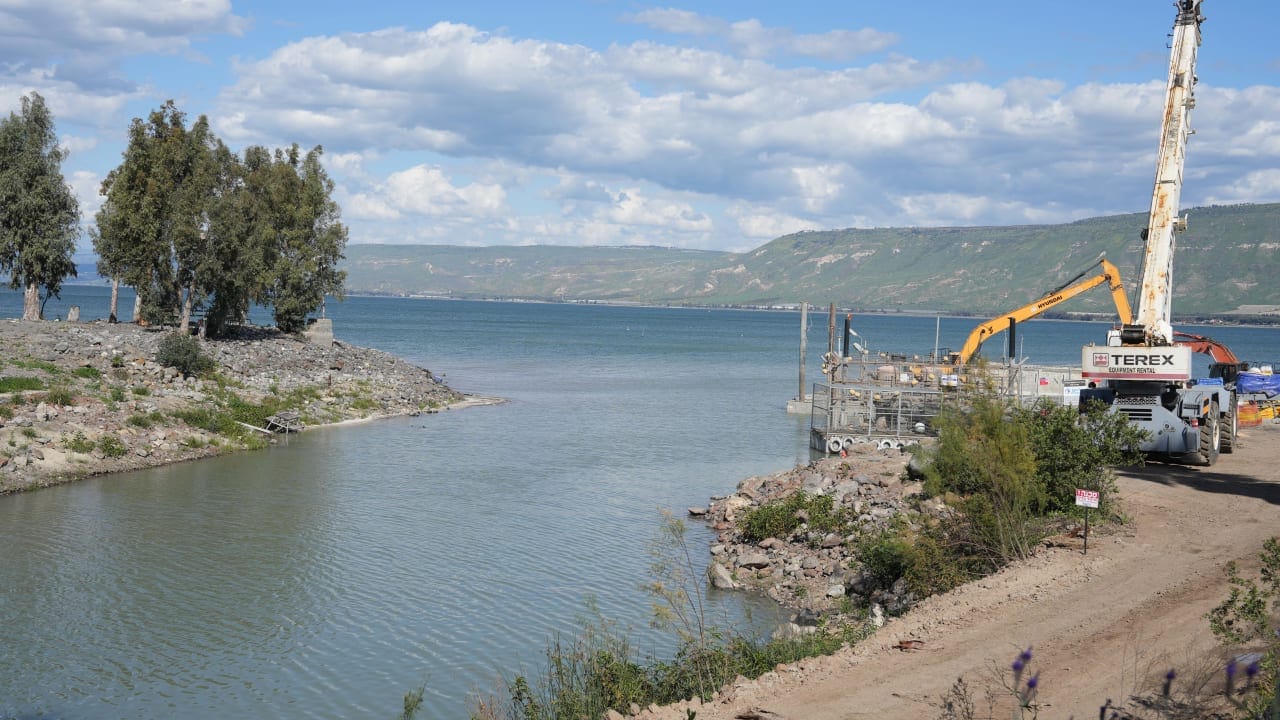
“We are working to increase the rate of pumping from wells and the Sea of Galilee, and we have also approved the activation of two additional desalination facilities in order to ensure water supplies,” Cohen said.
However, there are concerns that operating the facilities despite the turbid water could cause them severe damage. At this stage, the priority is to ensure continued regular water supplies to households.
Government working to aid farms where crops, livestock at risk
Following a situation assessment led by Agriculture and Food Security Ministry Director-General Oren Lavi, the ministry mapped areas where agricultural farms have been affected across the country, with an emphasis on the South and Ramat Hanegev.
The ministry is working with the Water Authority and Mekorot, Israel’s national water company, to restore agricultural water supplies and provide immediate assistance to farms where crops and livestock are at risk.
In the Ramat Hanegev area, particularly in the Nitzana region, significant damage has been reported.
The area contains extensive agricultural fields, including vegetables, greenhouses, and young seedlings, some of which depend on continuous water supplies and have no readily available alternative source.
“We are dealing with an unusual event that requires rapid action,” Lavi said. “For farmers, water is not a resource whose use can be postponed to another time. In some crops, particularly young seedlings, greenhouses, and sensitive crops, prolonged irrigation stoppages can cause irreversible damage quickly.”
“The situation is especially difficult in Ramat Hanegev, and we are working with the Water Authority and Mekorot to prioritize farms where there is an immediate danger to crops and livestock,” he continued.
“If the shutdown of the desalination facilities continues, it could also affect the continuity of production and supply of fresh agricultural produce ahead of the High Holy Days.
“Our goal at this stage is clear: to prevent irreversible damage to farmers and preserve agricultural production continuity and Israel’s food security.”
Reports received by the ministry indicate that disruptions are also being felt in the Hof Ashkelon and Sdot Negev regional councils, as well as other parts of southern-central Israel.
The ministry is also assisting livestock farms affected by the disruption. The ministry supplied a water tanker to a dairy farm in Kibbutz Gezer, and another tanker to a dairy farm in Moshav Matzliah.
Israel Farmers Federation demands immediate solution, compensation
The ministry has additional tankers available for deployment as needed, but officials stressed that this is only a temporary emergency solution.
The Israel Farmers Federation warned that the interruption of agricultural water supplies threatens Israel’s food security and the operations of hundreds of agricultural farms, demanding that the government provide an immediate solution and compensation framework.
Moshavim movement secretary-general Amit Yifrach and Israel Farmers Federation secretary-general Or Dorman appealed to Finance Minister Bezalel Smotrich, Agriculture Minister Avi Dichter, and Energy and Infrastructure Minister Eli Cohen, demanding immediate intervention following the disruption of freshwater supplies to agriculture in the Shfela, Judean Hills, and the Negev during the height of the growing season.
They warned that the disruption could cause severe and irreversible damage to many crops, particularly vegetables and orchards nearing harvest, and that it could put hundreds of agricultural farms, most of them family-owned, at risk.
“An entire region, including hundreds of agricultural farms, most of them family farms, is facing accumulating damage,” they said. “For farmers, this is not only the loss of crops, but a direct blow to their life’s work, their ability to make a living, and continue operating their farms.”

The federation stressed that while it understands the need to prioritize drinking water, agriculture cannot be left without certainty or a response.
“Every day without a regular water supply could deepen the damage and lead to crop losses,” the appeal stated.
Ramat Hanegev Regional Council head Eran Doron warned of an immediate threat to around 20,000 dunams of vegetable crops in the Nitzana region, which he said amounts to approximately two million tons of vegetables.
According to Doron, the shutdown of desalination systems has created a severe crisis in the area and threatens crops grown by dozens of farmers near the Egyptian border.
“This is a real threat to food security, the cost of living, and the supply of fresh food production in Israel, as well as a blow to farmers’ livelihoods and the region’s economic future,” he said.
State Comptroller warns about water desalination plant issues
The incident follows a series of reports from the State Comptroller’s Office in recent years warning about the management of water desalination facilities and Israel’s preparedness for risks affecting the water sector.
A 2024 report examining the regulation and oversight of seawater desalination facilities found that between 2007 and the end of 2023, 14 incidents of seawater contamination led to production stoppages at desalination facilities.
The stoppages lasted from several hours to five days and were caused by tests that detected microbial contamination, fuel and oil pollution, and turbidity.
The report found that about 57% of the incidents that caused production stoppages due to the quality of raw water, in accordance with Health Ministry guidelines, involved microbial contamination.
Around 29% of all incidents were caused by fuel and oil contamination, while about 14% were turbidity events caused by storms and earthquakes.
The comptroller recommended that the Health Ministry conduct periodic surveys on algal toxins and other toxins released into water by invasive species, prepare a plan to address the phenomenon, and oversee implementation.
Another report from 2022, which examined cybersecurity among local water suppliers, found that some of the water corporations inspected received low scores for their readiness to withstand cyberattacks, and that only some suppliers required to connect to the Energy Ministry’s cyber center for infrastructure monitoring had done so by May 2022.
The State Comptroller recommended advancing regulatory procedures requiring water suppliers to operate monitoring, control, and cyber defense systems, prepare information security plans, and establish the Water Authority’s authority to issue cybersecurity directives.
A 2021 report found that the division responsible for desalination facilities at the Water Authority had not prepared for the impact of climate change on the facilities.
The comptroller recommended examining scenarios related to the impact of climate change on seawater composition and the steps needed to reduce associated risks.
Bedouin villages have water cut off due to burst pipe
Meanwhile, several Bedouin villages in the Negev had their water cut off after a pipe burst at the Beersheba prison, Ynet reported on Wednesday morning.
The Water Authority said that tankers were on their way to the affected villages, and that the issue was being repaired.
Jerusalem Post Staff contributed to this report.