WASHINGTON — Top aides to President Donald Trump are pushing to keep the Iran war from escalating before November’s midterm elections to prevent Republican electoral losses, four people familiar with the discussions said, a strategy that is already under strain as the United States and Iran resume their back-and-forth attacks.
White House officials will consider ramping up military action after the Nov. 3 vote, said the sources, who requested anonymity to describe internal thinking, though any return to full-scale conflict is far from a given.
For now, they said, the administration is focused on tightening the economic pressure on Iran to extract concessions in any future negotiation that months of military action failed to secure.
“We are keeping the pressure on Iran,” one White House official said. “But November is a priority.”
Keeping the war mostly contained until then would help prevent the unpopular conflict from dominating the news as Trump’s Republicans campaign to defend thin majorities in the Senate and House of Representatives, said the sources, three of whom are White House officials.
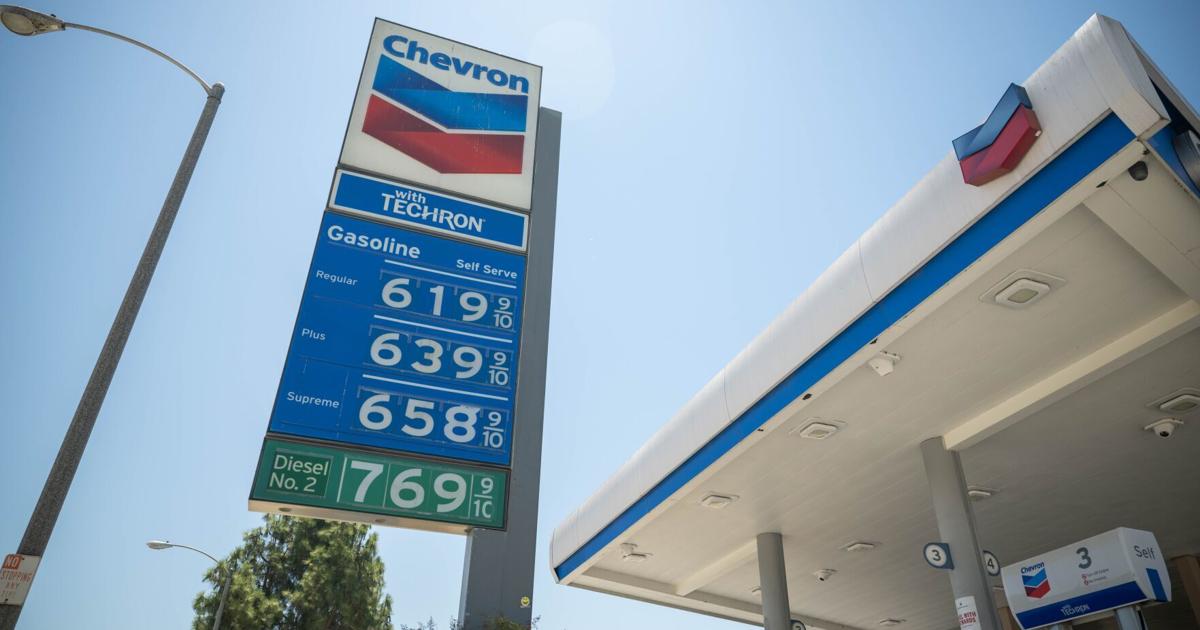
Only 31% of Americans approve of the war, while some 63% disapprove, according to a late August Reuters/Ipsos poll, and voters are particularly unhappy about high gas prices.
A tactical pause could also give the U.S. military some breathing room to replenish its heavily depleted munitions stockpiles, the sources said.
But pulling off the play-it-cool strategy looks more difficult by the day. While the conflict remains much less intense than it was during the spring or during a flare-up in the middle of the summer, both sides exchanged tit-for-tat strikes in recent days.
Iran’s leaders, emboldened after months of disrupting traffic through the Strait of Hormuz and facing little internal unrest, will likely keep striking at U.S. and allied Gulf targets, including military bases, vessels and energy infrastructure, at least periodically, analysts said.


“The regime has every incentive to disrupt the ‘calm’ — which is no real calm, after all, since the administration’s explicit aim is to increase economic pressure massively on Iran,” said Barbara Leaf, who served as the top State Department official for the Middle East under former President Joe Biden.
Another wild card is Trump.
The president’s approval rating fell from 40% to 33% since the conflict began, according to Reuters/Ipsos polling. Sources said he is not currently interested in escalation, but he is famously prone to changing his mind and could change course in response to events.
Trump threatened Tuesday to escalate the conflict if Iran hits back against the latest U.S. strikes.
“If the failed Nation of Iran retaliates for this very justified attack, they will be hit again at a much harder and higher level, but it will not be the biggest attack of them all, that is waiting in the wings,” he wrote on social media.
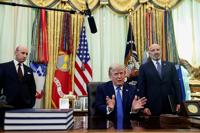
U.S. President Donald Trump, center, with White House Deputy Chief of Staff Stephen Miller, left, and U.S. Secretary of Commerce Howard Lutnick, speaks Aug. 6 in the Oval Office at the White House in Washington.
Evelyn Hockstein, REUTERS
Logistics and politics
Trump publicly says the upcoming elections were not factoring into this Iran strategy.
But as the war enters its seventh month, his White House finds itself increasingly constrained by logistical and political realities.
“The timetable has changed,” one senior White House official said. Another added that the “calendar is driving Iran.”
Reuters reported in August that the military used “virtually all” of its supply of certain precision missiles. On Sunday, the Washington Post reported that the heads of the Army, Navy and Air Force warned Pentagon chief Pete Hegseth in a written assessment that prolonging the war was unsustainable and would diminish the military’s readiness in other theaters.
The Pentagon claims the military had “everything it needs to execute” its mission.
America’s Gulf allies — some of whom had pushed for aggressive action against Iran earlier in the war to weaken their main regional adversary — roundly urged the White House to de-escalate after a recent round of attacks in late July, regional diplomats said.

Vessels are seen Wednesday near the Strait of Hormuz near Musandam, Oman.
REUTERS
Two White House officials said Vice President JD Vance and Secretary of State Marco Rubio are among the high-ranking Trump aides who are on board with the idea of trying to keep the Iran conflict relatively “quiet” until November.
In recent weeks, administration officials instead intensified an economic isolation campaign, during which the U.S. threatened to slap countries that trade with Iran with massive sanctions, while maintaining its own blockade on the Strait of Hormuz.
The trade-focused strategy, however, has its own limits, analysts and officials said.
Iran has spent decades under layers of U.S. and international sanctions that battered its economy but haven’t deterred its leadership.
Additionally, some major world powers, like China, have not joined Washington’s bid to isolate Iran, prompting questions about the campaign’s effectiveness.
“The purpose of the new sanctions package is meant to add economic pressure on top of that being caused by the blockade to force Iran back to the table, after the administration determined it was a better option than returning to kinetic action,” said Alex Plitsas, a senior fellow at the Atlantic Council. “Iran is concerned about it, but China has already indicated that it’s not willing to play ball, which calls into question how effective it will be.”