
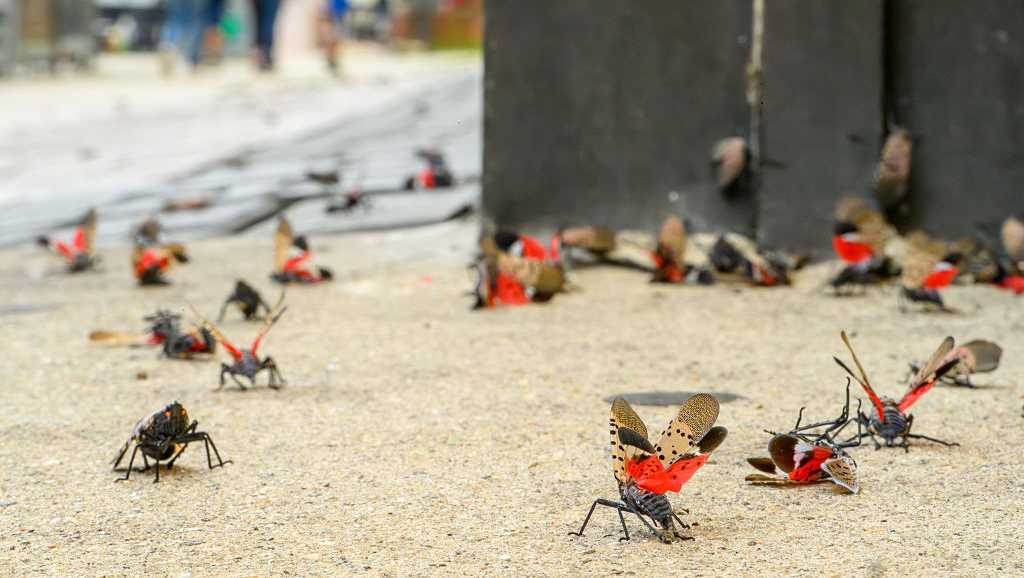
Residents urged to kill the invasive spotted lanternfly as the pest spreads across Mass.

 WORCESTER, Mass. —
Spotted lanternflies, an invasive pest first detected in Massachusetts in 2021, are spreading across the state, with sightings reported from Worcester to Natick, and residents are being urged to squash them to help curb their growing population.
Tom Glenn of Natick has taken the call to action seriously.
“Gotta be 200-300,” Glenn said when asked how many he has killed.
Arborist Rolf Briggs of Tree Specialists, LLC, who has been studying the pest since it arrived in Fitchburg, emphasized that while the insects are a nuisance, they pose no direct harm to humans, pets, or property.
Info: Where to report lanternfly sightings
“The most important fact [is] it’s not going to hurt you; it’s not going to hurt your pets, your kids, your car. It’s a nuisance,” Briggs said.
The spotted lanternfly feeds on about 103 different types of trees, and while it can stress them, the only tree it is known to kill is the invasive Tree of Heaven, which it prefers. “This is their ice cream sundae with a cherry on top,” Briggs said.
However, the pest poses a significant threat to certain crops, including peaches and grapes. Experts have detected the spotted lanternfly in 140 communities across the state, and they warn that the insects can travel three to five miles per year and are adept hitchhikers.
“It can be a scenario as simple as you stop at a gas station, your window’s open, an adult or two hops inside your truck, you drive off, and then bring it to the next point on your route,” said Tawny Simisky of UMass Amherst.
In addition to damaging trees and crops, the spotted lanternfly is known for excreting a sticky substance called honeydew, which coats surfaces and attracts black mold and flying insects like bees and wasps.
“Which can also present health concerns for individuals who have allergies to those stings,” Simisky said.
While some birds eat the lanternfly, their impact on the population is minimal. Experts at Penn State University are currently studying natural predators to help control the growing infestation.
If you spot a spotted lanternfly, officials encourage you to report it to the state and, most importantly, don’t hesitate to squash it.