
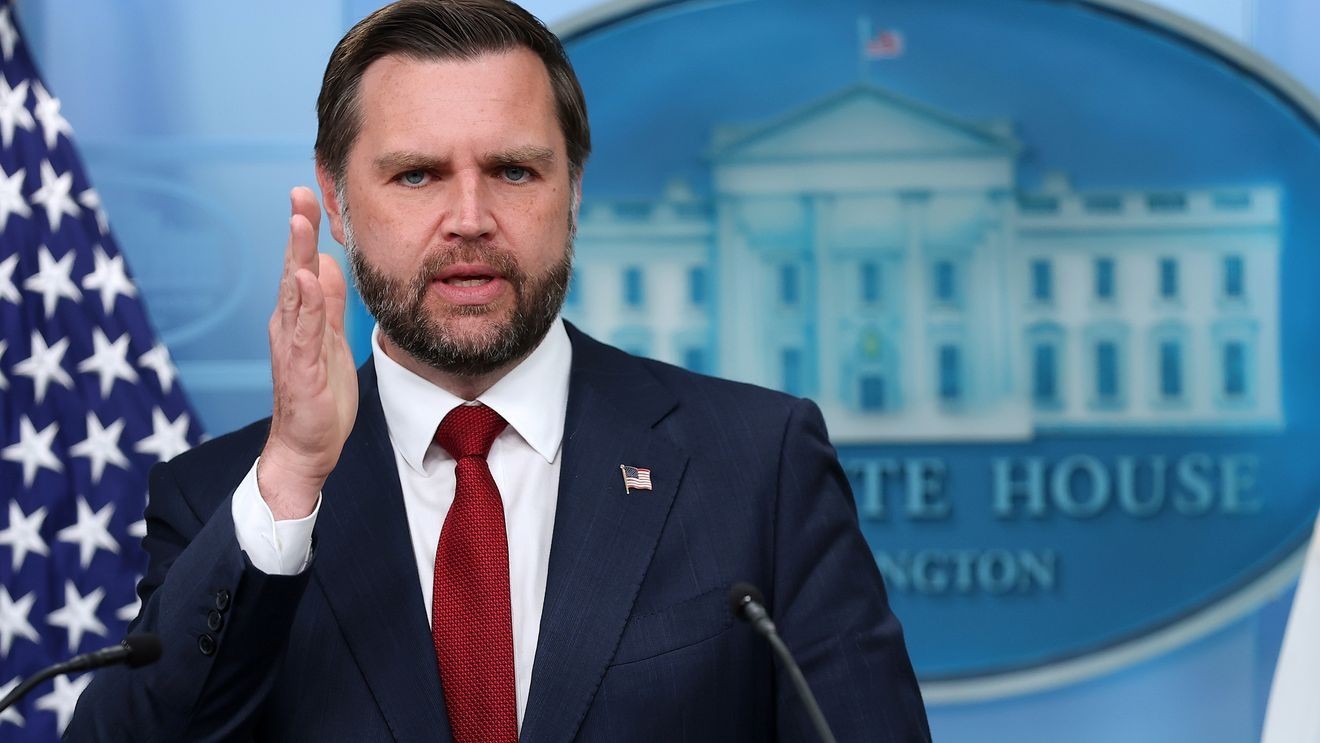
WASHINGTON (TNND) — In the first White House press briefing in more than one month, on Thursday, Vice President JD Vance gave journalists his latest assessment on the Iran war following a Wall Street Journal report that the Pentagon is extending troop deployments in the Middle East.
In the first White House press briefing in more than one month, on Thursday, Vice President JD Vance gave journalists his latest assessment on the Iran war following a Wall Street Journal report that the Pentagon is extending troop deployments in the Middle East. (TNND)
I wouldn’t call it a war. Right now there’s no active shooting. I recognize there have been places where this has flared up,” Vance said.
Hours earlier, Iran extended its latest strikes on the United States’ partners and allies in the region, attacking Kuwait and the UAE. Earlier in the week, U.S. forces launched strikes on Iranian targets near the Strait of Hormuz.
The Wall Street Journal broke news Wednesday night that Defense Secretary Pete Hegseth “is quietly extending troop deployments in a sign that the conflict could drag well into next year, according to people familiar with the matter.”
Currently, about 50,000 American service members are in the Middle East. Many of their day-to-day missions involve enforcing a naval blockade on Iranian ports, protecting commercial shipping in the Strait of Hormuz and defending against incoming Iranian strikes. According to the Wall Street Journal, “Warship crews, air defense units and paratroopers are among the forces being ordered to stay in the region longer than expected.”
“Everything that could happen is on the table. Economic pressure, military pressure, diplomatic pressure, covert pressure. Of course these are things, these are tools in the president’s toolkit,” Vance said.
The vice president also responded to a question about a reported U.S. strike that hit a wedding in southern Iran, killing several women and children and wounding dozens more, saying he’s “skeptical” about the initial reports by Iranian media.
“Unfortunately, obviously sometimes things happen, but in this particular case, I don’t think that we have any information one way or the other. We’re investigating it because obviously we care. We want to know, and if we do make mistakes, again, this is a big difference between us and Iran. When our military makes mistakes, they learn from them and try to get better from them,” Vance said.
In addition to military action, the White House waged “Operation Economic Outcast,” pressuring firms and foreign countries to cut economic ties with the Iranian regime. However, there’s been mixed messaging from the administration this week about what its outcome should look like.
On Monday, Treasury Secretary Scott Bessent told CNBC, “The goal here is to create the conditions that they will want to come to the table.”
A day later, Trump posted on social media, “I’m not trying to force Iran to the bargaining table . . . I couldn’t care less if they sign a worthless, to them, agreement.”