

Listen to this article
Estimated 4 minutes
The audio version of this article is generated by AI-based technology. Mispronunciations can occur. We are working with our partners to continually review and improve the results.
Hundreds of errors, including 38 references to non-existent academic sources, were uncovered during the scrubbing of a high-profile action plan for Newfoundland and Labrador’s education system.
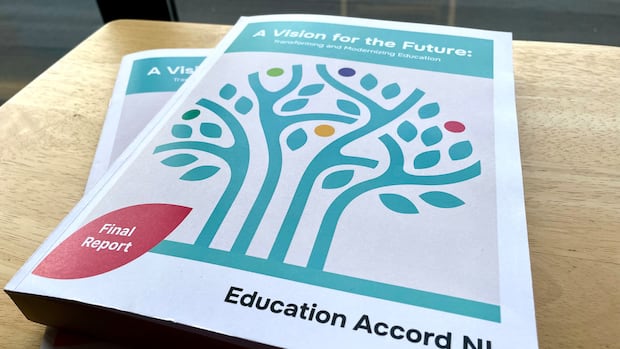
The Education Accord NL final report — a 410-page brick costing the provincial government $750,000 — was pulled from the government’s website last year when university professors discovered it contained a series of fake academic references they believed were created by AI.
Now, an independent analysis of the Education Accord’s bibliography and in-text citations — obtained through access to information legislation — reveals the full scope of the report’s problems.
In total, nearly 350 references in the report’s bibliography needed edits, according to a 95-page analysis by Labrador-based publisher Brack and Brine.
Many were minor formatting issues, but for some 38 references, including several appearing in the bibliography but not in in-text citations, Brack and Brine wrote it was “unable to verify this source.”
In 23 cases, fake references appearing in both the bibliography and text were “flagged for special attention.”
“In these cases, the references are not verifiable and should be deleted,” reads the document, which found nearly 180 in-text citations also needed changes.
WATCH | ‘There’s valuable information there that we can’t just throw away,’ says education minister: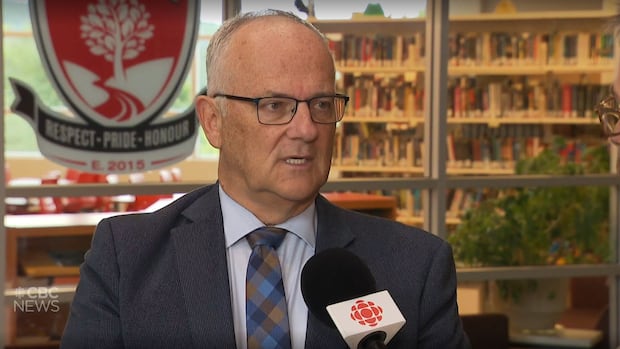
Minister surprised how fake citations ended up in Education Report
Thanks to Radio-Canada reporting, more details are coming to light on the errors in the more than 400-page final report of the Education Accord, an action plan for the province’s education system. That includes 38 notes directing readers to apparently made-up sources. The CBC’s Laura Howells reports.Professor questions report’s integrity
“It is worse than we thought,” said Ian Jones, a biology professor at Memorial University who’s been closely following the fallout from Radio-Canada’s initial reporting on the Education Accord last September, which found the report cited at least 15 non-existent journal articles and documents.
“Those references and their contents form the basis that underlies the conclusions and recommendations of a report on a very important topic,” Jones said. “The integrity of the references contained in the report are central to the credibility of the report.”
Emails obtained through access to information legislation show that at the behest of the province, the co-chairs of the Education Accord, Memorial professors Anne Burke and Karen Goodnough, began scrubbing their report last fall with the help of the Brack and Brine analysis.
Neither Burke nor Goodnough responded to requests for comment.
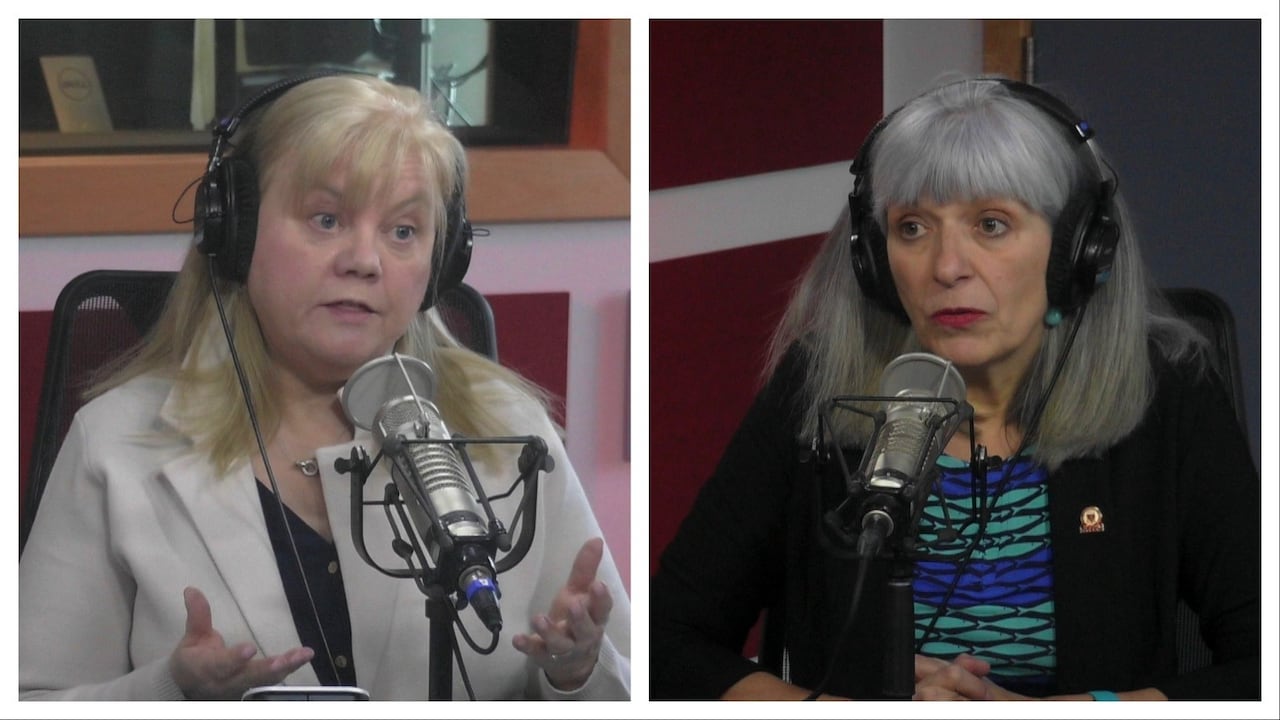 Co-chairs of the Education Accord NL, Memorial University professors Anne Burke (left) and Karen Goodnough, in September 2025. (CBC)
Last year, Goodnough told CBC she believed the fake references and in-text citations appeared in the report only after they submitted their work to the province. Both Goodnough and Burke denied having used AI at any point when the report was crafted.
However, Education Minister Paul Dinn said Wednesday he believes AI was, in fact, responsible for creating the fake citations and that the situation “certainly highlighted the need for further monitoring.”
Dinn stopped short of saying who he believes added the fake citations.
“How it happened, I can’t comment on,” Dinn said, adding that the report was submitted to his department under the Liberals.
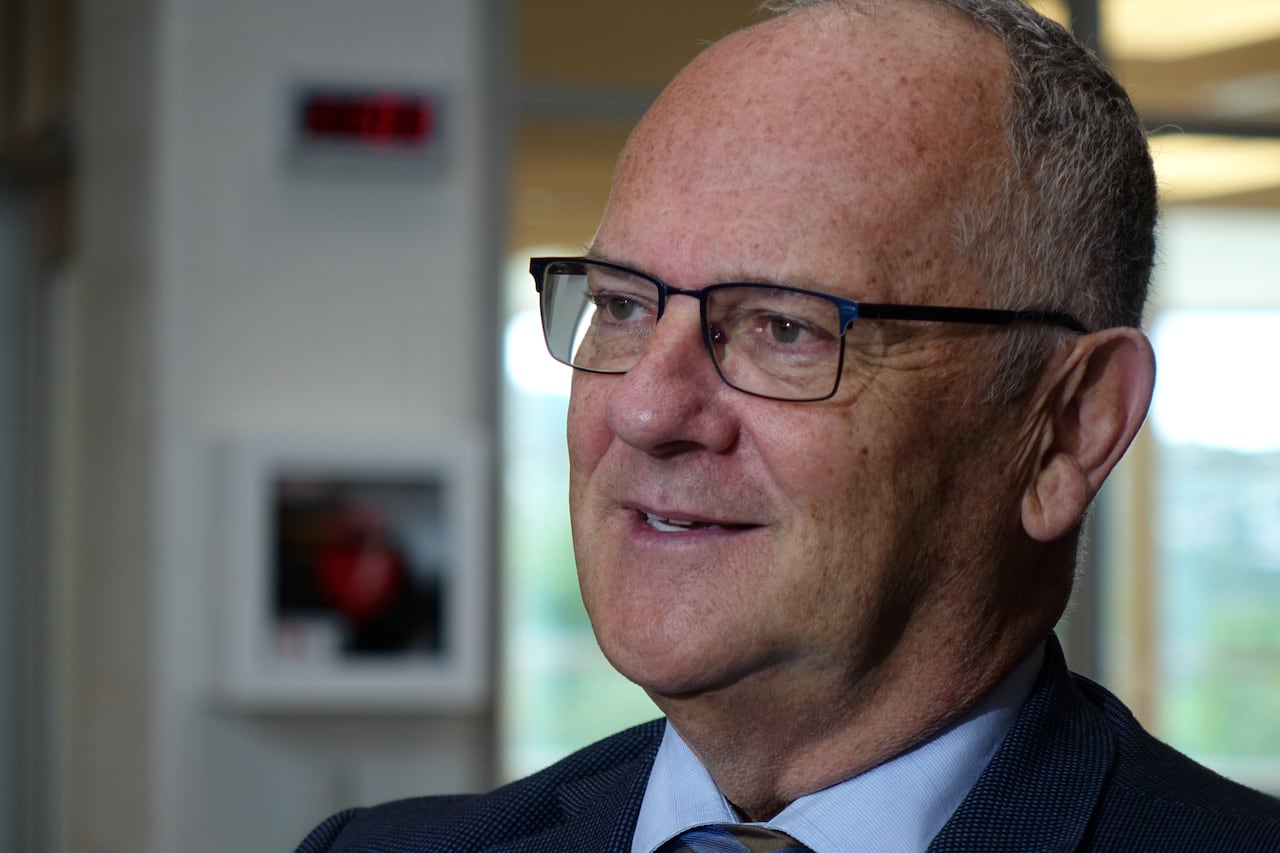 Education and Early Childhood Development Minister Paul Dinn says a new version of the final report will be posted ‘in short order.’ (Patrick Butler)
In 2025, several university professors told Radio-Canada the fake references in the Education Accord bore all the hallmarks of AI hallucinations. The references looked almost right, featuring the names of real-life researchers and journals. But when placed under the microscope, they were clearly fabrications.
Jones said he believes Memorial University should conduct its own investigation of the numerous fake references contained in the Education Accord.
He also said he was “deeply troubled” by the “evasive” responses from the province and from the report’s co-chairs regarding who was responsible for the “non-verifiable” citations.
Cleaned up version will be published shortly: Dinn
The cleaned-up version of the Education Accord hasn’t yet been posted online, despite promises from both the previous Liberal and current Progressive Conservative governments.
But Dinn said Wednesday a new version of the final report will be posted “in short order.”
“We can’t just throw it away,” said Dinn, according to whom hundreds of teachers and front-line education workers contributed to the action plan.
“We intend to scrub it down as best we can. It’ll be put up on our website for use. It may not form our blueprint but it will inform our blueprint.”
Download our free CBC News app to sign up for push alerts for CBC Newfoundland and Labrador. Sign up for our daily headlines newsletter here. Click here to visit our landing page.