
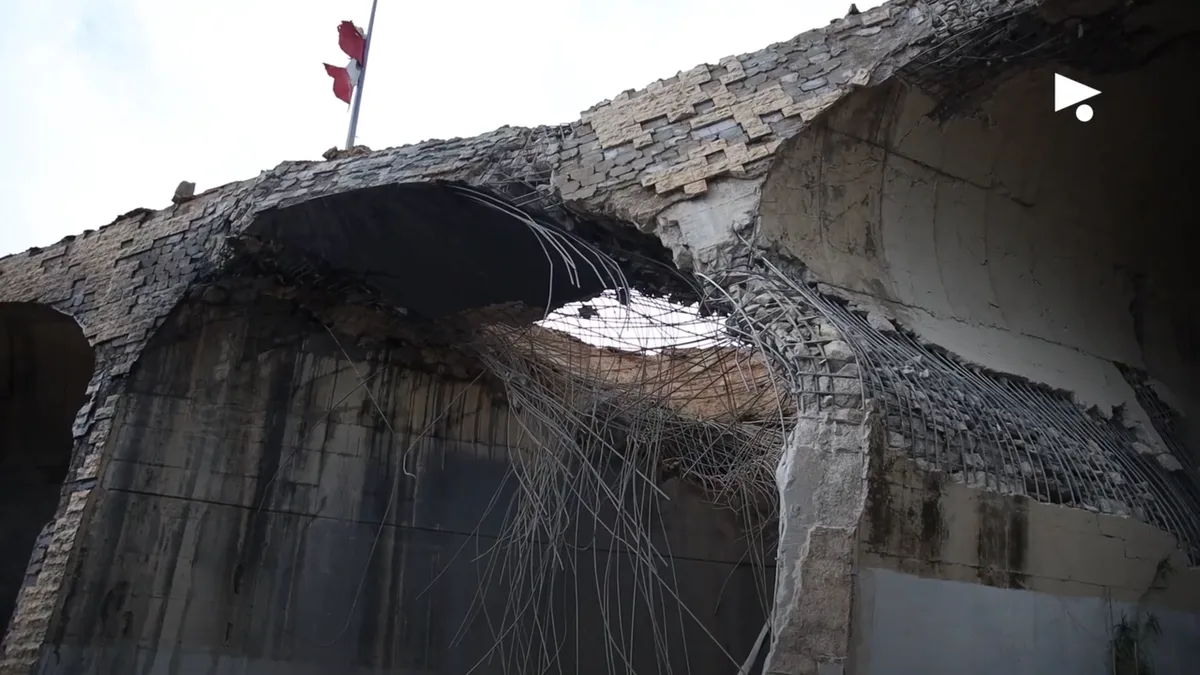
A series of Israeli strikes on southern Lebanon early on August 15 killed at least 11 people. A strike on Ansar killed 7 people and wounded 2 others, while a strike on Deir al-Zahrani killed at least 4 and wounded 17. This is one of the deadliest attacks since the truce between Israel and Hezbollah took effect in mid-June.
The Israeli military claimed that its attack in the Ansar area targeted infrastructure belonging to Hezbollah (an Iran-backed militia group). Israel’s prime minister Benjamin Netanyahu explained that Hezbollah had attacked Israeli soldiers in Lebanon, so the military struck the group’s headquarters. However, it was only later that the military learned “that Hezbollah deliberately put civilians in that military compound.” Nevertheless, Nawaf Salam, Lebanon’s prime minister, responded on his X profile that “the seven martyrs in the Israeli strike on Ansar town were not ‘military infrastructure,’ and the children and women killed were not military targets.” Hezbollah has condemned the attacks, accused Netanyahu of escalating the war “in order to strengthen his domestic political position,” and vowed that the strikes would be “met with an appropriate response.”
The killing of civilians is unacceptable. Stopping terrorism should not come at the expense of innocent people. Furthermore, continued fighting will worsen Lebanon’s economic and humanitarian crises. Ultimately, civilians are paying the price for this conflict, as demonstrated by the deaths of 11 civilians on August 15. Rather than relying on belligerents for the truth, we must encourage independent investigations, such as those from third-party groups and international organizations. These investigations are crucial, whether the attacks are claimed to be targeted at civilians or a use of civilians as “military infrastructure.” This is the only way that the potential war crime can be addressed, bringing justice to those who have been killed.
Hezbollah is an Iran-backed Shiite militia group based in Lebanon. The United States and many other countries consider it a terrorist organization. There has long been conflict between Israel and Hezbollah due to the disputed Israel-Lebanon border, the Israeli-Palestinian conflict, and the Syrian Civil War. On March 2, the current conflict began after Hezbollah fired rockets into Israel in retaliation for the U.S.-Israeli strikes on Iran. Since then, according to Lebanese officials, more than a million people in Lebanon have been displaced, more than 4,300 killed, and more than 12,000 wounded. In the same time period, Israeli officials have reported that Hezbollah has killed more than 30 Israeli soldiers and civilians. On June 20, a ceasefire was reached between Israel and Hezbollah to halt the fighting and pave the way to establish a more durable peace. However, fighting has continued across southern Lebanon, with both sides accusing the other of violating the truce.
Both sides remain at odds over the terms of a framework agreement, signed June 26 by Israel, Lebanon, and the U.S., that was intended to wind down the conflict. Under the agreement, Israel is expected to gradually withdraw from southern Lebanon and the Lebanese Armed Forces to gradually move in. However, it has been criticized in Lebanon because it does not set out a timetable or guarantee for the Israeli withdrawal and ties the process to Hezbollah’s disarmament, which Lebanon has long struggled to do. In addition, Hezbollah, which was not involved in the deal’s negotiations, has completely rejected it. As no withdrawal has occurred, the Lebanese and Israeli governments have since been holding negotiations. Meanwhile, Israel has continued to occupy parts of southern Lebanon, carry out strikes across the region, demolish civilian buildings, destroy water and energy infrastructure, and cause widespread destruction. Israeli officials have said they will not pull out until Hezbollah is disarmed, and that these attacks are necessary to dismantle Hezbollah infrastructure. Meanwhile, hundreds of thousands of people have been unable to return to their homes due to the presence of Israeli forces and the destruction of their villages.
With a long history of conflict between Israel and Hezbollah, it is unlikely that an ultimate peace will be reached anytime soon. At the same time, it is unreasonable to believe that the scale of the catastrophe in Lebanon can be entirely chalked up to fighting Hezbollah. This is demonstrated through the widespread destruction of civilian homes, devastation of basic services, and widespread death and injury. Meanwhile, this same level of devastation has not been seen in Israel, as demonstrated by the significantly higher death toll and decreased living standards in Lebanon compared to Israel.
Moving forward, it will likely be necessary for a third party to help negotiate a permanent ceasefire between Lebanon and Israel. However, it is essential that all groups, including Hezbollah, agree to the terms. This agreement should lay out clear steps for Israel’s de-occupation of southern Lebanon and the disarmament of Hezbollah.