
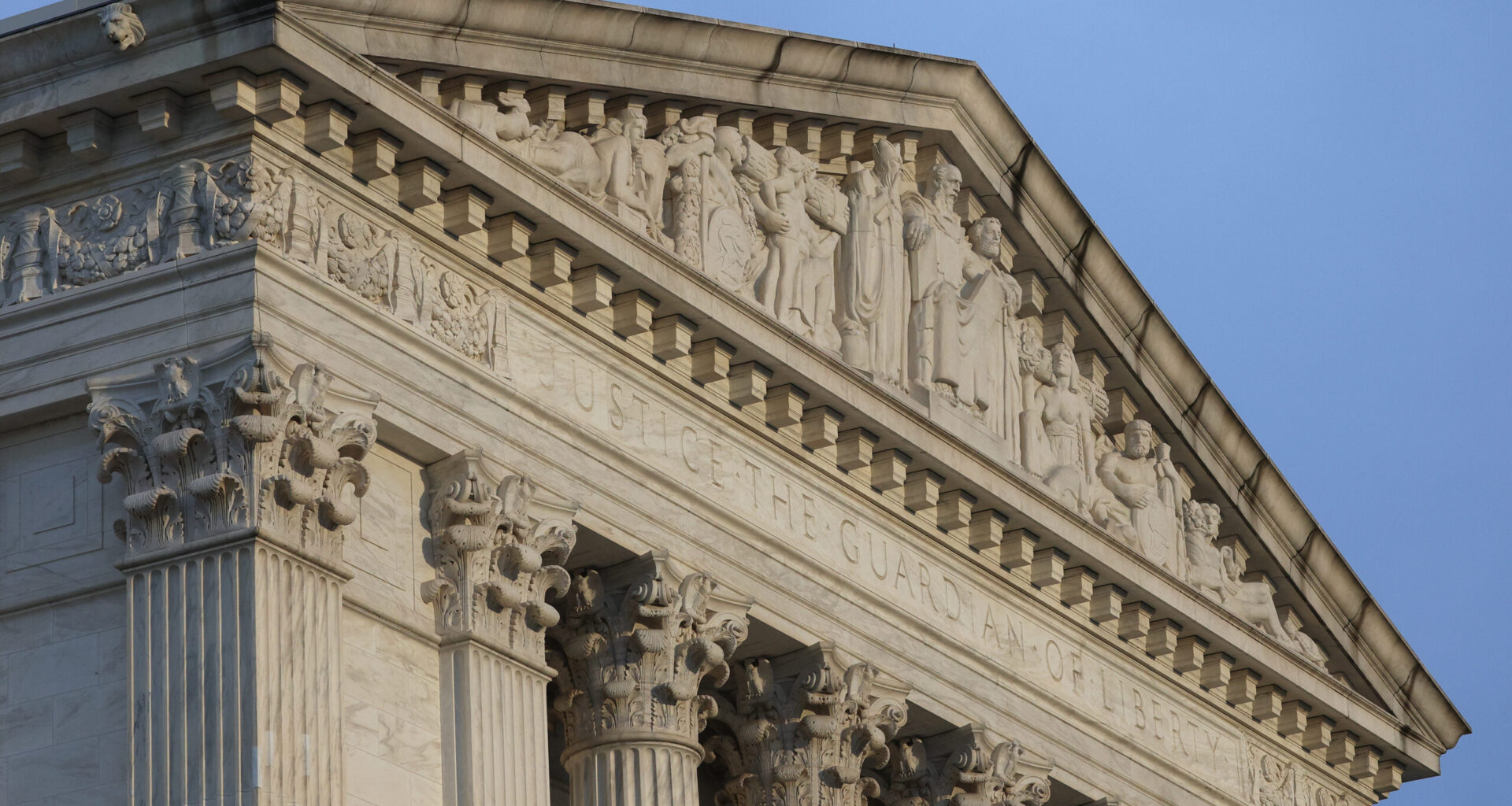
In a win for voters, the U.S. Supreme Court has denied a right-wing group’s request to force Michigan to place a proposed constitutional amendment requiring proof of citizenship to vote on the November 2026 ballot.
The denial by Justice Brett Kavanaugh, a conservative appointed by President Donald Trump, likely means the amendment is dead. Sept. 4 is the deadline for state election officials to finalize the November ballot. Separately, the Michigan Supreme Court Thursday also declined to force state officials to put the measure on the ballot, according to multiple reports by local journalists.
If approved by voters, the measure would have required Michigan residents to show photo ID to vote in future elections, implemented a systematic review of the state’s Qualified Voter File and stated that only American citizens are to vote in elections. Both federal and state law already bar noncitizens from voting.
Americans for Citizen Voting Michigan (ACVM), the right-wing group, turned to the Michigan Supreme Court after the amendment failed to pass the Michigan Board of State Canvassers, which deadlocked in a vote last week. But just four days later, it filed its appeal to the U.S. Supreme Court.
In March, ACVM gathered more than 750,000 signatures to ask voters to take up the amendment. Under state law, they needed 446,198 valid signatures — equivalent to 10% of votes cast for governor in the last election — to successfully put the amendment on the ballot.
But the Board of State Canvassers was not required to verify every signature. Instead, it took a sample of 1,000 signatures. At least 629 valid signatures were needed for the measure to succeed, but the board only certified 626.
Without the necessary signatures, the four-member board — which is evenly divided between Democrats and Republicans — then voted on whether to approve the measure, but hit a stalemate.
After the measure failed to pass the board, both sides traded accusations of wrongdoing.
Republicans in the Michigan House of Representatives voted to formally investigate the signature review process for the ballot measure. Meanwhile, the attorney for opponents of the measure alleged that ACVM forged signatures and “tried to coverup mistakes by editing petitions with crayon.”