
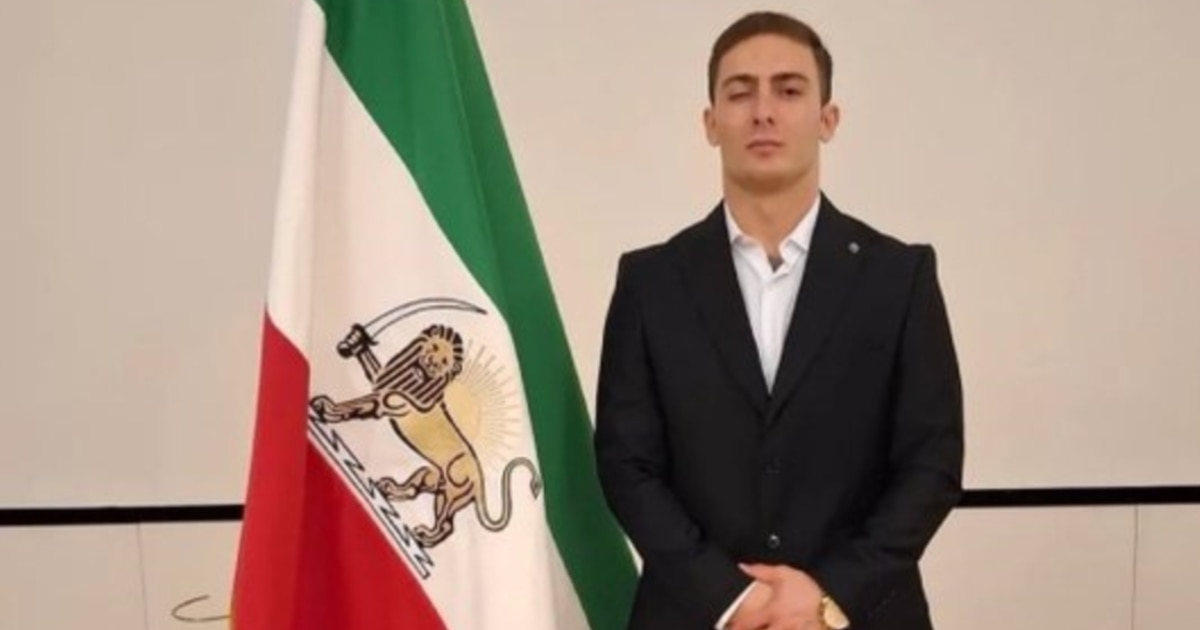
An Iranian man who left the country after being injured during the 2022 Women, Life, Freedom protests has been sentenced to death after returning to Iran from Germany, his friends and rights groups say.
Ali Zarei, who is being held at Qezel Hesar Prison in Karaj, was sentenced to death by a Tehran Revolutionary Court for “corruption on Earth,” according to the US-based Iranian rights group HRANA.
The ruling, which was delivered to Zarei on August 23, accuses him of “extensive political activities, creating fabricated reports of damage, producing false news, propaganda against the regime, disturbing security, and illegally entering and leaving the country.”
Zarei was arrested by agents of Iran’s Intelligence Ministry on April 28 after returning to Iran.
Zarei’s decision to return has puzzled those who knew him in Germany given his experience during the 2022 protests and the risks he faced upon returning.
Parviz Yari, an Iranian journalist and activist who lived with Zarei in Germany for about a month, told RFE/RL’s Radio Farda that Zarei had previously decided to return but changed his mind after Yari warned him of the risks.
“He told me about it as a friend and adviser. Naturally, I explained the circumstances to him,” Yari said. “I was also a little more forceful in my response, and that caused him to change his mind.”
Yari said Zarei eventually decided to return without informing him.
He attributed the decision partly to the atmosphere among some Iranian opposition supporters following the deadly protests in January this year, saying exile monarchist circles had created an impression that political change in Iran was imminent.
“My impression is that the image that this movement had created of those days in Iran in the minds of political activists outside the country was that the Islamic republic was seemingly on the verge of collapse, that a train had left the station and people simply needed to get on board,” Yari said.
Zarei had been blinded in his right eye during the state’s brutal crackdown on the 2022 protests and subsequently left Iran for Germany. He was just one of many protesters who were shot in the eye in what appeared to be a deliberate tactic.
Yari said Zarei identified himself as a monarchist but stressed he was not formally affiliated with any particular political party or organization.
“He didn’t receive financial support from anywhere, nor was he an organizer of any demonstrations,” Yari added.
Zarei did, however, participate in gatherings of Iranian opposition supporters, including events backing exiled former Crown Prince Reza Pahlavi. In February this year he addressed a protest in Munich attended by 250,000 people, according to German police figures.
“The 1979 revolution is over!” Zarei shouted in an impassioned speech to the crowd, referring to the events in which Iran’s current clerical establishment seized power.
Yari said that after arriving in Germany, Zarei found a job at a restaurant, joined a gym, and was trying to learn German. But the violence surrounding the protests in Iran this year remained a powerful influence on him.
Rights groups have documented more than 6,000 deaths during the crackdown by security forces, but many say the real toll is much higher. Some estimates put the figure in the tens of thousands.
“What I think was a turning point for Zarei’s presence in Germany was the protests in January and the unprecedented violence that the Islamic republic used to suppress the people,” Yari said. “This created a collective trauma for all of us, and in exile, I think it’s somewhat harder to bear that kind of trauma.”
Yari said the flow of information about Zarei’s current case has been limited because of his restricted contact with his family and lawyer, as well as the family’s limited knowledge of political cases.
“Since Zarei’s arrest, unfortunately, he has faced restrictions on meeting with his family and making telephone calls to them, and even on communicating with his lawyer,” Yari said.
He said the information available to those outside Iran suggests the current case involves charges a controversial law enacted recently concerning espionage and cooperation with hostile states. The death sentence is subject to appeal.
Rights groups have documented some 50 politically motivated executions this year.
With reporting by Mohammad Zarghami of RFE/RL’s Radio Farda