
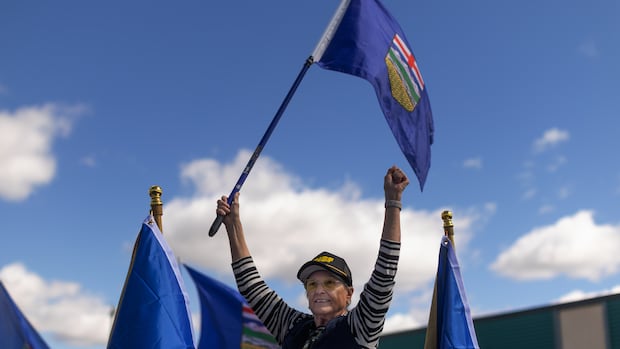
A new report from the Canada West Foundation warns that, though the grievances behind Alberta secession may be real, the economic risks and political uncertainties are too great to consider separating from Canada.
And the Calgary-based public policy think-tank puts a $200 billion price tag on setup costs for an independent Alberta, with a warning at the same time that the province’s economy could shrink.
The report, Alberta in Confederation, breaks down a number of potential separation-related issues, including constitutional negotiations, Indigenous rights, market access and labour supply.
Among the contributors to the report are Ted Morton, former Progressive Conservative MLA and one of the authors of the 2001 firewall letter, and Business Council of Alberta President Adam Legge.
Thursday’s report, which was greeted with criticism from a prominent separatist leader, comes less than two months ahead of the Oct. 19 referendum, where Albertans will vote on whether to remain in Canada, or hold a second, binding referendum on secession.
Canada West Foundation President Gary Mar says the intention is not to settle the debate, but inform voters, and show that the economic future would be “murky.”
 Canada West Foundation President and CEO Gary Mar says while Albertans may have their grievances with the federal government, the economic risks of separation are too great. (CBC)
“There will be people who will criticize it and say, ‘Look, you’re fearmongering.’ This is not fearmongering. This is about laying out the cold hard facts and saying, ‘Here’s what you need to know before you cast your vote.'”
Economic consequences
In the report, former Treasury Board senior manager Lennie Kaplan estimates setting up an independent Alberta would cost more than $200 billion, with ongoing costs of more than $50 billion annually.
That would include Alberta taking over its share of the federal net debt, the associated annual debt servicing costs, setting up new trade agreements, and taking over federal transfers for health care, child care and other services.
“Moreover, it could very well shrink Alberta’s economy, cause jobs to be lost, raise interest rates and deter investment,” Kaplan writes.
The report warns of the loss of influence over monetary policy decisions if Alberta were to assume the U.S. dollar as its currency, or if a new republic continued using the Canadian dollar despite no longer being in Confederation.
It also calculates that the debt per person in Alberta could rise to between $80,000 and $95,000 post-separation, compared to the $27,000 per person in 2024, based on the increased debt share Alberta might assume if the province left.
The province is putting its own report together costing out potential expenses related to separation. Premier Danielle Smith gave an early estimate of $400 billion earlier this summer.
Impact on workers, students
The Canada West Foundation report questions whether an independent Alberta could attract enough workers to sustain its labour market, particularly if it were to significantly boost its oil production.
Mar noted that much of the province’s current workforce is made up of people from other parts of Canada and the world.
LISTEN | What might Alberta separation mean for workers?:
Radio Active8:59What might Alberta separation mean for workers?
Albertans will head to the polls to vote in a ten-question referendum with questions covering everything from immigration and the judicial system, and of course, separation. The Alberta Federation of Labour released a report looking at what separation could mean for Alberta workers. Jim Stanford is an economist, and the author of the report.
“Is Alberta going to be able to attract such people to come to Alberta when really people who immigrate to Canada come to Canada, they don’t come to Alberta,” said Mar.
The report also warns of the risk of businesses leaving Alberta, as happened in Quebec around the time of its last sovereignty referendum.
“Most importantly, every Albertan should ask themselves one simple question: Can they be certain their employer, or their job, will still be here if Alberta chooses to separate?” writes Legge.
Post-secondary students could also be affected, the report warns, if they seek schooling in other Canadian provinces and are now subject to international tuition fees.
Constitutional questions
How easy it would actually be for Alberta to secede from Canada has already been the subject of much debate.
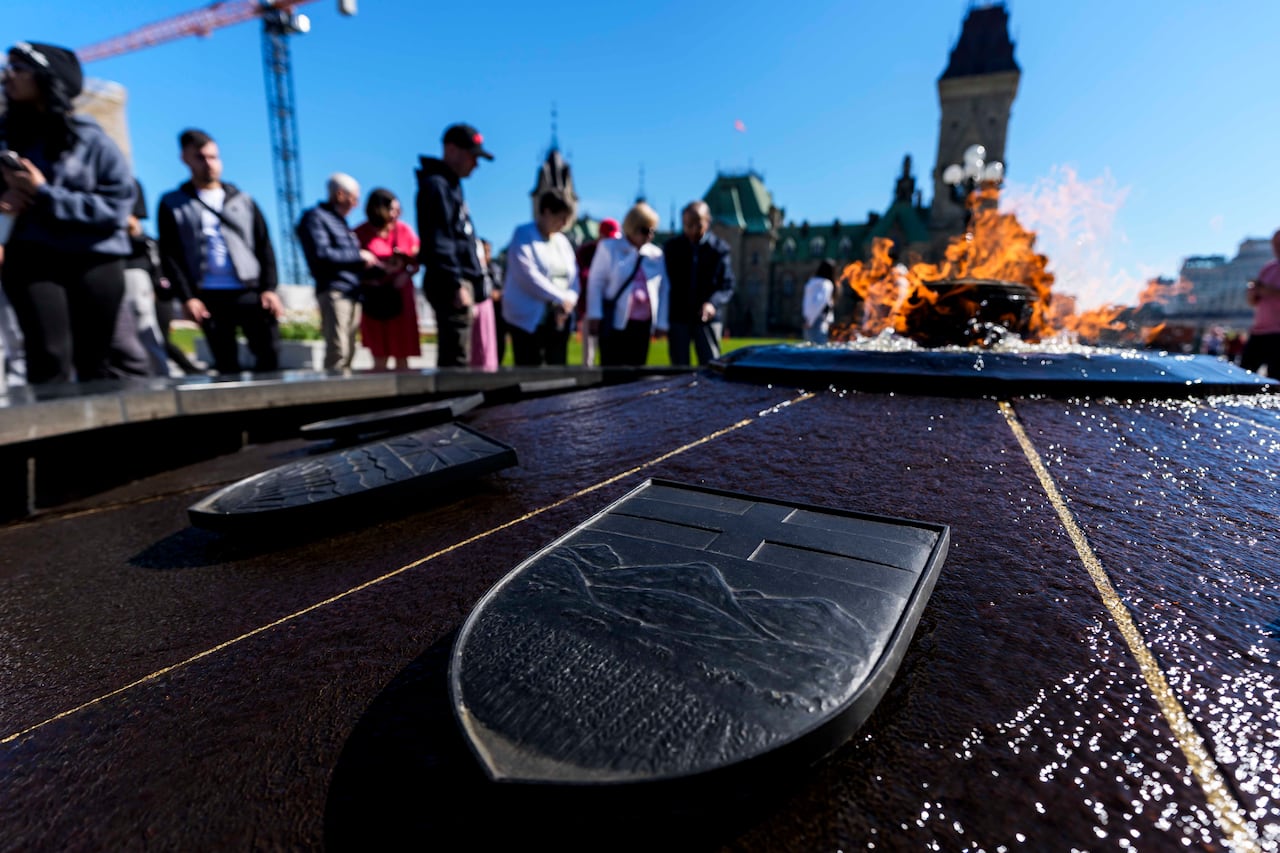 The provincial shield of Alberta is seen on the Centennial Flame on Parliament Hill, in Ottawa, in this file photo. If the province were to vote in favour of separation, it would require lengthy constitutional negotiations. (Justin Tang/The Canadian Press)
The report makes the case that negotiations would be complex, with no guaranteed outcome or agreement from all provinces.
There is also no set timeline, with the potential for “years of negotiation efforts on a wide range of topics,” law professor Dwight Newman writes.
Likewise, negotiations with Indigenous people would be “challenging and require significant expert resources to address,” writes political scientist Audrey Doerr, that could require new internal boundaries in the province around First Nations land.
Separatist response
Lawyer Keith Wilson, who co-heads the pro-separation third party advertiser Let Alberta Decide, said in a post on X that the Canada West Foundation report identifies many of the same complications his own team’s analysis has.
But he says the report differs in its assumptions about how those issues would unfold.
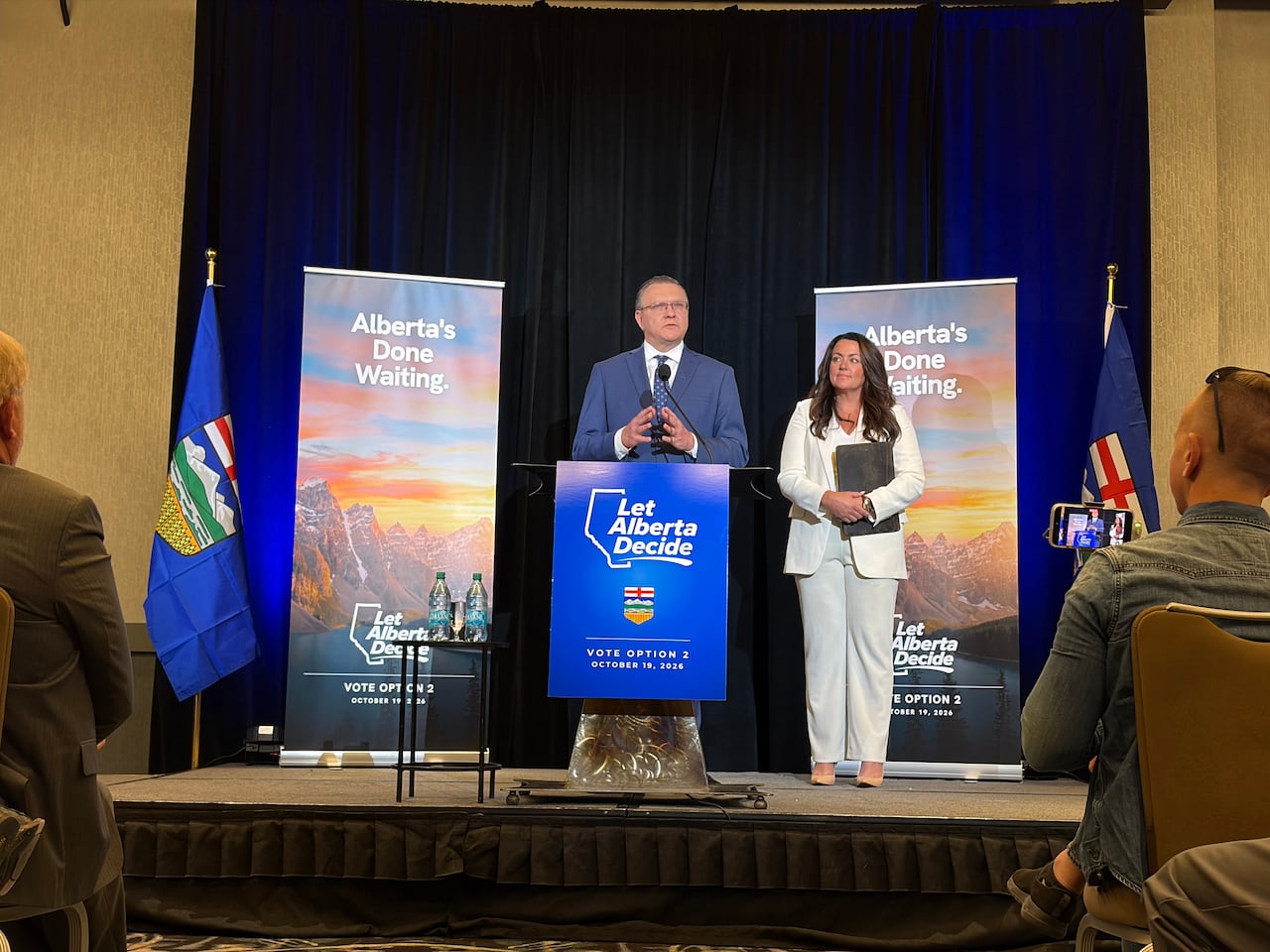 Keith Wilson and Tanya Clemens launch the pro-separation ‘Let Alberta Decide’ campaign in Calgary on June 19, 2026. (Karina Zapata/CBC)
“Too often, the Canada West analysis takes an uncertainty or negotiating risk and then assumes a worst-case outcome and ignores Alberta’s powerful leverage. Identifying a risk is not the same as demonstrating that it cannot be planned for, negotiated or managed,” Wilson wrote.
Mar says the driving dissatisfactions behind the separatist movement are not to be discounted.
“But we also have to acknowledge that Canada has been good for Alberta in so many ways in terms of the things that we really take for granted,” Mar said.
For Wilson, acknowledging Albertans’ grievances does not go far enough.
“The report offers no concrete or enforceable roadmap for ensuring they will actually be fixed. Its answer is essentially to remain in Canada and continue pressing Ottawa for change,” Wilson posted on social media.