
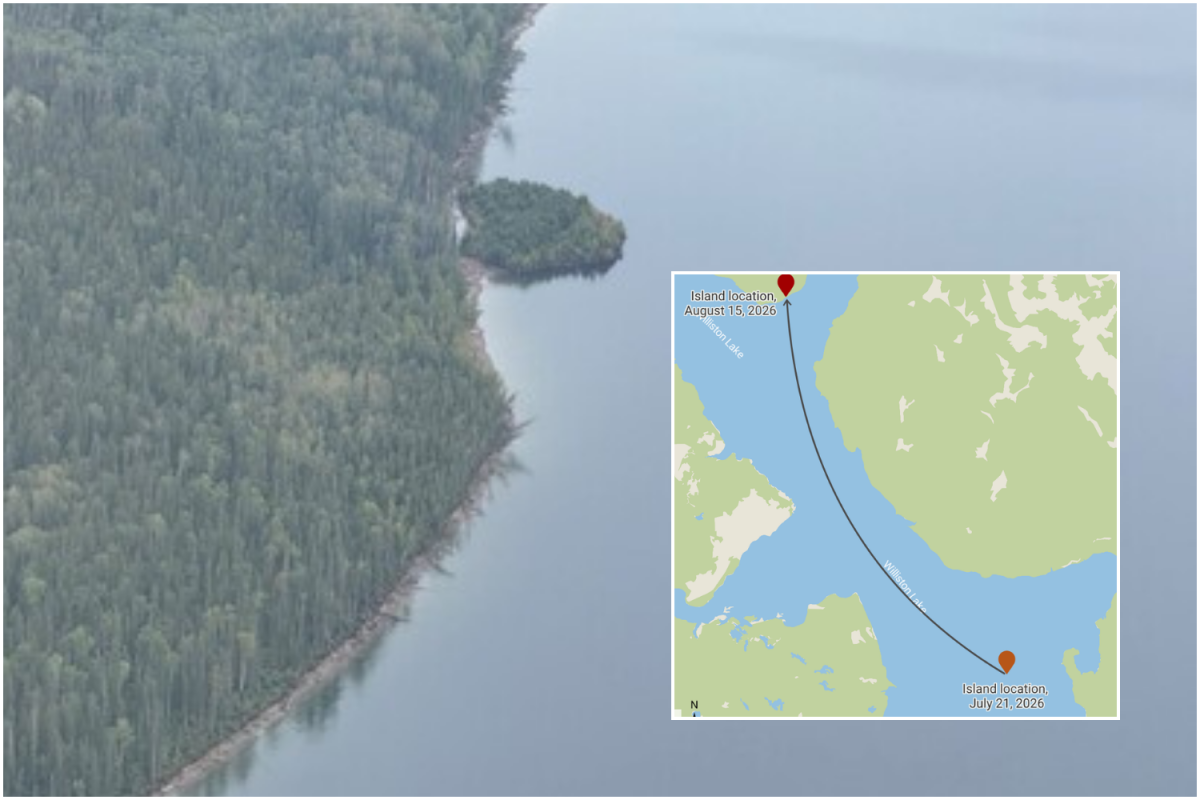
A floating island that baffled observers after seemingly disappearing from one of Canada‘s largest reservoirs has been found.
BC Hydro said on Wednesday that the floating island on British Columbia‘s Williston Reservoir had been located after drifting roughly 30 kilometers (about 19 miles) over a 15-day period. The island, which became an international curiosity after it surfaced near Finlay Bay and then appeared to vanish, was found along the shoreline of the reservoir’s Ospika Arm.
The discovery comes after BC Hydro spokesperson Bob Gammer told Newsweek there had been no eyewitness sightings for weeks.
Read More on News
Where Is Canada’s Disappearing Island?
The island was located along the shoreline of the Ospika Arm of Williston Reservoir, approximately 30 kilometers northwest of where it was first documented near Finlay Bay, according to BC Hydro.
Officials said the floating island had not vanished at all. Instead, it had drifted across the reservoir over a period of about 15 days before coming to rest against the shoreline.
The utility company said the island’s location was confirmed using a combination of satellite imagery, observations from small aircraft and reports from boaters.
“We found the island,” BC Hydro said in a social media update. “Turns out it wasn’t missing. Just drifting.”
Timeline of Events
The mystery began when satellite imagery captured on July 21 showed a tree-covered floating island west of Finlay Bay on British Columbia’s Williston Reservoir. BC Hydro received reports, photos and videos of the unusual landmass from local boaters on August 13, but by then the island could no longer be found in its original location.
As searches continued, the island’s disappearance attracted international attention and prompted speculation about where it had gone. The mystery was eventually solved after BC Hydro reviewed satellite imagery from August 15 showing the island on the reservoir’s Ospika Arm, about 30 kilometers northwest of where it was first documented. The utility confirmed the location on August 31 and announced the discovery on September 2.
What Is a Floating Island?
A floating island is a mass of vegetation, soil and organic material that is able to float on the surface of a body of water. While small floating islands can be found in lakes, wetlands and reservoirs around the world, examples large enough to support mature trees are relatively uncommon.
Researchers do not yet know exactly how the island formed.
One theory is that logs and woody debris accumulated over many years in a sheltered part of the reservoir. As the material gradually decomposed, vegetation may have taken root, eventually creating a stable floating mass capable of supporting trees and other plant life.
The phenomenon has attracted interest from geologists, ecologists and other researchers who hope to better understand how large floating vegetated islands form and move.
“When we first received photos and video of a floating island covered in trees, we weren’t entirely convinced,” Gammer said in a statement. “In the age of AI, it’s important to verify unusual reports before drawing conclusions.”
How Far Did the Floating Island Travel?
Based on available satellite imagery and observations, BC Hydro said the island traveled approximately 30 kilometers, or about 19 miles, from its original documented location.
The mystery was solved after officials reviewed satellite imagery captured on August 15, which showed the island near the Ospika Arm. Because satellite imagery is not available in real time, the discovery was only confirmed weeks later.
The island is now farther from the W.A.C. Bennett Dam than when it was first identified, and BC Hydro said it does not expect any operational impacts from its current location.
How Big Is the Floating Island?
BC Hydro estimates the island is about 459 feet long and 230 feet wide.
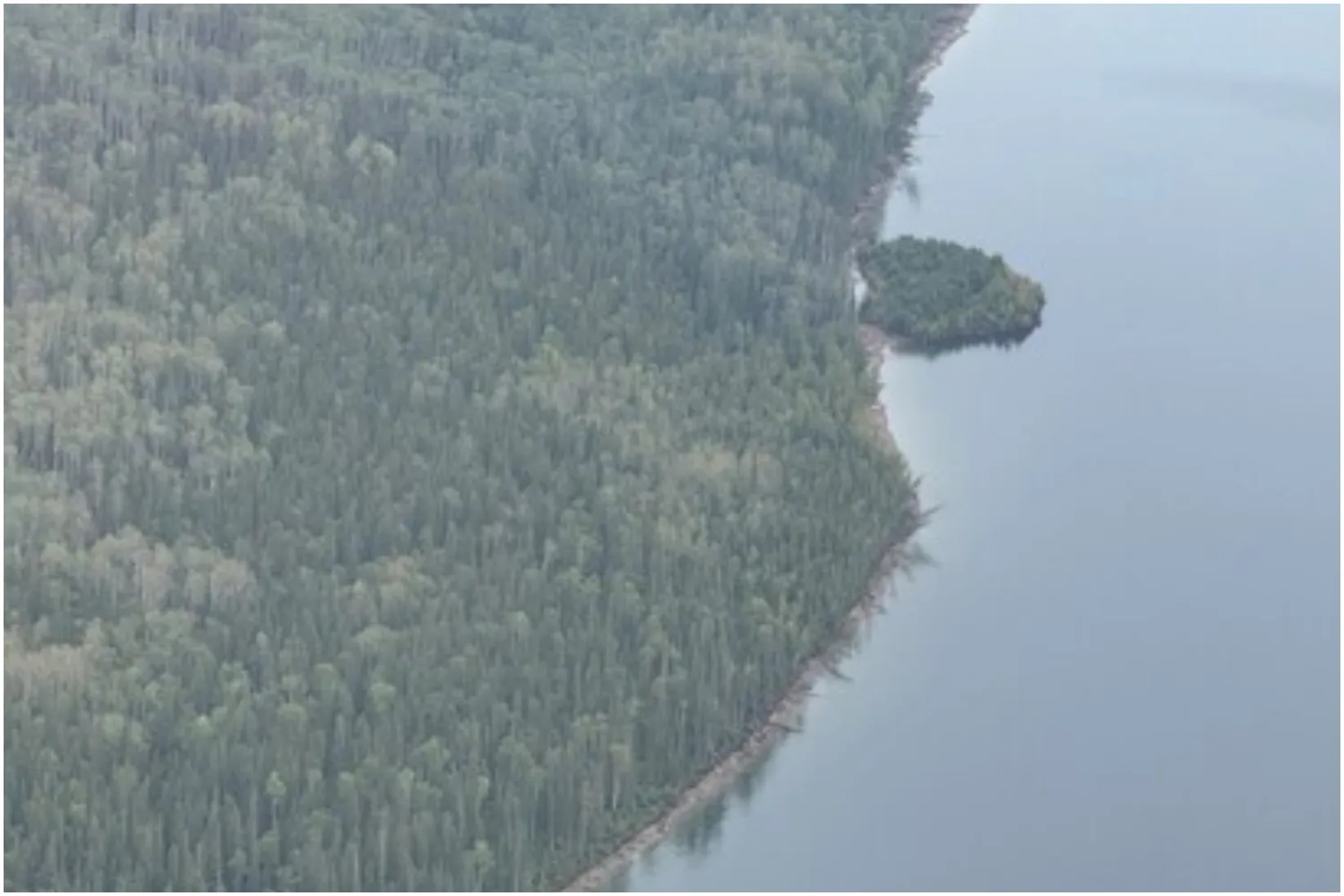
The floating landmass covers roughly 9,800 square meters, making it about the size of two NFL football fields. Officials said it remains intact and supports established vegetation, including mature trees growing on its surface.
Images released by BC Hydro show a densely vegetated patch of land sitting on the water, giving it the appearance of a conventional island despite floating freely through the reservoir.
 Can People Visit the Island?
BC Hydro said people are welcome to photograph the island from boats or drones but warned against attempting to land on it.
Officials said the island is made up largely of logs and decaying woody debris, making it unstable and potentially unsafe for visitors.
“Finding the island has answered one question, but it has raised several others,” Gammer said. “While we’re pleased to have confirmed the island’s location, there is still more to learn about how it formed and how it came to drift across the reservoir.”
The utility company said it will continue monitoring the island as researchers work to understand the unusual natural phenomenon.
Contact Newsweek editors on this story: Rebecca Flood and Emma Lee-Sang