
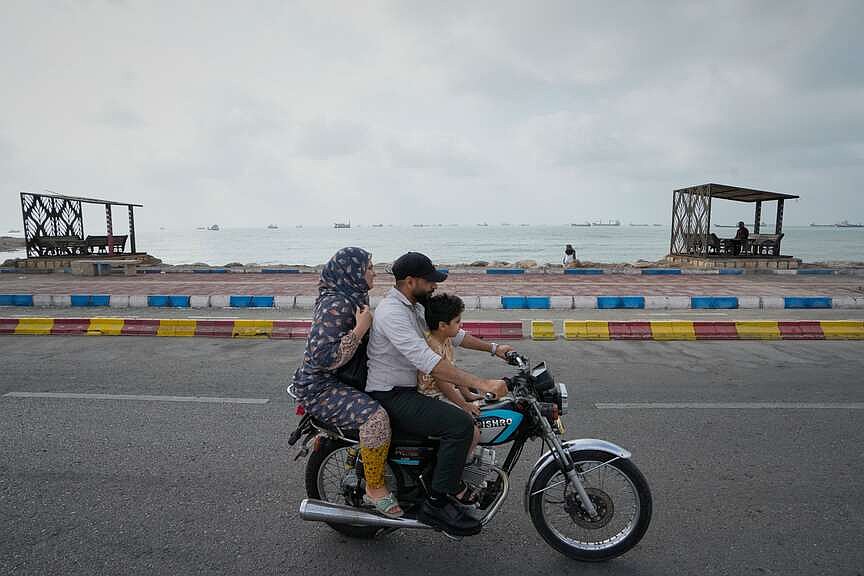
Israeli authorities released four people Friday who had been held in Israeli prisons after being detained by Israeli troops. Meanwhile, ship traffic remains low on the Strait of Hormuz days after the U.S. and Iran exchanged attacks for the first time in a month, and fighting has intensified in Yemen between Iran-backed rebels and government forces.
The released prisoners were transferred to Lebanese authorities via the International Committee of the Red Cross, a day after one Lebanese man was released.
Israel said on Thursday that none of the five had been found to have ties to militant groups.
They had been detained in southern Lebanon, where troops now occupy a large swath in the wake of new fighting with Hezbollah that began two days after the U.S. and Israel attacked Iran.
Israel on Thursday said it had agreed to release them after Lebanon provided assistance in searching for the bodies of Lebanese Jewish leaders who went missing in the 1980s during Lebanon’s civil war.
Officials said the release comes as a result of U.S. mediation and negotiations between Israel and Lebanon. Another round of talks is expected in Rome later this month.
A Lebanese committee advocating for Lebanese in Israeli custody says Israel has detained dozens of people inside Lebanon over the last six months. Some have been released after days or weeks, others remain in Israeli custody.
Lebanese President Joseph Aoun said those freed this week were among a “first batch,” suggesting more could be coming.
Those released Friday included two Lebanese citizens and two Syrians who had been captured in Lebanon, according to two Lebanese officials who spoke on condition of anonymity because they were not authorized to comment publicly. Hundreds of thousands of Syrian refugees and workers live in Lebanon. It was not clear if the released detainees would be sent back to Syria.
Hussein Ayyash, a 33-year-old released on Friday, said he was driving in the southern Lebanese town of Kfar Tebnit nearly three months ago when Israeli soldiers approached and ordered him out of his car.
He said he was blindfolded and handcuffed, and then slept several days in various homes in southern Lebanon before being transferred into Israel and held in solitary confinement, sometimes for up to 30 days.
“Then they move you to prison, a normal room. There are places, called a cage, you sit in it. There are some people — Syrian nationals, Lebanese nationals, Palestinian nationals — all the nationalities, the different ones, are in prison. You get moved from room to room every once in a while, every 40 days, 30 days,” Ayyash told Reuters.
He said he was asked whether he had ties to Hezbollah, and was not tortured but suffered mental strain.
“You have to talk. They have all the information. Psychological pressure isn’t easy — you’re in a country that isn’t yours, you’re with people you don’t know, and you don’t know when you’ll leave,” he said.
The Israeli military did not immediately respond to Reuters questions about Ayyash’s detention.
Israeli Defense Minister Israel Katz said on Friday that Israel’s military has cleared Hezbollah fighters holed up in tunnels under the strategic Ali al-Taher ridge in southern Lebanon, though the Iran-backed group did not immediately comment.
Israel had said Hezbollah fighters were embedded in tunnels under the ridge, which overlooks a wide area and had become one of the most hotly contested areas in the Israel-Hezbollah war, despite a ceasefire announced in June.
Reuters reported on Thursday that Iran had warned the United States last month it would respond forcefully to an Israeli assault on its Hezbollah allies’ positions within the ridge.
“The mission was completed and the tunnels were cleared of terrorists,” Katz said on social media, after a statement by the military late on Thursday saying it had operational control of the ridge.
The military said some Hezbollah fighters had been “eliminated”, while others had fled.
Traffic through the Strait of Hormuz remained low after the renewed U.S. attacks on targets in Iran earlier this week and Iran’s retaliatory attacks in the region, including firing at U.S. Gulf ally Kuwait on Thursday.
Fuel prices were again affected. Diesel hit a record price in the U.S. on Friday, soaring to an average of $5.85 a gallon for the first time ever.
The benchmark U.S. crude price rose above $91 a barrel with the new wave of uncertainty around traffic on the strait, which Iran continues to use as leverage after six months of war with the U.S.
Iran’s Army spokesperson said Friday that recent strikes carried out by Iran “had both a deterrent aspect and a preemptive aspect.”
In an interview with Iran’s state TV, Brig. Gen. Mohammad Akramnia said since the 12-day war in 2025, Iran has been moving in the direction of preemptive warfare and acting for deterrence, which he said is “permissible” under the United Nations Charter.
“In several cases, before they attacked us and committed aggression, we acted for deterrence, in order to genuinely deter them from aggression,” he said of the United States.
The Islamic Republic has repeatedly stated it carries out retaliatory strikes on its neighboring Gulf countries to target U.S. facilities and interests in the region, and in response to U.S. strikes.
Fighting intensified overnight between Iran-backed Houthi rebels and Yemeni government forces along Yemen’s west coast near an important supply route.
An official with the internationally recognized government’s health ministry told The Associated Press there were an unspecified number of casualties on both sides in the fighting in mountainous Taiz province. The official spoke on condition of anonymity because he wasn’t authorized to speak with the media. A military official, who also spoke on condition of anonymity because he wasn’t authorized to brief the media, confirmed casualties on both sides.
Jabal Nu’man overlooks a major supply route for Yemeni government forces between Taiz province and Mokha, a port city heavily targeted by the Houthis in recent weeks.
The Houthis’ expansion of attacks in these areas appears to indicate an effort to gain full control of the Bab el-Mandeb strait, the southern gateway to the Red Sea, according to Mohamed Abdelrahman, a Taiz province spokesperson.
Ahmed Nagi, a senior analyst on Yemen at the International Crisis Group, told the AP the Houthis want to take control of the mountains overlooking the coast.
Information for this arctile was contributed by Fadi Tawil, Abby Sewell, Ahmed al-Haj and Fatma Khaled of The Associated Press, and Maya Gebeily and Rami Ayyub of Reuters.
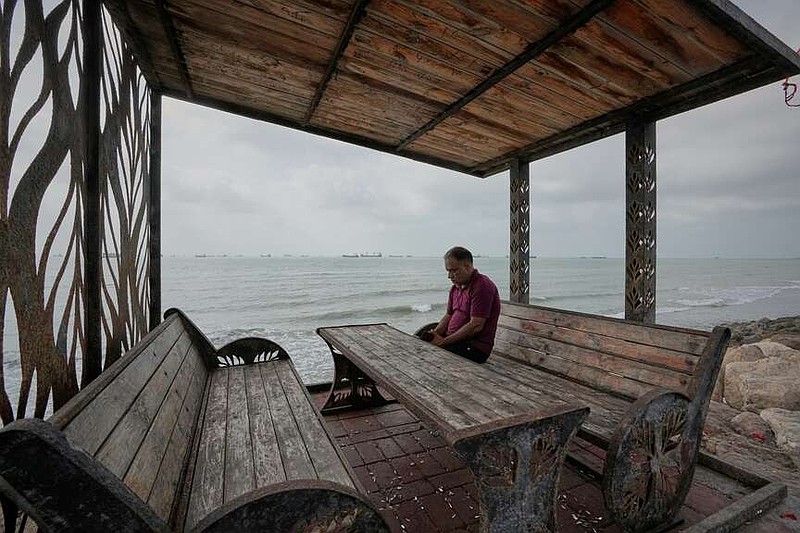 A man rests at a waterfront shelter as commercial vessels lie anchored in the Strait of Hormuz off Bandar Abbas, Iran, Friday, Sept. 4, 2026. (AP Photo/Vahid Salemi)
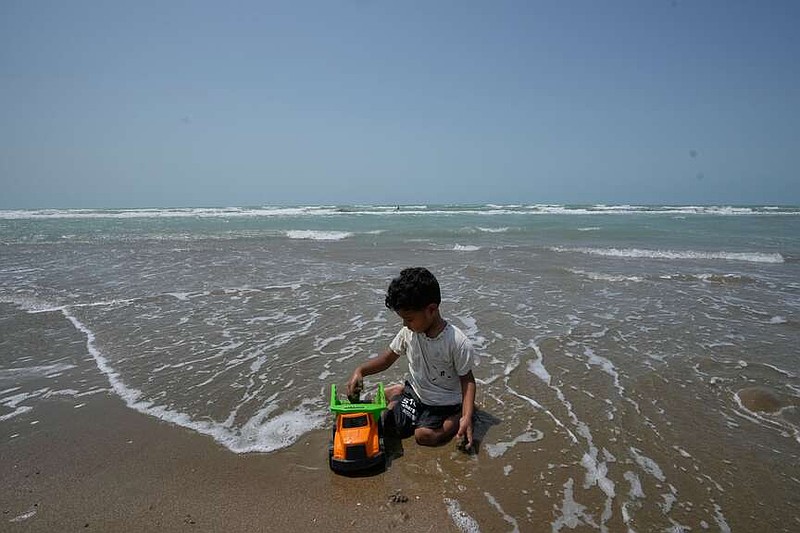 A boy plays with a toy truck on a beach along the Strait of Hormuz in Kuhestak, Iran, Friday, Sept. 4, 2026. (AP Photo/Vahid Salemi)
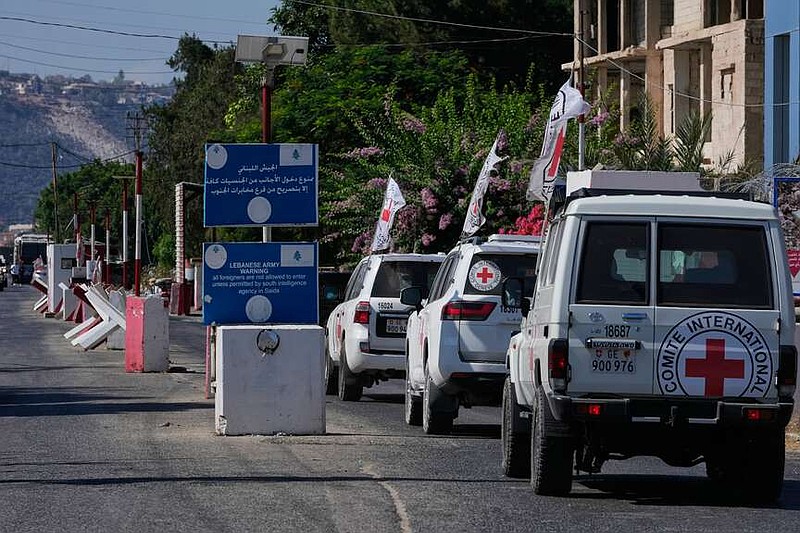 A Red Cross convoy passes a Lebanese checkpoint near the border with Israel in the southern village of Mansouri, Lebanon, Friday, Sept. 4, 2026. (AP Photo/Mohammed Zaatari) CORRECTION: A Red Cross convoy, instead of U.N. peacekeeper convoy
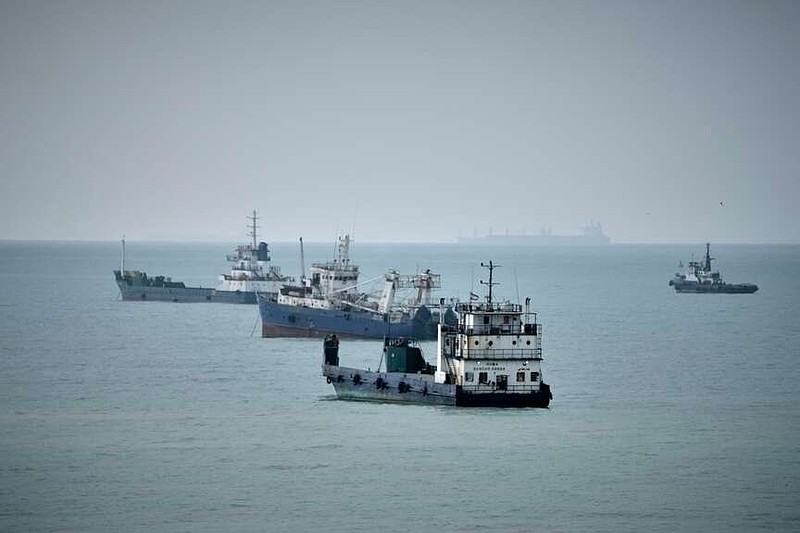 Commercial vessels lie anchored in the Strait of Hormuz off Bandar Abbas, Iran, Friday, Sept. 4, 2026. (AP Photo/Vahid Salemi)