
President Donald Trump‘s handling of the Iran war is drawing less intense support from Republican voters, according to a new NBC News Decision Desk poll, even as overall GOP approval of the president remains high less than two months before the midterm elections.
The survey found that the share of Republicans who strongly approve of Trump’s handling of the war has fallen sharply since the spring. While Trump’s overall approval rating on the conflict was largely unchanged, the enthusiasm behind that support appears to be weakening.
The findings arrive as the U.S. and Iran remain locked in a volatile standoff despite a June agreement intended to ease tensions in the Strait of Hormuz. In recent weeks, both sides have exchanged military actions, raising questions about whether the conflict is entering a prolonged new phase rather than winding down.
Newsweek reached out to the White House on Sunday.
Republican Enthusiasm Softens
According to NBC’s poll, 31 percent of Americans approve of Trump’s handling of the Iran war while 69 percent disapprove, figures that have changed little from spring polling. But beneath those topline numbers, NBC found a notable shift among Republican voters.
The share of Republicans who say they strongly approve of Trump’s handling of the conflict dropped 18 percentage points since the spring and now stands at 30 percent, according to the survey. Among self-identified MAGA Republicans, strong approval fell by 21 points.
The same pattern appeared in views of Trump’s presidency overall. NBC found that the percentage of Republicans who strongly approve of Trump’s job performance fell from 52 percent in the spring to 41 percent in the latest survey, the first time that figure has slipped below 50 percent in NBC News Decision Desk polling.
Overall Republican support remains robust. Eighty percent of Republicans still approve of Trump’s job performance.
The poll surveyed 7,105 adults online from August 20 to September 1 and has a margin of error of plus or minus 3.3 percentage points.
Iran War Tests Republicans
The Iran conflict has remained one of Trump’s weakest issues with voters.
An Associated Press-NORC poll released in June found that just 34 percent of Americans approved of Trump’s handling of Iran, while 65 percent disapproved. Fifty-three percent of respondents said the conflict had “gone too far.”
A Quinnipiac University survey released in July found only 34 percent of voters supported U.S. military action against Iran while 60 percent opposed it. The poll also showed that 66 percent said the war had not been worth fighting.
The issue has also intersected with concerns about the economy. Previous polling has found signs of frustration among Republicans over gas prices and the broader economic impact of instability in the Gulf region. Rising energy costs could become a significant challenge for GOP candidates in competitive races.
Trump has repeatedly defended the campaign, arguing that military pressure and sanctions have weakened Tehran and enhanced American security. The White House has also maintained that polling will not dictate national security decisions.

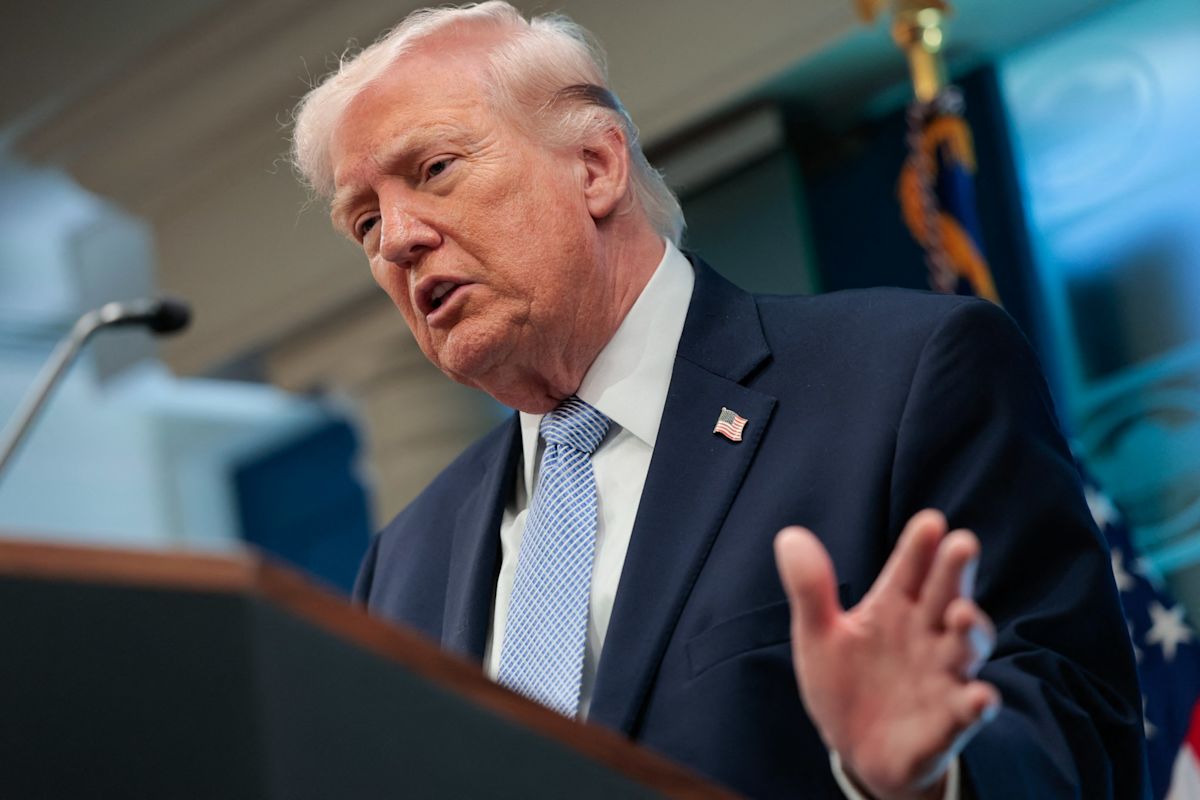
US President Donald Trump speaks about the conflict in Iran in the White House on April 6, 2026, in Washington, DC.
New Escalation Raises Stakes
The poll comes as tensions between Washington and Tehran have escalated again.
On Saturday, U.S. Central Command said American forces struck three Iranian oil tankers after Iran’s Islamic Revolutionary Guard Corps (IRGC) allegedly launched ballistic missiles at two U.S. Navy warships operating in the region. CENTCOM said the vessels were part of a network used to finance the IRGC and that the action was intended to impose economic costs on Tehran.
The strikes followed weeks of renewed clashes after the collapse of a ceasefire that had been tied to June’s memorandum of understanding designed to reopen the Strait of Hormuz and create a framework for negotiations over Iran’s nuclear program. Since then, both sides have traded military strikes, and lawmakers from both parties have continued to argue over the administration’s strategy.
The Strait of Hormuz remains a focal point because roughly one-fifth of globally traded oil normally passes through the waterway, making any disruption a concern for global energy markets and American consumers.
Speaking on NBC’s Meet the Press on Sunday, Senator John Kennedy, a Louisiana Republican, said the war would “probably not” be over by the November midterms. Kennedy also acknowledged potential political risks for the GOP, saying voters are “not especially happy about the war in Iran” as Republicans prepare for November elections.
With Republicans defending their congressional majorities in November, the poll suggests that while Trump’s support within the GOP remains strong, enthusiasm for one of the defining foreign policy conflicts of his second term may be softening.
Related Articles