
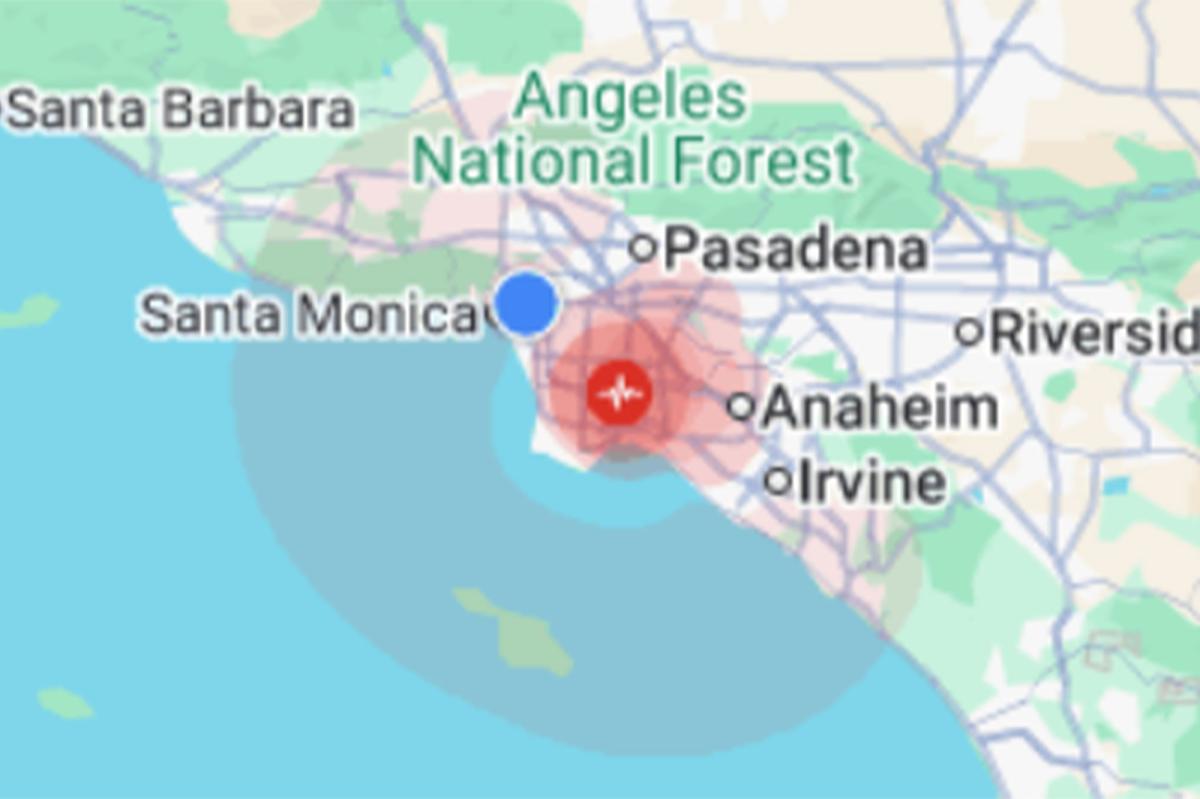
An earthquake briefly shook parts of LA‘s South Bay early Sunday, catching residents off guard overnight.
The US Geological Survey recorded the quake at magnitude 3.2, with the epicenter located 2 miles southeast of Compton. It struck shortly after midnight, at approximately 12:15 a.m.
The earthquake originated nearly 8 miles below the surface, according to the USGS.
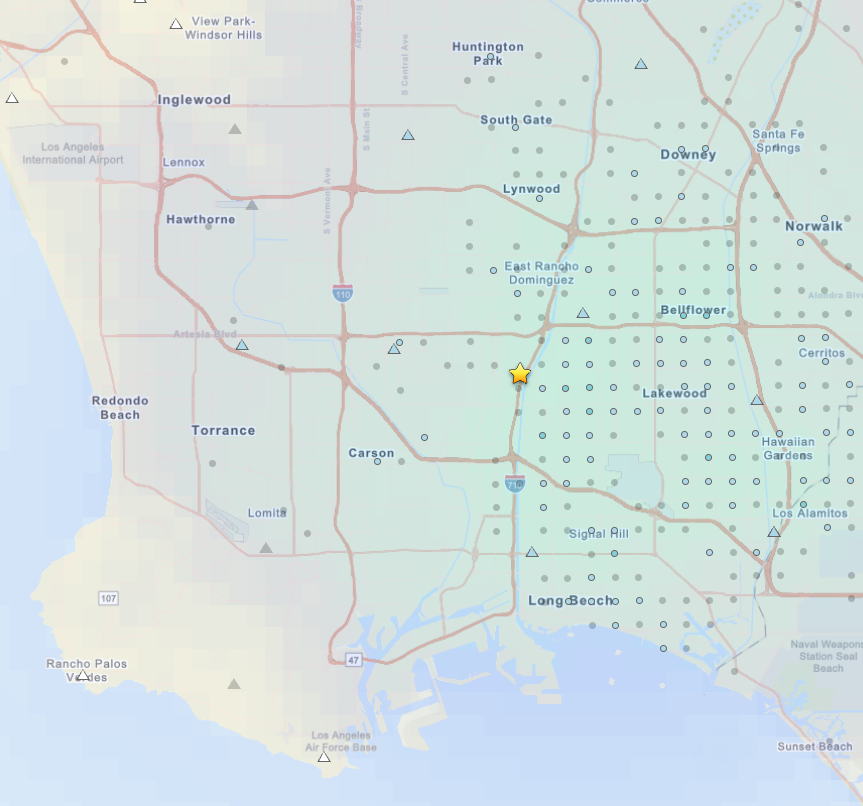 A 3.2 magnitude earthquake near Compton, Los Angeles.
Sign up for the California Morning Report newsletter
California’s top news, sports and entertainment delivered to your inbox every day.
Thanks for signing up!
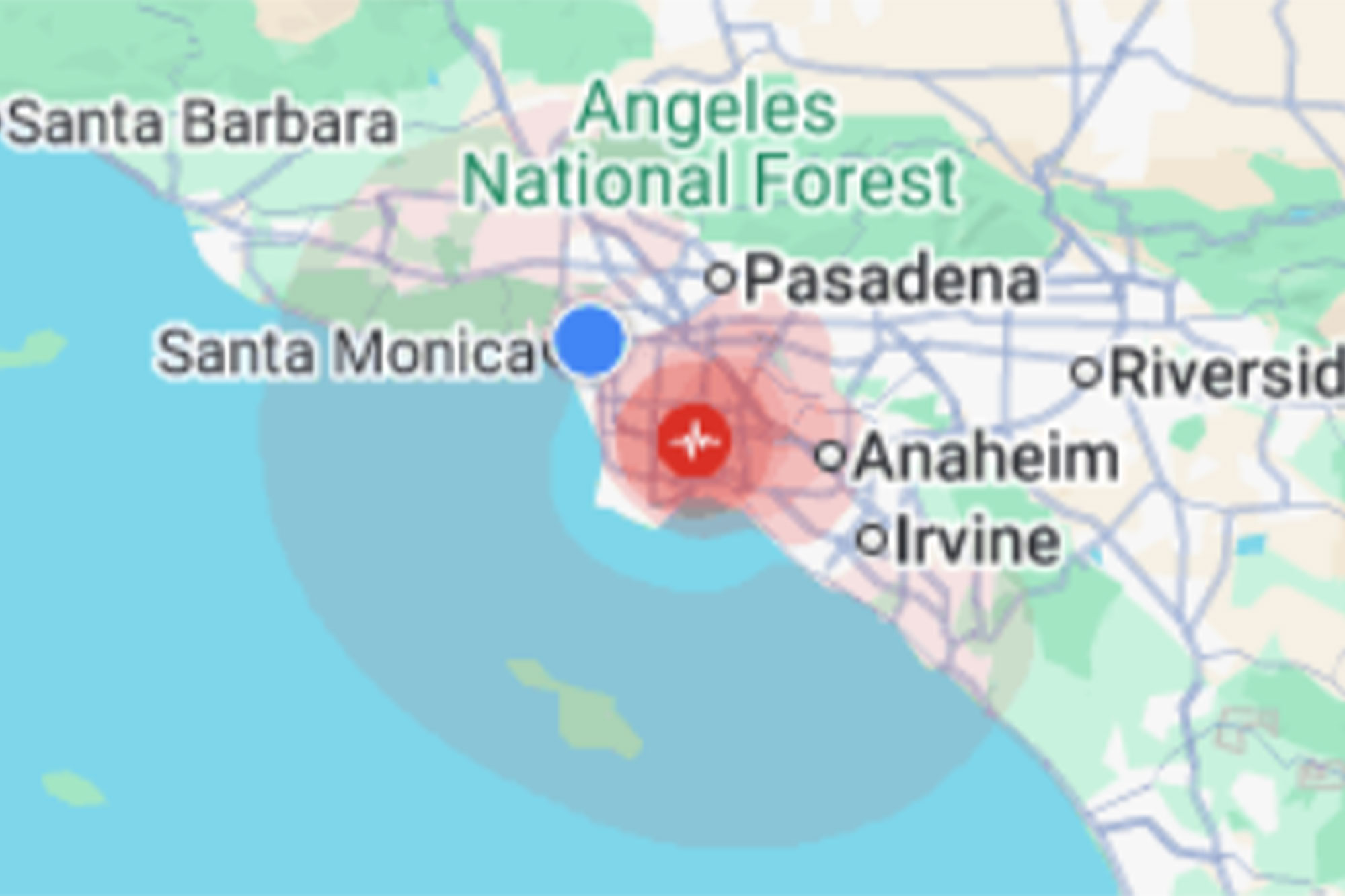 The earthquake epicenter was located 2 miles southeast of Compton. USGS
People in communities across the area said they felt the tremor, though there were no immediate indications of a major impact.
No injuries or damage had been reported following the earthquake.
Officials will continue watching for any additional seismic activity.
The relatively small tremor comes as Southern California remains under the shadow of some of the nation’s most notorious earthquake faults — and scientists continue to warn that a much larger quake could eventually strike the region.
A crucial corridor sits above two major fault lines where scientists say tectonic stress has reached its highest level in 1,000 years — raising fears of the devastation that could follow the region’s next major earthquake.
Cajon Pass — a heavily traveled route through the San Bernardino and San Gabriel Mountains north of Los Angeles — lies where the San Andreas and San Jacinto fault systems meet.
Scientists have described the area as a potential “earthquake gate,” meaning it could either stop a rupture from spreading between the two faults or allow one to tear through both systems, potentially producing a much larger earthquake, according to National Geographic.
“We all know the San Andreas fault is loaded. It’s ready to go. For years the scientific community has been saying so,” Ken Hudnut, who helped the US Geological Survey develop seismic resiliency initiatives for California, told National Geographic.
“Cajon Pass keeps me up at night,” he added.
Researchers found that during previous periods of increased stress, ruptures spread through both fault systems. A future event at the junction could reach about magnitude 7.5, though the findings do not predict when such an earthquake could occur.
Southern California has already experienced several devastating quakes.
The magnitude-6.7 Northridge earthquake in 1994 killed 33 people, injured more than 7,000 and caused an estimated $40 billion in damage.
The magnitude-6.4 Long Beach earthquake in 1933 was even deadlier, killing about 120 people and causing widespread destruction across Long Beach and Compton.
And the 1971 magnitude-6.6 San Fernando earthquake killed 64 people and caused more than $500 million in damage.
While Sunday’s magnitude-3.2 quake caused no reported damage or injuries, the region’s history serves as a reminder of the seismic threat facing Southern California.
Download The California Post App, follow us on social, and subscribe to our newsletters
California Post News: Facebook, Instagram, TikTok, X, YouTube, WhatsApp, LinkedIn
California Post Sports Facebook, Instagram, TikTok, YouTube, X
California Post Opinion
California Post Newsletters: Sign up here!
California Post App: Download here!
Home delivery: Sign up here!
Page Six Hollywood: Sign up here!