
Your support helps us to tell the story
From reproductive rights to climate change to Big Tech, The Independent is on the ground when the story is developing. Whether it’s investigating the financials of Elon Musk’s pro-Trump PAC or producing our latest documentary, ‘The A Word’, which shines a light on the American women fighting for reproductive rights, we know how important it is to parse out the facts from the messaging.
At such a critical moment in US history, we need reporters on the ground. Your donation allows us to keep sending journalists to speak to both sides of the story.
The Independent is trusted by Americans across the entire political spectrum. And unlike many other quality news outlets, we choose not to lock Americans out of our reporting and analysis with paywalls. We believe quality journalism should be available to everyone, paid for by those who can afford it.
Your support makes all the difference.Read more
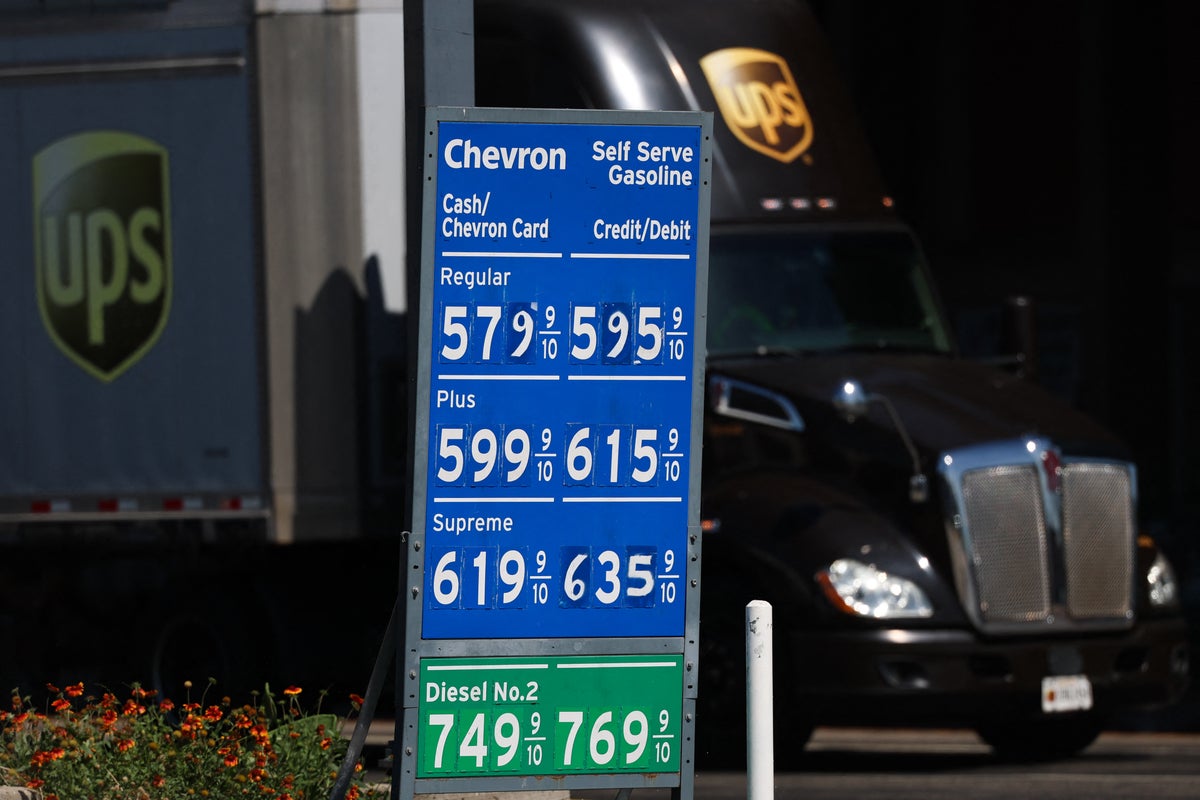
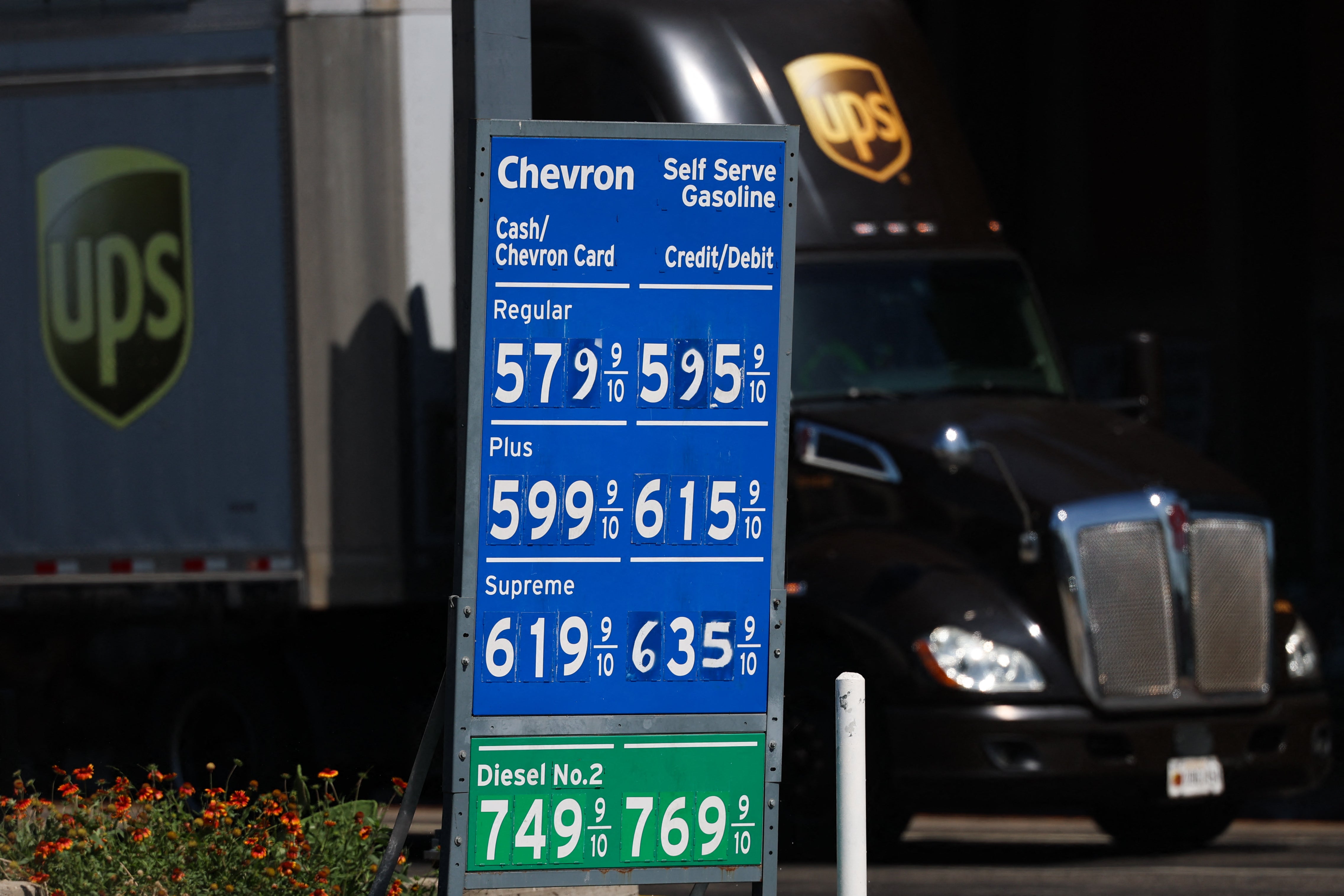
Motorists across the U.S. are encountering record prices to fill their tanks for one final summer getaway over Labor Day weekend.
The average price for regular fuel stood at $4.14 a gallon entering the holiday—nearly a dollar higher than last year and far above the previous Labor Day record of $3.82 set in 2012, according to the AAA motor club.
Nicole Collins had planned a trip from Philadelphia to South Carolina to visit friends, but explained that her family spent most of the summer near home, skipping their routine weekend travel because driving became too costly.
 (AFP/Getty)
“Gas is pretty high right now. It doesn’t help that we also have a baby, so we also have to pay for that,” Collins said outside a gas station in Claymont, Delaware, where regular gas was $4.199 a gallon.
Fuel prices escalated after the U.S. and Israel launched strikes on Iran in February and have remained high. Tanker traffic through the critical Strait of Hormuz has dropped precipitously, with Iran refusing to reopen the passage.
“Everything points to the Iran War and the Strait of Hormuz,” said Tom Seng, a professor of energy finance at Texas Christian University.
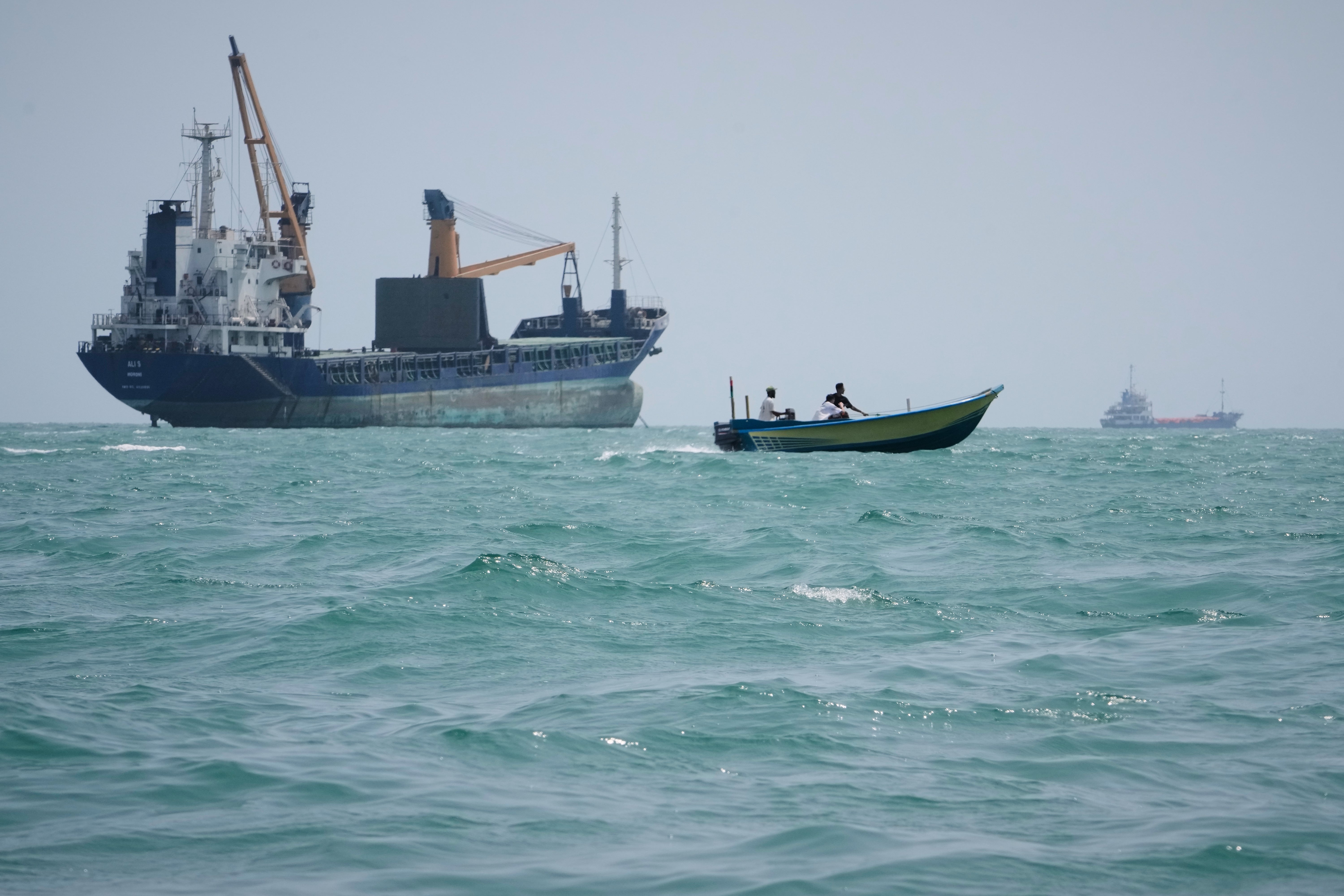 A motorboat passes a general cargo ship anchored in the Strait of Hormuz off Bandar Abbas, Iran (AP)
Energy Secretary Chris Wright offered few details on when drivers might see pump relief, acknowledging prices are higher now than Labor Day 2025.
“Yes, they’re higher today, but we’re doing everything we can to push them down,” Wright said Sunday on ABC’s “This Week.”
The nationwide average for regular gasoline remains well below the record high of $5.02 per gallon set in June 2022.
But diesel is a different story: It reached a record national average of $5.85 a gallon on Friday.
 U.S. Secretary of the Interior Doug Burgum (L) and U.S. Secretary of Energy Chris Wright (C) listen as U.S. President Donald Trump (R) speaks during an announcement on American nuclear innovation in the Oval Office at the White House in July (Getty)
Freight haulers and delivery fleets consume vast quantities of diesel, and those elevated transport expenses are passed to consumers at grocery stores and through package delivery fees.
“It doesn’t really seem like there’s an end to it,” Collins said.
Gasoline prices typically ease as summer driving ends and refineries switch to cheaper winter fuel blends.
But Seng noted that other elements beyond Middle East instability make future prices unpredictable. U.S. refineries are running at 98% capacity, many enduring harsh Texas heat. Should technical breakdowns occur or a severe hurricane force facilities offline, prices will struggle to fall.
The issue extends beyond the Middle East. Ukrainian drone strikes on Russian refineries are restricting diesel supplies, while Chinese refiners report falling output, said Matthew Metzgar, a clinical professor of economics at UNC Charlotte.
“There’s just less gasoline coming out of those refineries,” Metzgar said.
Wright, the energy secretary, said the Trump administration is working to expand production and noted market forecasts indicate lower prices in coming months.
“If you look at the futures prices, if you wanted to buy today in bulk gasoline for two months out in November, it’s about $0.35 cheaper than it is today. So the marketplace thinks gasoline prices are going to move meaningfully lower,” he said.
From a geopolitical perspective, individual drivers have minimal leverage to lower fuel prices.
However, price-tracking apps can offer savings, particularly on long trips, where roadside stations near interstates charge 10 to 15 cents more per gallon than nearby pumps slightly off the highway, Metzgar noted.