
(Sept. 7, 2026 / JNS)
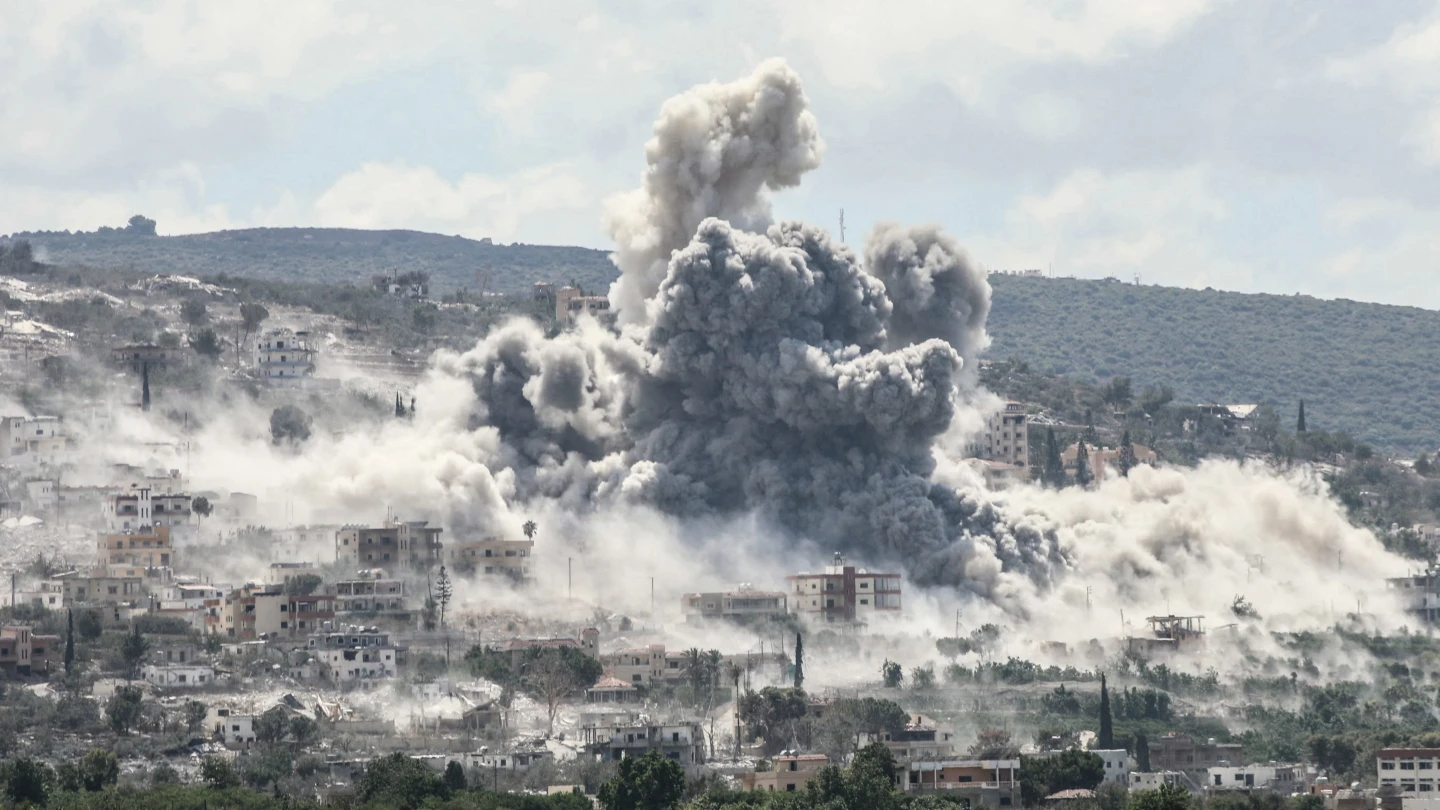
The Israel Defense Forces struck Hezbollah infrastructure across Southern Lebanon overnight on Sunday after the Iranian-backed terrorist organization launched two explosive drones at IDF troops in the security zone, the military said on Monday.
The suicide drones targeted soldiers operating in the area of the Ali al-Taher Ridge, the army said. No Israelis were injured.
In response, the IDF attacked several Hezbollah sites, including a weapons storage facility, it said. The military said it also struck several terrorists it identified transferring weapons near Kfar Reman, northeast of Nabatieh, to remove a threat to its soldiers.
Separately, the IDF struck in the Nabatieh area, eliminating several Hezbollah operatives, it announced.
“Prior to the strikes, steps were taken to mitigate harm to uninvolved individuals, including the use of precise munitions and aerial surveillance,” the military said. “The claim that several uninvolved individuals were harmed as a result of the strikes is being reviewed.
“The IDF will not allow the Hezbollah terrorist organization to harm Israeli civilians or IDF soldiers and will continue to operate to remove threats while remaining committed to the ceasefire agreement,” it added.
On Sunday morning, the IDF said it was striking in Southern Lebanon after Hezbollah launched two drones toward soldiers operating in the security zone.
Troops downed one of the drones, the IDF said. No injuries were reported in the attack.
The statement called the incident “a blatant violation” of the ceasefire agreement with Beirut.
Soldiers “will continue to operate in the security zone in order to remove any threat toward Israeli civilians and IDF soldiers,” the military said, adding that it would act “with determination against Hezbollah’s repeated attempts to harm IDF soldiers.”
Also on Sunday, Lebanese President Joseph Aoun urged the United States and the international community to “urgently” intervene after the Israeli strikes in Southern Lebanon.
Overnight Friday, the IDF also carried out strikes on Hezbollah terrorists and infrastructure in Southern Lebanon in response to a drone launched earlier in the day at soldiers operating in the security zone.
The drone attack constituted a “blatant violation” of the ceasefire agreement, the IDF said.
Israeli soldiers opened fire and downed the drone, the IDF continued, adding that no injuries were reported.
As part of the retaliatory strikes, the IDF struck weapon storage facilities intended to be used by Hezbollah operatives to plan and direct terrorist attacks on IDF soldiers in the security zone and Israeli civilians, the army said.
“The IDF is currently operating and will continue to act with determination against Hezbollah’s repeated attempts to harm IDF soldiers,” the army added.
The security zone in control of the Israeli military runs along the Israeli-Lebanese border from the Mediterranean Sea to the area north of Mount Hermon, extending roughly seven miles deep into Lebanon in its furthest points.
‘A clear and uncompromising policy’
Israel will not withdraw from Southern Lebanon until Hezbollah is disarmed throughout the country and the danger posed by attacks from the Land of the Cedars is neutralized, Defense Minister Israel Katz said on Friday.
“Prime Minister Netanyahu and I are leading a clear and uncompromising policy, implemented every day by the IDF: Israel will not withdraw from the security zone in Lebanon until Hezbollah is disarmed throughout Lebanon and the threats to the residents of the Galilee are removed,” Katz said.
“The capture of Ali al-Taher is an important step toward achieving this goal,” he added.
Katz said the IDF’s capture of the Ali al-Taher Ridge in southeastern Lebanon marked the completion of a phase in consolidating Israel’s hold on the security zone.
The decision to advance toward the ridge was made after intelligence indicated the presence of Hezbollah command-and-control tunnels there, according to the defense minister.
The tunnels served as a command center for attacks on IDF troops and the Galilee, while the ridge constituted Hezbollah’s last commanding position protecting the Nabatieh area, giving it strategic importance, Katz said.
The IDF operated in difficult terrain during both offensive and defensive operations on the ridge.
“I closely followed the activity on the ridge, including maintaining contact with the forces in the field, and I was deeply impressed by their commitment to the mission,” Katz said.
He noted that to protect Israeli troops, a strict information blackout had been imposed on details of the operation.
“In a complex and systematic operation, the mission was completed and the tunnels were cleared of terrorists,” Katz said. “I salute the determination of the IDF command and the courage of the fighters.”
The IDF said earlier on Friday that troops from the 36th Armored Division had operated in recent weeks to clear and neutralize two underground routes in the Ali al-Taher Ridge area.
The troops established operational control of the ridge both above and below ground and cleared the area of Hezbollah terrorists. Some were killed, while others fled, according to the military.
The underground network contained command centers, weapons-storage rooms, generator rooms, living quarters, showers and a kitchen, enabling Hezbollah terrorists to conduct operations and remain underground for extended periods.
The IDF described it as a strategic underground network built over two decades with Iranian funding and planning.
The IDF said its operations over recent weeks had neutralized the enemy’s ability to launch attacks from the underground routes.
Katz said the IDF would now complete the neutralization of the tunnels and deploy tactically to maintain control of the ridge and prevent Hezbollah from reestablishing itself there.
The military said it would continue operating in the security zone and would respond to any attempt by Hezbollah to attack Israeli troops, while remaining committed to the ceasefire agreement.