 Crescent International Rabi’ al-Awwal 25, 14482026-09-07
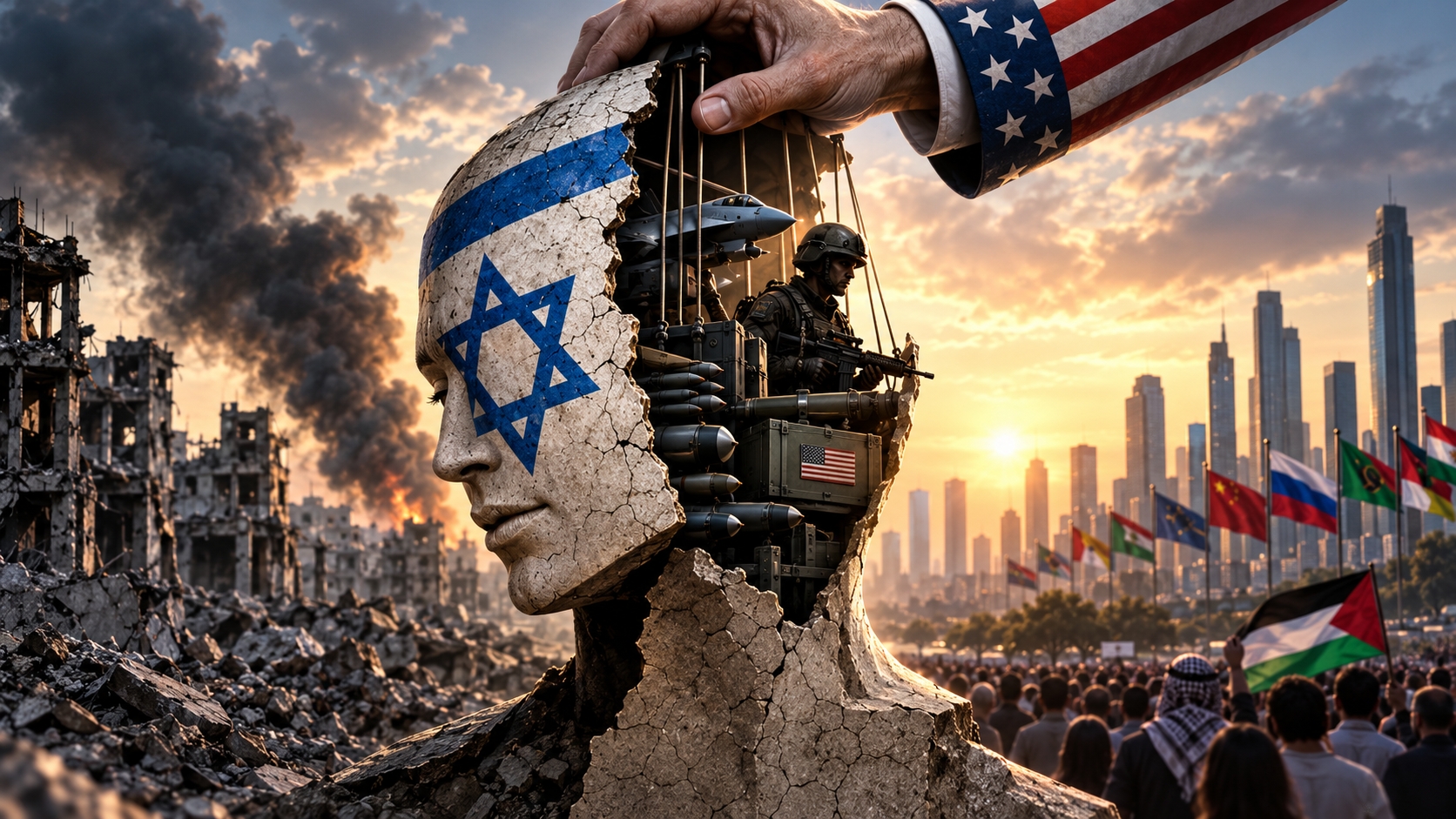 Image source – AI
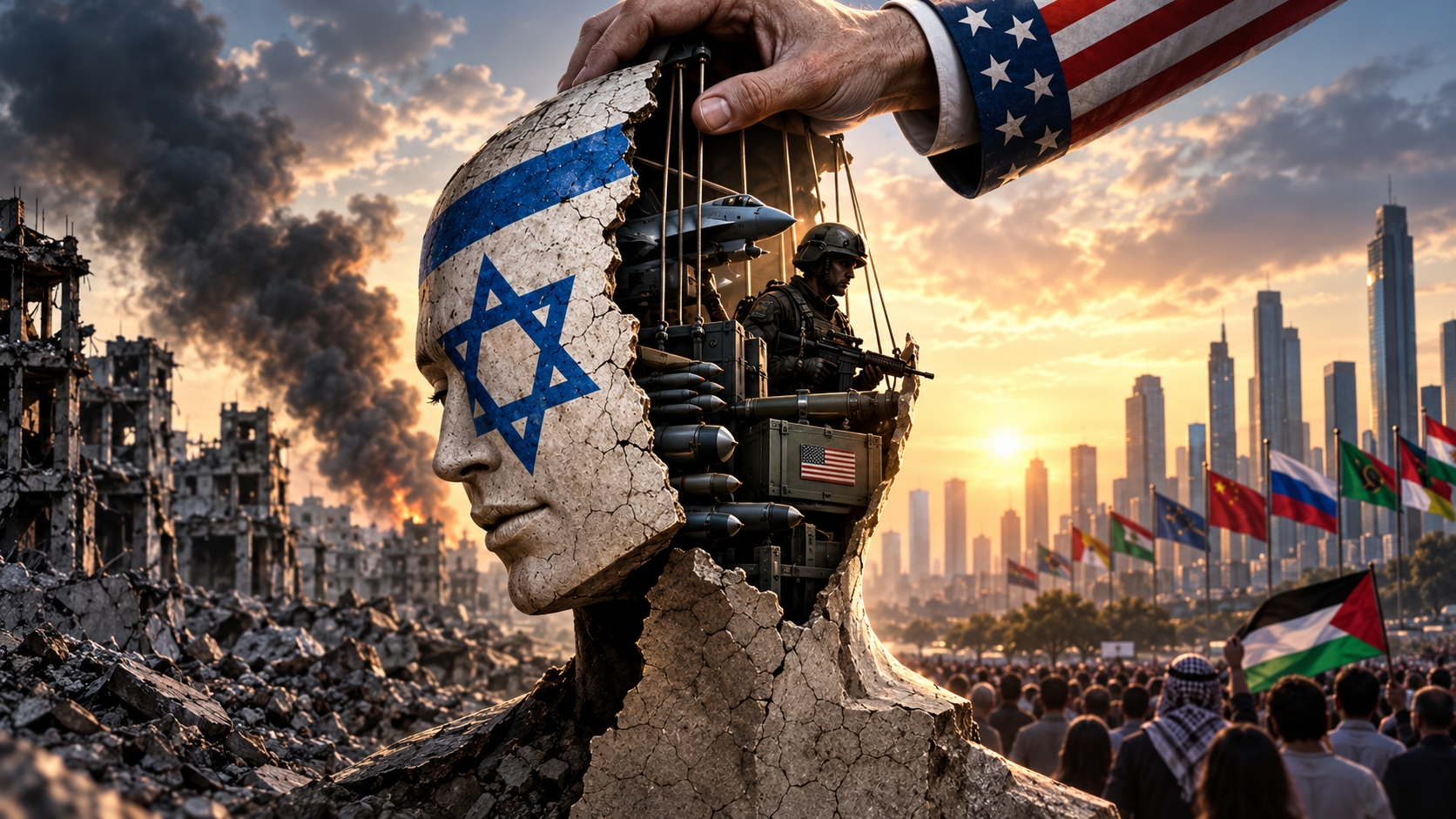
For decades, unconditional US support for Israel was presented as one of the zionist entity’s greatest strategic strengths.
The regional war that erupted in October 2023, however, has exposed a different reality: what once appeared to be Israel’s strategic advantage has increasingly become a structural dependency.
The zionist regime has been exposed for what it really is: a political and military outpost of western imperial power in West Asia, principally that of the US.
This arrangement served Israel relatively well when the west-centric global order exercised overwhelming economic, military and political dominance.
That international order, however, has eroded along with American hegemony.
The military dependency is difficult to conceal.
According to SIPRI, the US supplied 68% of Israel’s major arms imports during 2021–25.
Thus, Israel remains heavily dependent on American imports for critical capabilities. Every active Israeli combat aircraft is US-supplied.
The scale became even clearer after October 2023.
By May 2025, according to the Congressional Research Service, Washington had dispatched 800 transport aircraft and 140 ships carrying more than 90,000 tons of weapons and military equipment to the zionist entity.
This exposes a fundamental strategic contradiction.
The more aggressively Israel attempts to impose its military hegemony over West Asia, the more dependent it becomes on American imperial power to sustain it.
The US itself is in rapid decline.
Israel is simultaneously becoming a growing political and soft-power burden on its western sponsors.
Across the Muslim world and the Global South, western complicity in Israel’s genocide in Palestine has further shattered the credibility of western claims about human rights, international law and the so-called “rules-based international order.”
During the era of uncontested western supremacy, Washington and its allies could absorb such reputational damage.
In an emerging multipolar world, this is increasingly costly.
Western regimes remain powerful, but they are now one of the players rather than the player.
Their relative economic and political weight is declining precisely when Israel demands ever greater military, diplomatic and financial support.
There are internal warning signs as well.
Even the zionist regime’s propaganda outlet, Times of Israel had to admit in August 2026 that emigration among high-earning Israelis in technology and healthcare had nearly doubled within five years, with doctors, engineers and other highly educated professionals disproportionately represented.
Thus, one of the greatest political achievements of the Axis of Resistance since 2023 has been stripping Israel of its state sovereignty mask and pretense.
Whatever tactical military damage individual components of the Axis of Resistance may have suffered, the confrontation has exposed the zionist entity as a fully subsidized, dependent entity of American imperialism—a military-political outpost incapable of sustaining prolonged regional warfare without massive external support.
This is Israel’s emerging strategic dilemma. It has tied its survival to a west-centric global order whose hegemony is declining, while its own actions are accelerating that order’s credibility crisis.
Israel’s American lifeline, once its greatest strategic advantage, has become its strategic weakness.
Israel’s strategic dilemma is increasingly clear.
It has tied its survival to a west-centric order whose hegemony is declining.
As that order weakens, so does the imperial lifeline sustaining its zionist outpost in West Asia.